The Shaker Cemetery
I had already explored the history of Sabbathday Lake Shaker Village, but its cemetery offered another way to understand the people who live there. Unlike burial grounds filled with elaborate monuments celebrating individual wealth, military service, or family ancestry, the Shaker Cemetery reflects the community’s beliefs in simplicity, humility, equality, and collective life.
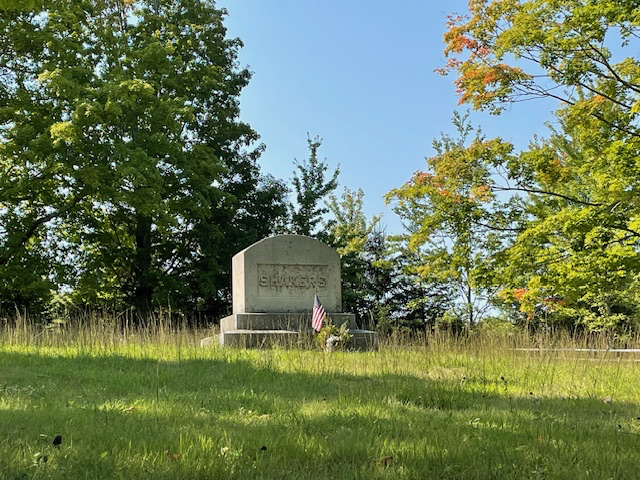
The Shakers lived together as a spiritual family rather than in traditional households. Members practiced celibacy, held property communally, and addressed one another as brothers and sisters. Because their identity rested with the community rather than a biological family, their cemeteries were not generally organized around married couples, prominent family names, or private family plots. In death, as in life, each member remained part of the larger Shaker family.
Early Shaker graves were usually identified by small, simple markers bearing little more than a name, initials, and dates. Elaborate epitaphs and decorative monuments conflicted with the humility that shaped Shaker life. Some communities later replaced individual stones with metal markers that were easier to maintain. Approximately twenty of the distinctive cast-iron markers remain at Sabbathday Lake, identifying individual burial locations without creating imposing personal memorials.
During the twentieth century, several Shaker communities removed many of their individual gravestones and erected a single monument honoring everyone buried within the cemetery. The plain stone marked “SHAKERS” expresses the idea that the members should be remembered collectively, just as they had worshiped, worked, and shared their possessions collectively during life. Detailed community records preserved individual names even when they were no longer prominently displayed above the graves.
The Shakers regarded death as a passage into continuing spiritual life rather than an occasion for elaborate material display. Their burial grounds were therefore quiet, orderly, and restrained. The simplicity did not indicate that individual lives were forgotten. It reflected a belief that worldly distinctions ended at death and that a person’s spiritual life was more important than an impressive monument.
Standing before this single stone, it is impossible to identify the accomplishments or position of any one person buried nearby. That is precisely what gives the cemetery its meaning. The Shakers rest together beneath one communal name, preserving in death the equality and shared identity that governed their lives.
Read More From Nancy
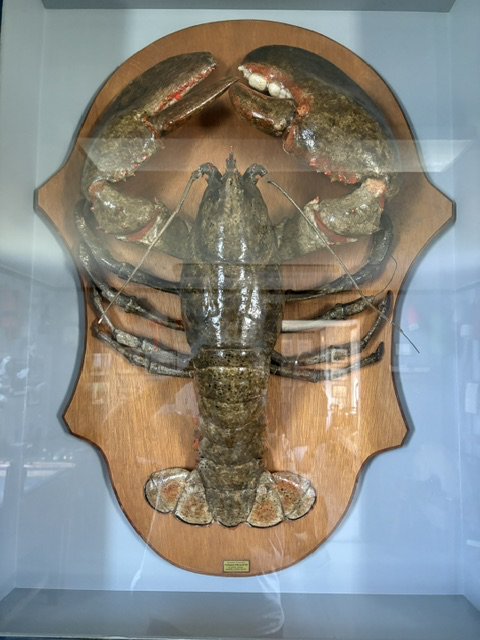
The Giant Lobster at Pemaquid Point
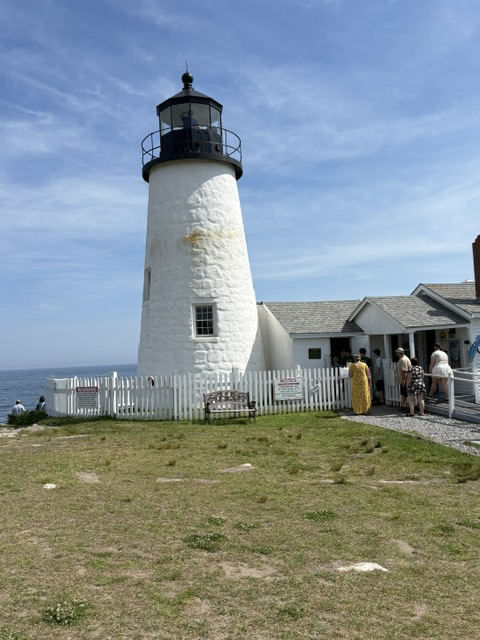
While visiting Pemaquid Point Lighthouse, I expected to learn about shipwrecks, lighthouse keepers, and Maine’s rocky coast. I didn’t expect one of the exhibits that would capture my attention most to be a giant lobster. Displayed inside the Fishermen’s Museum at Pemaquid Point is a mounted lobster weighing twenty-eight pounds. It was caught off the […]
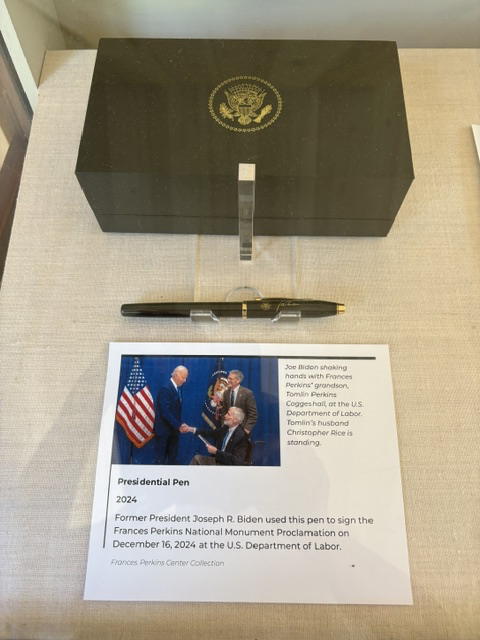
The Pen That Created Frances Perkins National Monument
On December 16, 2024, President Joseph R. Biden Jr. used this pen to sign the presidential proclamation establishing Frances Perkins National Monument in Newcastle, Maine. The ceremony took place in the U.S. Department of Labor; the department Perkins led from 1933 to 1945. The photograph accompanying the pen shows Biden handing it to Frances Perkins’s […]
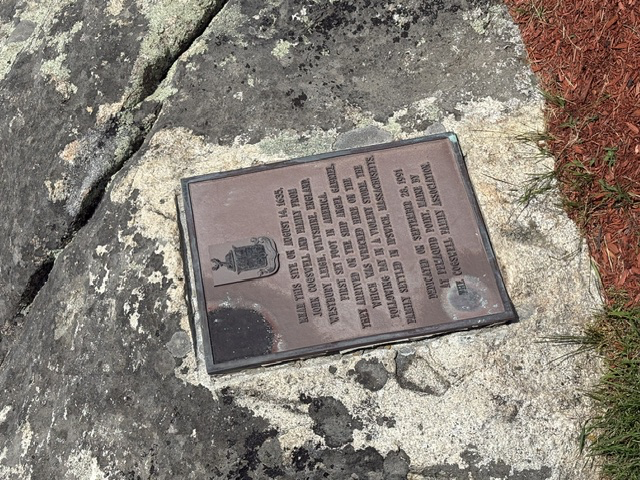
The Cogswell Family
Set into the rocks at Pemaquid Point is a bronze plaque marking the place where one family’s American story began nearly four centuries ago. On August 14, 1635, John Cogswell and his family, from Westbury Leigh in Wiltshire, England, first set foot in America near this site. They had crossed the Atlantic aboard the Angel Gabriel, […]

