The Moulin Rouge and Its Red Windmill
Above the entrance to the Moulin Rouge, a red windmill announces one of Paris’s most famous places of entertainment. Its name means “Red Mill”, and the windmill has been part of its identity since the cabaret opened on October 6, 1889, at the foot of Montmartre. Founded by Joseph Oller and Charles Zidler, the Moulin Rouge became closely associated with the music, dancing, and nightlife of the Belle Époque.
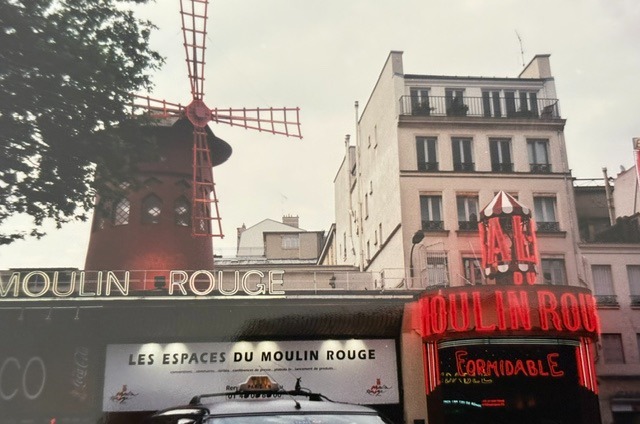
The windmill connects the cabaret with an older Montmartre. Before the neighborhood became famous for artists and nightlife, working windmills were familiar features of its hillside. The Moulin Rouge’s decorative mill drew on that local identity, following the example of the Moulin de la Galette. Its purpose was to attract attention and establish a recognizable entrance to a place of entertainment.
Inside, the early Moulin Rouge offered a lively combination of dancing, drinking, and performances. It became especially famous for the French cancan, with its high kicks, swirling skirts, and energetic choreography. Louise Weber, known as La Goulue, and her partner Valentin le Désossé were among the performers who helped define its early years. Their dancing brought both notoriety and audiences to the new establishment.
Artists helped carry its reputation beyond the dance floor. Henri de Toulouse-Lautrec was a regular visitor who depicted the performers and patrons around him. His 1891 poster featuring La Goulue transformed an advertisement into an enduring image of Parisian nightlife. Through his paintings and posters, the dancers became recognizable individuals whose expressions, movements, and personalities remain part of the Moulin Rouge’s history.
Over the following decades, the establishment evolved into a venue for elaborate stage revues and celebrated singers. Édith Piaf appeared there in 1944, with a young Yves Montand on the same program. Renovations in the 1950s helped renew the cabaret, and the development of its dinner shows brought another chapter in its international reputation.
The red windmill remains a compact expression of that history. It recalls Montmartre’s older landscape while marking the entrance to a place shaped by dancers, musicians, artists, and audiences. Seen from the street, it offers a connection to the Paris that made entertainment, and the art inspired by it, part of its cultural identity.
Read More From Nancy
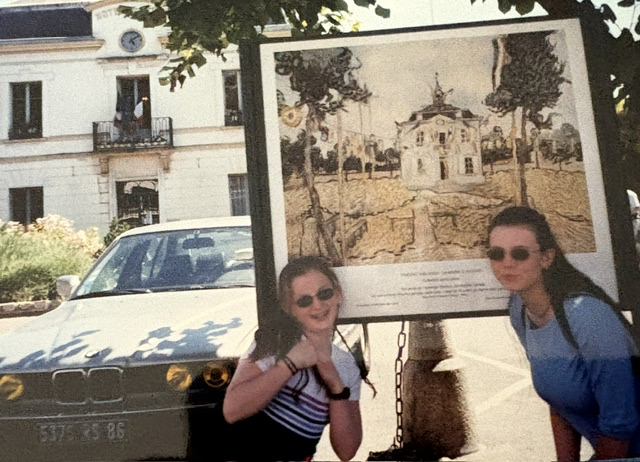
Van Gogh’s Landscape
Visiting museums was an important part of our daughters’ homeschooling. Museums hold many of our cultural treasures, preserving the paintings, objects, and stories through which we encounter the past. But there is another kind of learning that takes place when we leave the museum and enter the landscape that inspired the art displayed within it. […]
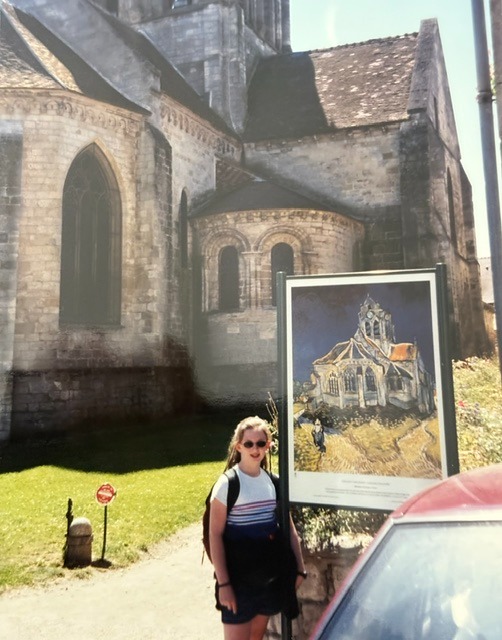
The Church at Auvers-sur-Oise
Erin stands outside the church at Auvers-sur-Oise, beside a reproduction of the painting Vincent van Gogh made of it in 1890. The building and its painted interpretation share the same setting, offering an opportunity to compare the place with the artist’s vision. Van Gogh painted the church in June 1890, shortly after settling in the […]
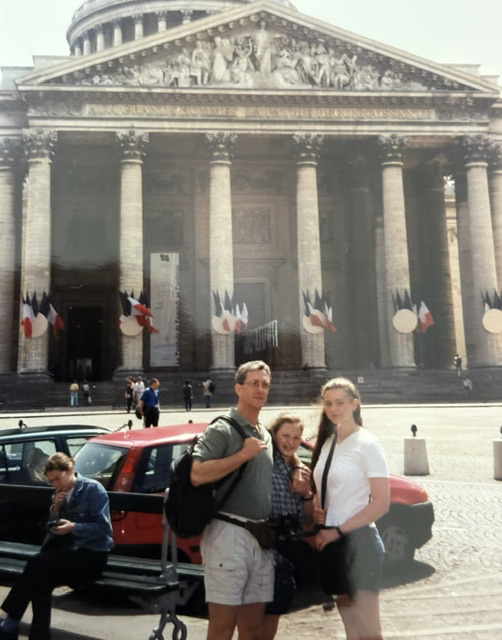
The Panthéon
During our family vacation to France, we visited the Panthéon in the Latin Quarter of Paris. Its massive columns, triangular pediment, and soaring dome give it the appearance of an ancient temple standing in the middle of the modern city. The building was commissioned by King Louis XV as a church dedicated to Saint Geneviève, […]

