Alexander Hamilton Statue in Boston
I love walking the Commonwealth Avenue Mall and pausing to take in the sculptures that line the path. Each one is placed not just to decorate the boulevard but also to invite reflection. One of the most prominent is the statute of Alexander Hamilton. I found myself wondering why Hamilton, who never lived in Boston. was chosen to stand here and who was the man who decided he belonged among the city’s civic monuments.
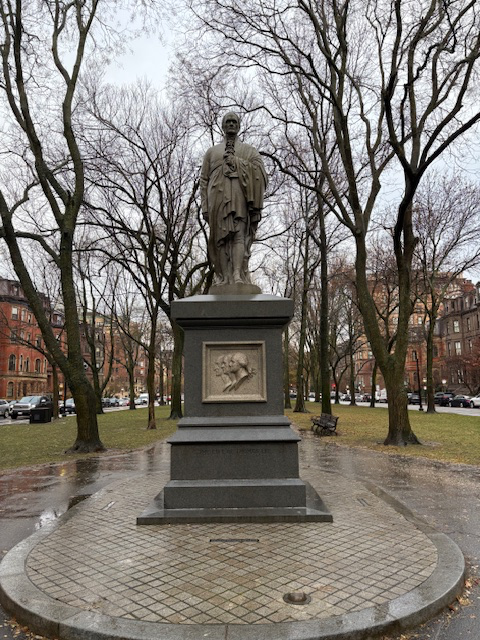
Hamilton’s ideas resonated in Boston. This was a city shaped by commerce and institutions such as banks, universities and civic organizations. Hamilton’s vision of a strong federal government and a stable financial system, aligned with Boston’s post-Revolutionary identity. Even though his political life unfolded largely in New York. His thinking helped shape Boston.
The statue was erected in 1865. The Civil War had just ended, and the country was reckoning with the cost of division, and the necessity of unity. Hamilton had come to symbolize the strength of the Union and the importance of a national framework.
Thomas Lee, the man who paid for the statue, was “a citizen of Boston.” He joined a long Boston tradition in which private citizens shaped public space to reflect shared values. The Commonwealth Avenue Mall was designed as a civic promenade. Public art often tells us much about those who commission it as it does about the figures they choose to honor – if we stop and contemplate and stay curious.
Read More From Nancy
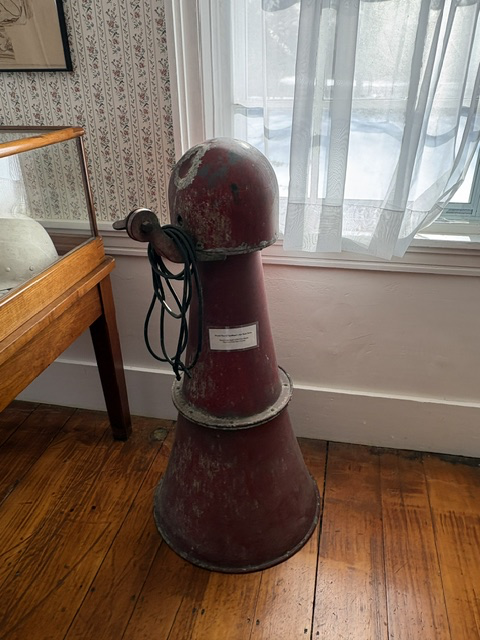
World War II Air Raid Siren
While visiting the Needham History Center and Museum, one artifact caught my attention. Standing quietly in the corner was a World War II air raid siren that once occupied the steeple of the First Baptist Church on Great Plain Avenue. It is not a large or ornate object, yet it represents a time when communities […]

Make Way for the Ducklings
Walking through the Boston Public Gardens, there is a familiar and beloved sight: a line of small bronze ducks following closely behind their mother. Most locals recognize them as characters from the classic children’s book “Make Way for Ducklings” by Robert McCloskey. These statues were created by sculptor Nancy Schon and installed in 1987 as a […]
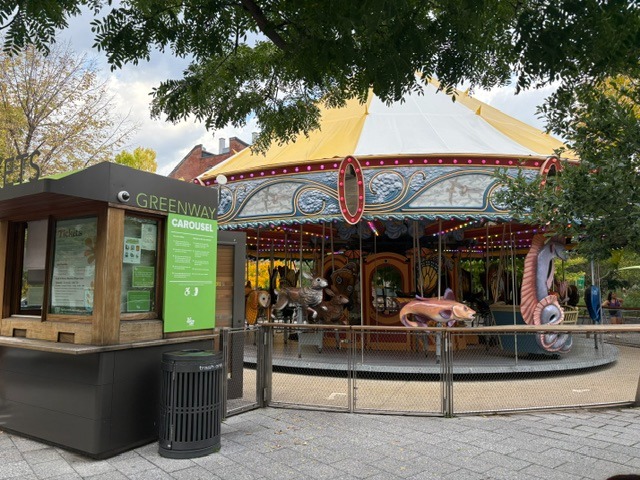
The Greenway Carousel
I ride this carousel as often as I can when I visit Boston. Walking through the city often leads us to historical places, but I also enjoy making time for something simply because it brings me joy. The Greenway Carousel has become one of those familiar stops I look forward to. Opened on August 31, […]

