The Gates of Hell
During our time in Paris, we encountered one of Auguste Rodin’s most ambitious creations, The Gates of Hell. More than six meters high and filled with nearly two hundred twisting, falling, and struggling figures, the monumental sculpture presents a vision of humanity suspended between suffering, judgment, and despair.
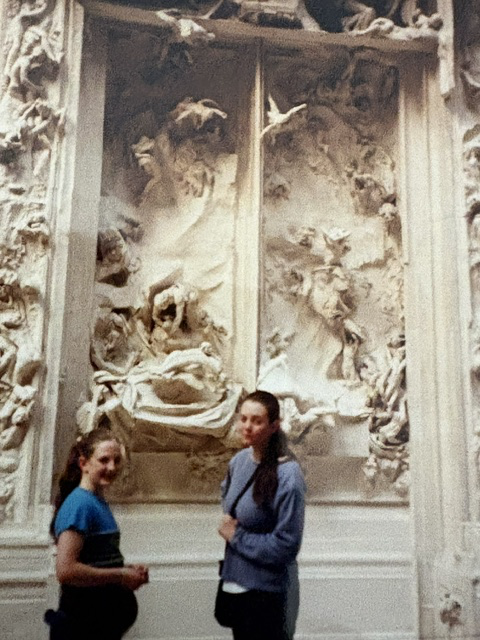
Rodin received the commission from the French government in 1880. The doorway was intended for a new museum of decorative arts planned for the site where the Musée d’Orsay now stands. Inspired largely by Dante’s Inferno, Rodin filled its surface with figures drawn from the poet’s journey through Hell, while also introducing forms and emotions from his own imagination.
Rodin continued revising the work for nearly four decades, but the proposed museum was never constructed and the doorway was not cast in bronze during his lifetime. Several figures developed for the project later became famous independent sculptures. The Thinker originally appeared above the doors contemplating the suffering below, while the embracing couple that became The Kiss also began as part of Rodin’s evolving design.
The plaster version displayed at the Musée d’Orsay reveals the work as Rodin developed it, with human figures emerging from and dissolving into the surface. Standing before it, it is difficult to take in the entire composition at once. The eye moves from one body to another, discovering new expressions and struggles within the crowded doorway. What began as an entrance to a museum that was never built became a lifelong project and one of the defining works of modern sculpture.
Read More From Nancy

Gravesites of Vincent and Theo Van Gogh
When we traveled as a family, we would try to find places that would spark the interests of our daughters. During a vacation in Paris, one of these special excursions was a train ride to the village of Auvers-sur-Oise, where Vincent Van Gogh spent the final weeks of his life and created many of his most famous paintings […]
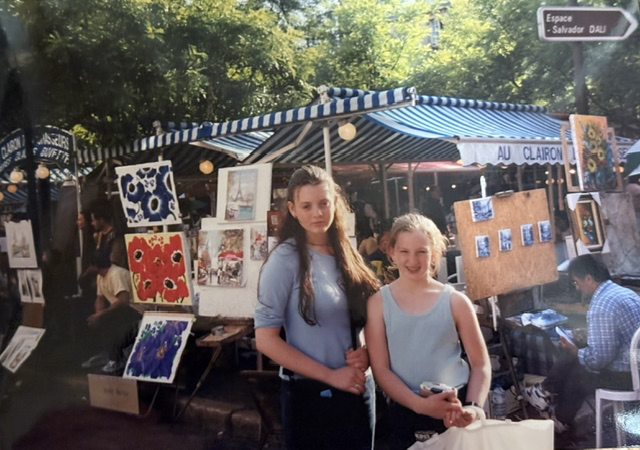
The Artists of Montmartre
During our family visit to Paris, we explored Montmartre, the historic neighborhood that rises above the city on its northern side. This photograph of our daughters was taken among the artists’ stalls near the Place du Tertre, not far from the Basilica of Sacré-Cœur. By the late nineteenth century, Montmartre had become home to a […]
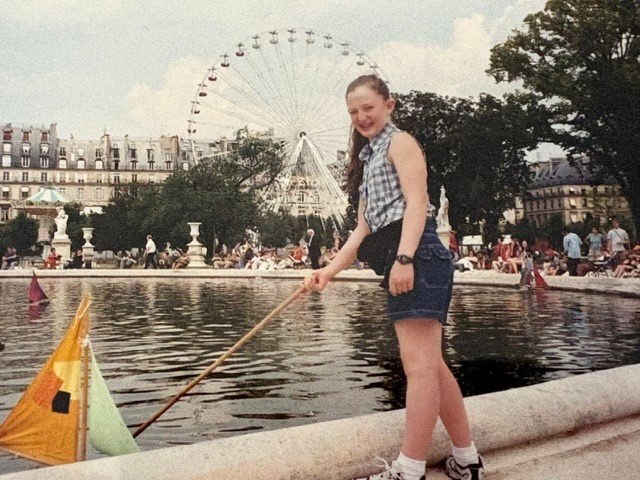
Sailboats of the Tuileries
At the edge of a basin in the Tuileries Garden, children launch small wooden sailboats and watch the wind carry them across the water. A long stick helps push a boat away from the stone rim or send it off again when it returns. This simple activity has been part of the garden’s life for […]

