The Florence Skyline
Seen from the hills south of the Arno River, Florence reveals itself not as a collection of separate monuments but as a complete historic city. Rows of closely packed buildings spread across the valley, their warm stone walls and red-tiled roofs creating a remarkably unified landscape. Rising above them are the towers, domes and church buildings that have defined the Florentine skyline for centuries.
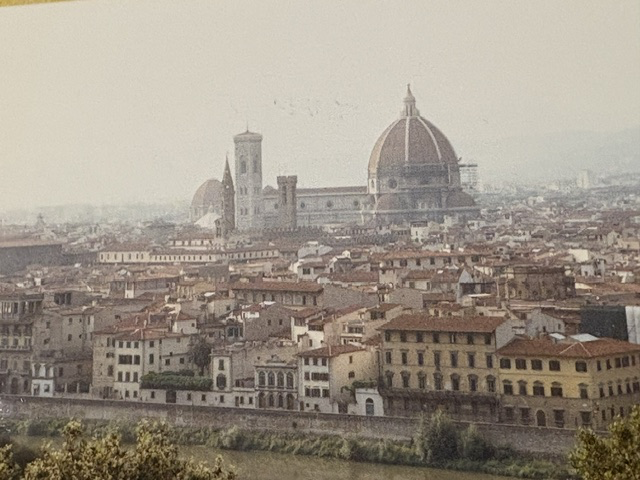
The Arno forms the southern edge of the historic center. Although the river itself is partly concealed by trees and embankments, its course can be followed across the foreground. Florence developed on both sides of the Arno, but the greatest concentration of its medieval and Renaissance landmarks stands on the northern bank. The river supported commerce and industry, yet it also divided the city and repeatedly threatened it with devastating floods.
Dominating the center is the Cathedral of Santa Maria del Fiore. Filippo Brunelleschi’s enormous terracotta-tiled dome rises far above the surrounding buildings, demonstrating how dramatically its construction altered the city’s appearance during the 15th century. The lantern at its summit provides the skyline’s highest visual point, making the cathedral recognizable from nearly every elevated approach to Florence.
Beside the cathedral stands Giotto’s Campanile, the square bell tower begun in the 14th century. From a distance, the tower and dome appear to form a single architectural composition, although the campanile is a separate structure. Together with the cathedral and the nearby Baptistery of San Giovanni, they form the religious heart of Florence.
Beyond these celebrated landmarks, the view reveals the character of the historic city itself. Florence is composed of narrow streets, enclosed courtyards, churches, former convents, fortified residences and palaces built close together over many centuries. Most buildings remain lower than the city’s principal religious and civic monuments, preserving the prominence of the towers and domes above the rooftops.
The panorama also demonstrates Florence’s relationship with its surrounding landscape. The city occupies the Arno Valley, enclosed by the gentle hills of Tuscany. This natural setting shaped its growth and created the elevated viewpoints from which the historic center can be seen in its entirety.
Florence became a center of banking, trade, politics, scholarship and artistic patronage, helping to shape the cultural movement now known as the Renaissance. Yet the view across the city shows that its importance is not represented by a single building. Its power lies in the relationship among the river, streets, rooftops, churches, palaces and surrounding hills.
The Historic Centre of Florence was added to the UNESCO World Heritage List in 1982. From above, it is easy to understand why the entire district received recognition. The skyline preserves the visual order of a city in which architecture, faith, commerce, civic ambition and artistic achievement developed together over generations.
Read More From Nancy
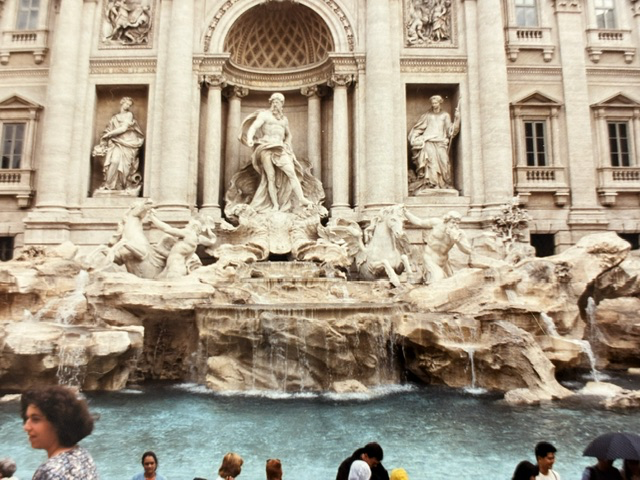
Trevi Fountain
During our first trip through Italy as a family, we visited and recorded many of the country’s most celebrated landmarks. Although we enjoy discovering fewer familiar places and the quieter stories found away from the usual tourist routes, there is also something meaningful about standing before a place recognized throughout the world. Being a tourist […]
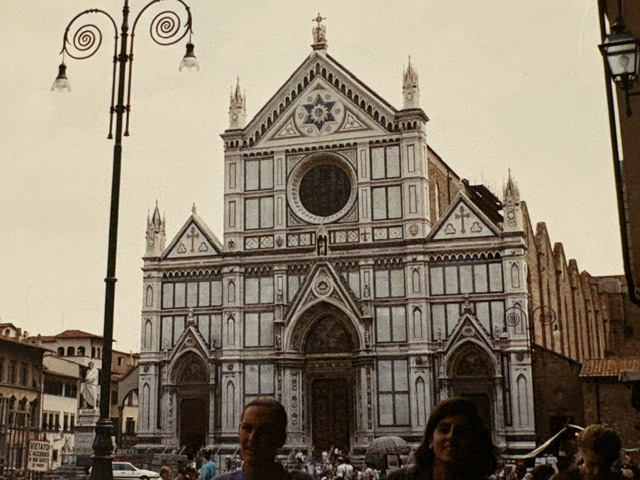
Giotto’s Campanile
Giotto’s Campanile rises beside the Cathedral of Santa Maria del Fiore as one of Florence’s most recognizable architectural landmarks. Although it forms part of the cathedral complex, the bell tower stands as a separate structure with its own design and construction history. Work began in 1334 under Giotto di Bondone, already celebrated as one of […]
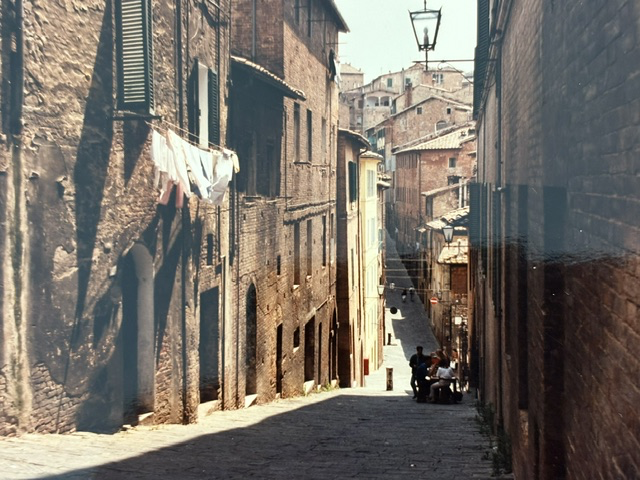
Siena
While traveling in Italy, there was one town I particularly wanted to visit: Siena. My uncle had been the pastor of St. Catherine of Siena Parish, and because of that connection, the name Siena had been familiar to me long before I ever walked its streets. I wanted to see the place that had given […]

