Giotto’s Campanile
Giotto’s Campanile rises beside the Cathedral of Santa Maria del Fiore as one of Florence’s most recognizable architectural landmarks. Although it forms part of the cathedral complex, the bell tower stands as a separate structure with its own design and construction history.
Work began in 1334 under Giotto di Bondone, already celebrated as one of the most influential painters of his time. Giotto designed a square tower covered with geometric patterns of white, green and red marble. He completed the lower portion before his death in 1337.
Andrea Pisano continued the project and added additional levels containing niches and sculptural decorations. Construction was interrupted by the Black Death in 1348 and later resumed under Francesco Talenti. Talenti completed the tower in 1359, modifying the upper levels with large, paired windows that gave the structure a lighter appearance as it rose.
The campanile reaches nearly 280 feet but has no spire. Talenti created a broad projecting terrace at the top, producing the flat summit visible today. Visitors can reach the terrace by climbing more than 400 interior steps.
The lower levels contain a remarkable series of sculpted reliefs illustrating humanity’s occupations, discoveries and intellectual development. Their subjects include agriculture, music, medicine, navigation, architecture and other forms of work and knowledge. Additional panels present biblical themes, while statues placed in niches represent prophets and important religious figures. Many of the original sculptures have been moved to the Museo dell’Opera del Duomo for protection and replaced by reproductions.
The tower’s bells regulated religious observances and marked important moments in the daily life of Florence. Its height also made it a visible expression of the city’s prosperity and artistic confidence. Giotto’s Campanile represents the combined work of several generations of Florentine artists and craftsmen. Its architecture, sculpture and marble decoration transformed a functional bell tower into one of the defining monuments of Florence.
Read More From Nancy
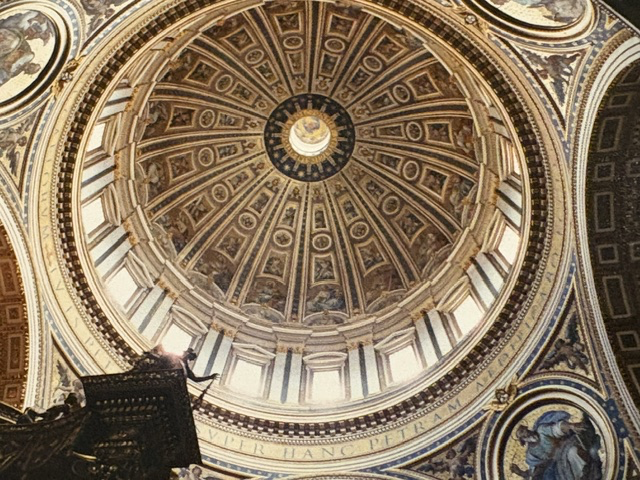
Dome of St. Peter’s Basilica
Looking upward inside St. Peter’s Basilica reveals one of the great architectural achievements of the Renaissance. The vast dome rises above the crossing of the church, directly over the papal altar and the traditional location of the tomb of Saint Peter. Michelangelo became the chief architect of St. Peter’s Basilica in 1546, when he was […]
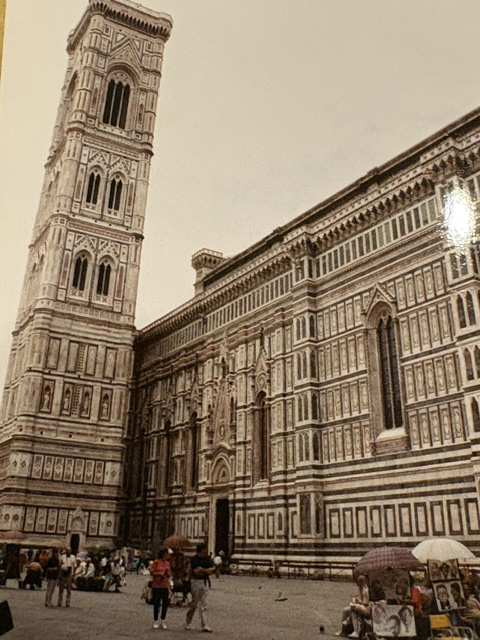
Cathedral of Santa Maria del Fiore
The Cathedral of Santa Maria del Fiore stands at the religious and historic center of Florence. Commonly known as the Duomo, it was created to replace the earlier Cathedral of Santa Reparata, which had become too small for the city’s growing population and increasing importance. Construction began in 1296 under architect Arnolfo di Cambio. The […]
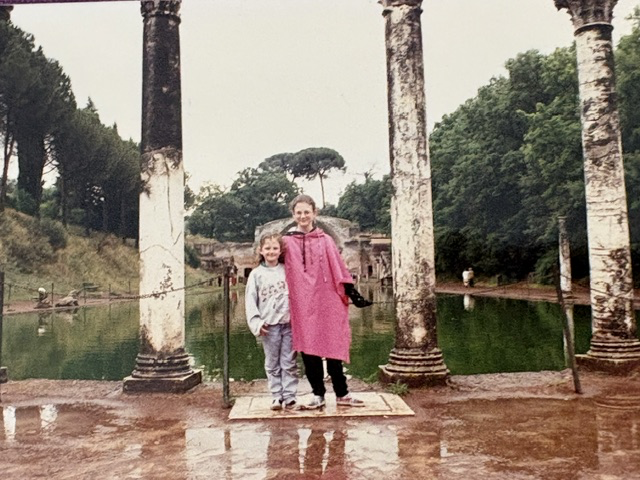
Hadrian’s Villa
Hadrian’s Villa, known in Italian as Villa Adriana, was constructed during the second century for the Roman emperor Hadrian. Located near Tivoli, approximately 18 miles east of Rome, the enormous estate served as an imperial residence and administrative retreat away from the crowded capital. Hadrian became emperor in A.D. 117 and ruled until his death in […]

