The Checkered Game of Life
A game board displayed at the Needham History Center & Museum turns the journey through life into a contest between opportunity, good conduct, and misfortune. Published by Milton Bradley in 1860, The Checkered Game of Life reveals what nineteenth-century Americans wanted their games to teach.
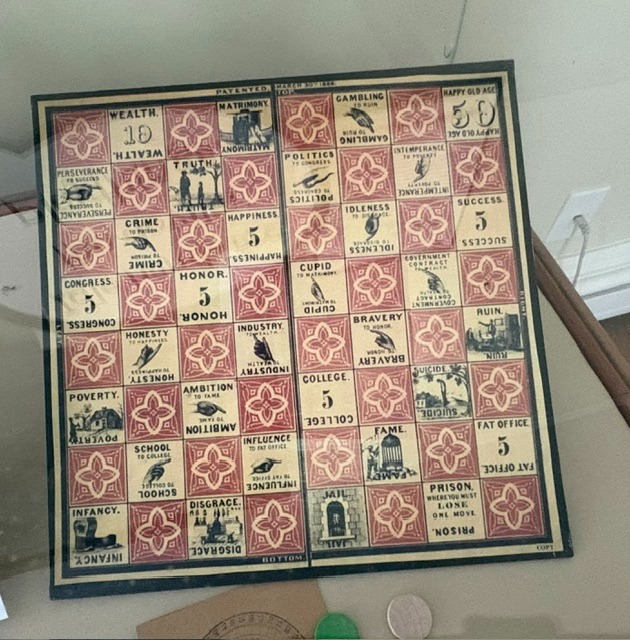
Players began at Infancy and worked toward Happy Old Age. Along the way, spaces labeled Honesty, Industry, and Bravery offered advancement, while Crime, Disgrace, and other hazards threatened their progress. A spinning device called a teetotum determined movement, introducing chance into a game that emphasized personal responsibility.
The board’s rewards combined moral approval with worldly achievement. Wealth, political office, and public recognition appeared alongside virtues such as perseverance and truth. Players encountered a miniature version of a society in which character, ambition, and financial success were closely connected.
This approach belonged to a tradition of games intended to instruct as well as entertain. Families could use play to reinforce expectations about behavior and the choices children would eventually face as adults.
The museum’s accompanying exhibit places the board within a broader change in American leisure. As childhood became less dominated by work and commercially manufactured games became more available, entertainment increasingly became a purpose in itself.
The Checkered Game of Life preserves an earlier balance between amusement and instruction. Its printed squares offer a glimpse of the lessons adults placed before children—and the kind of successful life they hoped those children would pursue.

Read More From Nancy
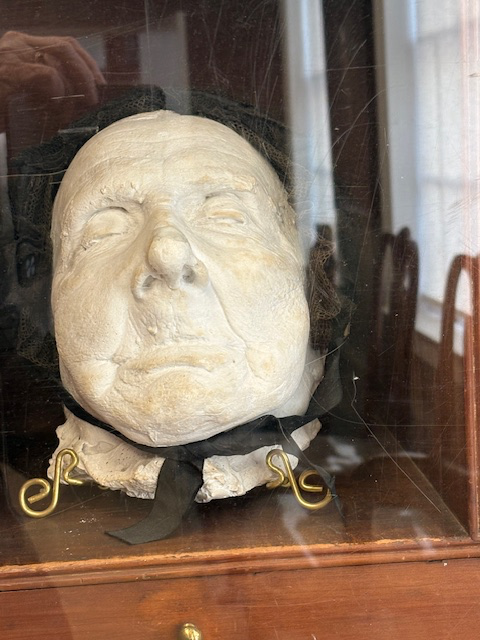
Death Mask
In the Dedham History Museum, is this death mask. An intimate impression of a person’s face taken shortly after death. The practice of creating death masks has a long history. In ancient Egypt, masks were place with the dead, though they were often idealized. In ancient Rome, families preserved wax masks of ancestors as a way to honor lineage […]
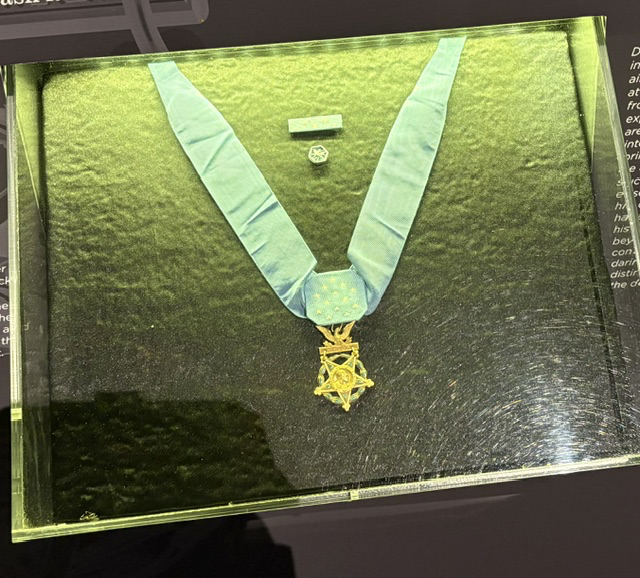
The Medal of Honor
Among all the artifacts displayed at the American Heritage Museum, few carry the emotional weight of the Medal of Honor. Unlike a tank, an aircraft, or a weapon, this small medal represents something that cannot be manufactured or engineered. It symbolizes extraordinary courage in the face of overwhelming danger. Established during the American Civil War […]
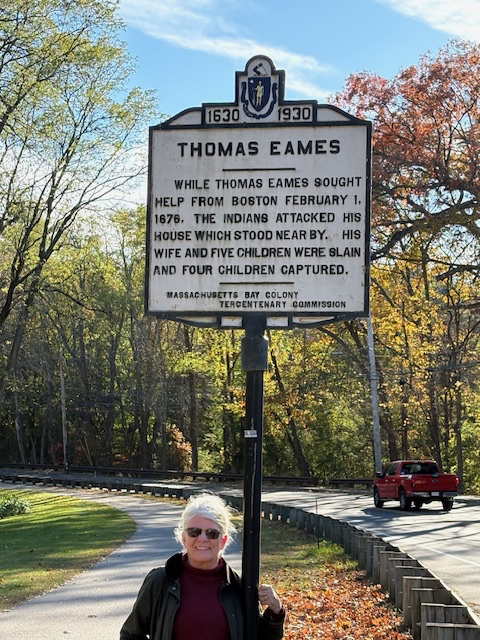
Thomas Eames Sign
Driving along a road in Framingham is this roadside sign that marks the location where the home of Thomas Eames once stood. There is no remaining structure, only the sign indicating that this was the site of a 17th century homestead. On February 1, 1676, during the King Philip’s War, the Eames house was attacked. At […]

