Aquinnah Cliffs
The beautiful clay cliffs at Aquinnah are one of the most striking landscapes on Martha’s Vineyard. Bands of red, yellow, brown, and pale clay rise above the beach, their colors changing with the light. Their history is closely connected to the Wampanoag people, whose ancestors have lived on the island they call Noepe for thousands of years. Aquinnah means “the shore or end of the island.”
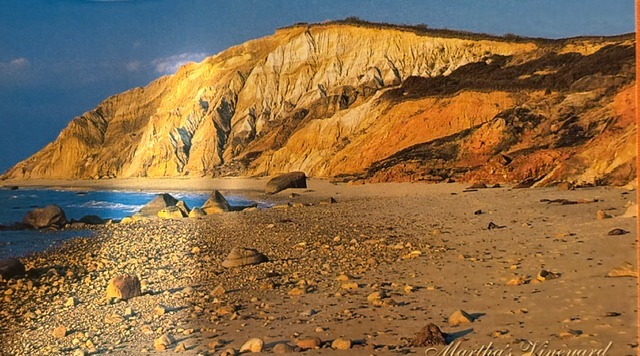
For the Aquinnah Wampanoag, these cliffs are sacred. Their traditional stories tell of Moshup, a benevolent giant who helped shape the island and taught the people how to fish and catch whales. From his home near the cliffs, Moshup would wade into the ocean, catch a whale, and prepare it for food. In this account, the whales’ blood stained the clay red, while the remains of his meals explain the bones and other materials found within the cliffs.
The town was formerly known as Gay Head, a name referring to the cliffs’ vivid colors. In 1998, it became Aquinnah, recognizing the community’s Wampanoag heritage. The Wampanoag Tribe of Gay Head (Aquinnah) continues to live on and care for its ancestral homeland, preserving its language, traditions, and cultural sites.
The cliffs remain part of that living heritage. Their protection preserves both a fragile coastal landscape and a place central to Wampanoag identity. The Tribe asks visitors to leave the clay undisturbed and refrain from climbing the cliffs, allowing future generations to experience this remarkable stretch of shoreline.
Read More From Nancy
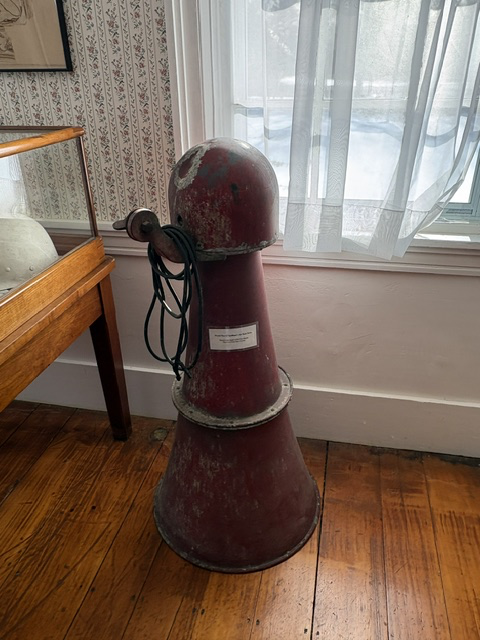
World War II Air Raid Siren
While visiting the Needham History Center and Museum, one artifact caught my attention. Standing quietly in the corner was a World War II air raid siren that once occupied the steeple of the First Baptist Church on Great Plain Avenue. It is not a large or ornate object, yet it represents a time when communities […]
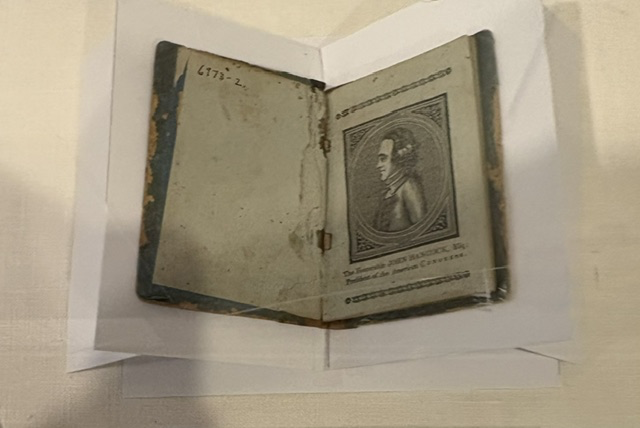
A 1777 Child’s Primer in Revolutionary
Inside Buckman Tavern in Lexington, I came across this remarkably small book. It is a children’s primer dating from 1777, only two years after the fighting at Lexington and Concord and just one year after the Declaration of Independence. On the first page, John Hancock is identified as a leader of the new nation. That […]
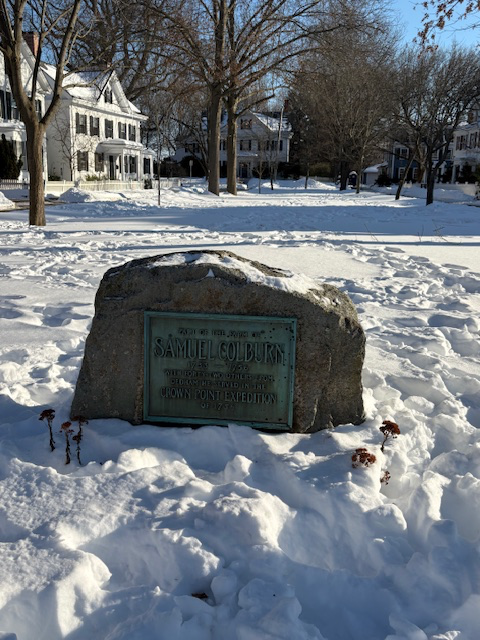
Samuel Colburn
As I was walking through downtown Dedham, I came across a simple rock monument honoring Samuel Colburn. I must admit I was not aware of the Crown Point Expedition. That unfamiliar name immediately caught my attention. I was excited to take a photo and look up more information later. There is something satisfying about discovering a small marker and realizing it opens […]

