The Bulfinch Building
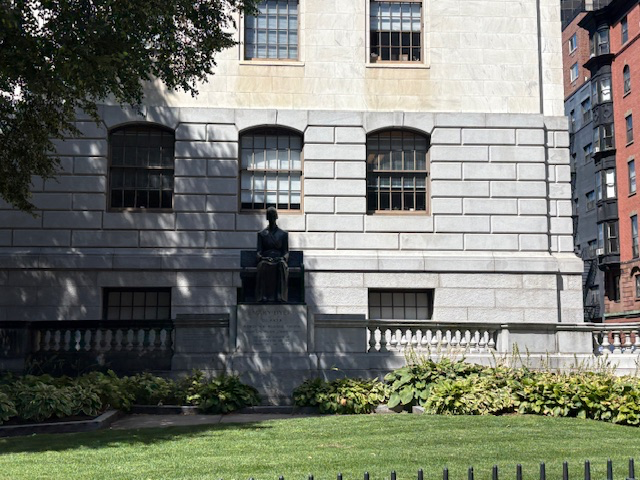
Standing within the enormous Massachusetts General Hospital campus is a building that looks almost modest compared with the medical complex that now surrounds it. The Bulfinch Building is the original home of Massachusetts General Hospital and has stood here for more than two centuries. Its classical façade, columned portico and triangular pediment provide a striking reminder of what the hospital looked like when it first opened.
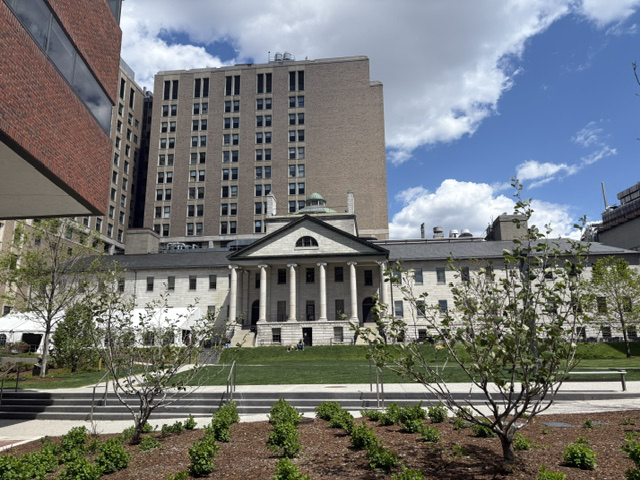
Massachusetts General Hospital was chartered in 1811, created to provide medical care for the sick and poor of Boston. At the time, hospitals as we understand them today were still relatively uncommon in the United States. The new institution was modeled in part on established European hospitals and represented an important step in the development of organized medical care in Boston.
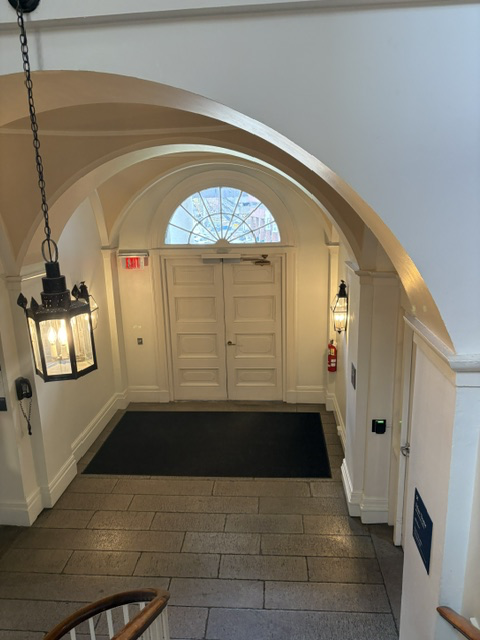
The hospital’s first building was designed by Charles Bulfinch, one of the most important architects of early America. Bulfinch had already helped shape the appearance of Boston through buildings that included the Massachusetts State House, and he later became involved in the design and construction of the United States Capitol in Washington. For the new hospital, he created a restrained but dignified neoclassical building that reflected the importance of the institution being established within it.
The building opened to patients in 1821. Its original design consisted of the central portion and wings, with the prominent entrance portico giving the hospital an appearance more reminiscent of a civic institution or grand country house than the large medical facilities we know today. Over the years, the structure was expanded and altered as Mass General grew, but its historic central character was preserved.
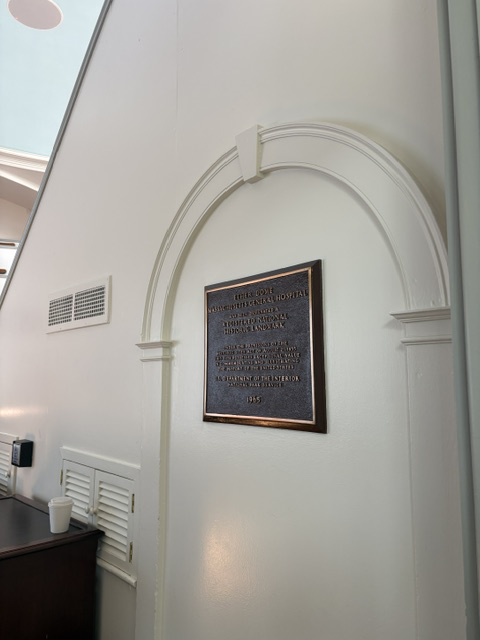
The Bulfinch Building is also home to one of the most significant rooms in American medical history. On October 16, 1846, a public demonstration of ether anesthesia took place in its surgical amphitheater. Dentist William T. G. Morton administered ether while surgeon John Collins Warren removed a tumor from the neck of patient Gilbert Abbott. The success of that operation helped demonstrate that surgery could be performed without the terrible pain that had previously been considered unavoidable. The room became known as the Ether Dome and remains preserved within the building.
The Bulfinch Building has survived while Massachusetts General Hospital has grown almost beyond recognition around it. What began with this single hospital building developed into a vast medical and research institution composed of buildings constructed across many generations.
That contrast is what caught my attention during my first visit to Mass General. Surrounded by the height and scale of a modern medical center, the original hospital still occupies its place at the heart of the campus. Its architecture immediately distinguishes it from everything around it.
More than two hundred years after its doors opened, the Bulfinch Building is more than an architectural survivor. It is the place where Massachusetts General Hospital began and a building within which an important chapter in the history of modern medicine was written.
Read More From Nancy

The Custom House Tower
During our walk around Boston, the Custom House Tower rose above the surrounding buildings, its pointed roof making it recognizable from a distance. This landmark connects two periods of the city’s history: the nineteenth-century seaport and the early twentieth-century skyline. The original Custom House opened in 1847. Designed by architect Ammi Burnham Young, its Greek […]
Bunker Hill Monument
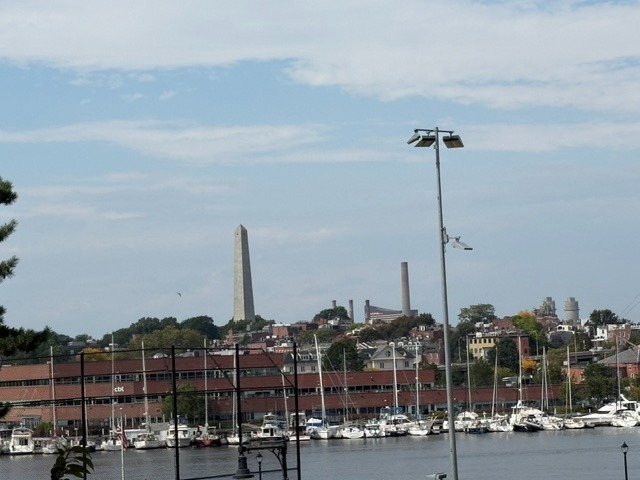
Looking across the water from Boston’s North End, we could see the Bunker Hill Monument rising above Charlestown. Its granite obelisk marks a battlefield that helped demonstrate the determination of the colonial forces during the opening months of the American Revolution. Despite its name, the monument stands on Breed’s Hill, where much of the Battle […]
Armenian Heritage Park
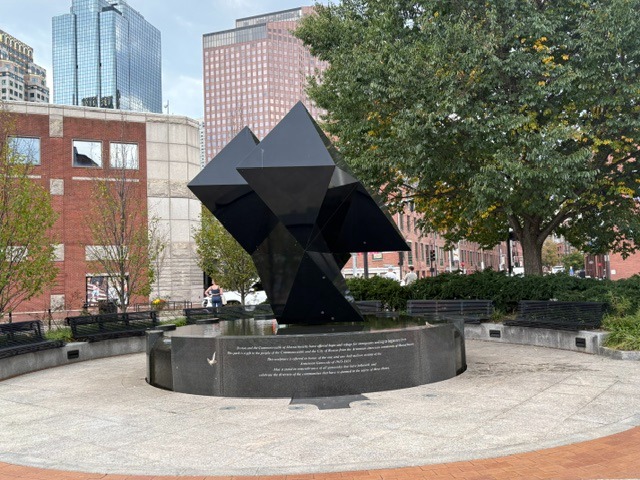
During our walk around Boston, we stopped at Armenian Heritage Park on the Rose Kennedy Greenway. Its angular sculpture offers a different kind of memorial: one whose form changes while its purpose remains rooted in remembrance. The sculpture honors the lives lost during the Armenian Genocide of 1915–1923 and the genocides that followed. The park […]

