The 1492 Edict of Expulsion
This document records the order that brought Girona’s centuries-old Jewish community to an end. Issued by Ferdinand and Isabella on March 31, 1492, the Edict of Expulsion required practicing Jews to leave the kingdoms under their rule unless they accepted baptism and converted to Christianity.
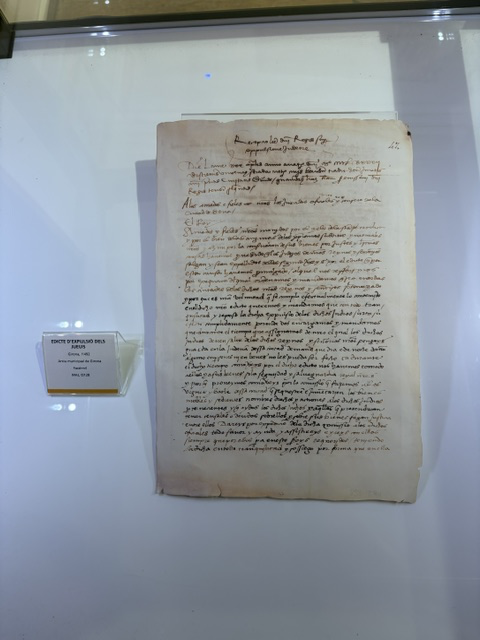
The edict was closely connected to the Spanish Inquisition and its scrutiny of conversos—Jews who had converted to Christianity. Church and royal authorities claimed that the presence of practicing Jews might encourage converts to retain or return to Jewish beliefs and customs. Their solution was to remove the remaining openly Jewish population.
Jews were given only a few months to settle their affairs and leave. They were forced to sell homes, businesses and possessions within a limited period, often under unfavorable conditions. They could take some belongings with them, but restrictions prevented the removal of gold, silver, coined money, weapons and horses.
By 1492, Girona’s Jewish community had already been greatly reduced by decades of violence, forced conversions and increasing restrictions. The attacks of 1391 had resulted in deaths, conversions and departures, while those who remained were gradually confined to a smaller section of the Call.
Some of Girona’s remaining Jews converted rather than abandon the city. Others left, joining the wider Sephardic diaspora that established new communities in North Africa, the Ottoman Empire, Italy and other parts of Europe and the Mediterranean.
Girona’s final synagogue was sold in July 1492, shortly before the deadline for departure. Homes changed ownership, religious objects were removed and the Jewish Quarter ceased to function as a living Jewish community.
The document displayed in the Museum of Jewish History preserves the official language behind that transformation. Its handwritten lines represent more than a royal decree: they mark the legal ending of more than six centuries of documented Jewish life in Girona.
Read More From Nancy
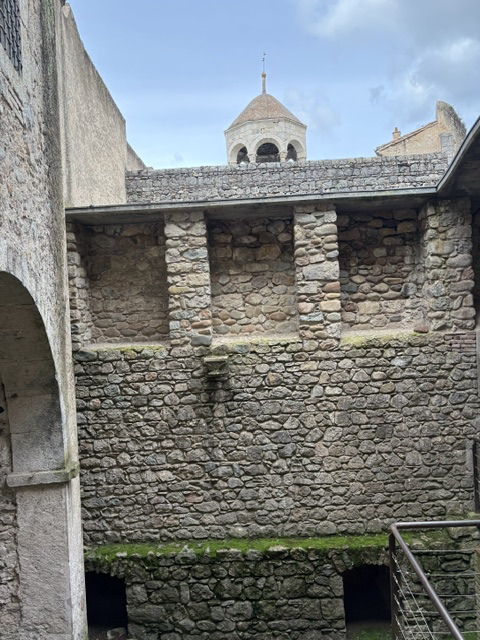
The Arab Baths
Hidden among the stone buildings of Girona’s old quarter, the Arab Baths reveal very little from the outside. Only the octagonal lantern rising above the roof suggests that something unusual lies within. The building appears ancient and austere, its weathered walls blending almost seamlessly with the medieval city surrounding it. Despite their name, the baths […]
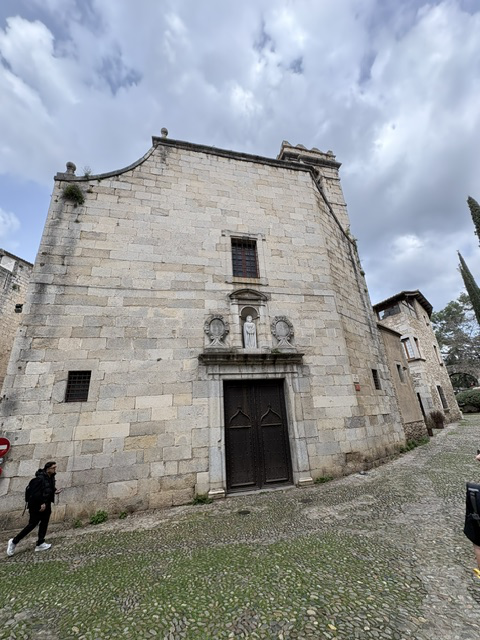
The Church of Sant Lluc
Walking through the stone-paved streets of Girona’s old quarter, we came upon the Church of Sant Lluc. Its broad façade fills one side of the narrow street, yet its simple design allows it to blend naturally with the surrounding stone buildings. There is little ornamentation beyond the entrance, a small statue set within a niche […]
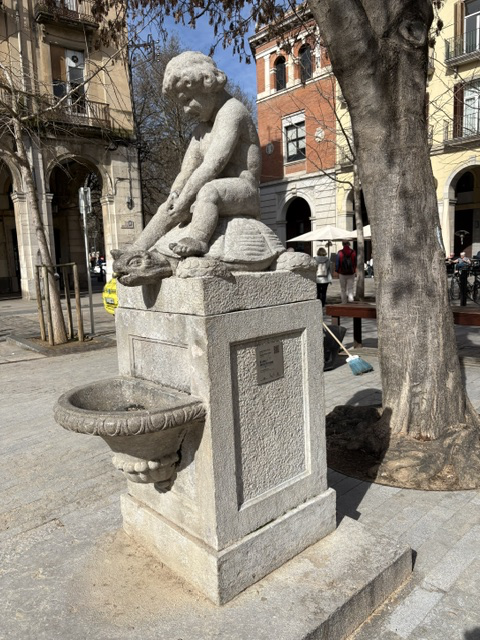
The Boy and Turtle Fountain
While exploring Plaça de la Independència in Girona, we noticed this small and playful fountain beneath the trees. Officially known as the Font del Nen de la Tortuga, it depicts a young boy seated in an unusual position on the back of a sea turtle. Water originally flowed from the turtle’s mouth into the decorative […]

