The Monument del Lleó Girona
While walking through Girona, we noticed this tall column rising above a surviving section of the city’s old fortifications. Known as the Monument del Lleó, or Lion Monument, it stands in Plaça Calvet i Rubalcaba beside the Mercat del Lleó.
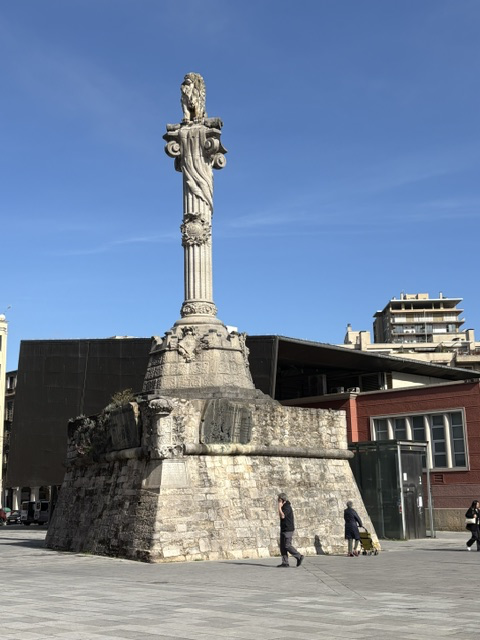
The monument honors the soldiers and civilians who defended Girona during the Napoleonic sieges of 1808 and 1809. Its location is especially appropriate because the column stands upon the remains of the Baluard de Sant Francesc, the southernmost of the bastions that once protected the Mercadal section of the city.
A tall, fluted column rises from the stone bastion and is crowned by a lion resting one paw upon a cannon. The lion represents courage and resistance. Plaques and sculpted reliefs around the base commemorate the artillerymen, militia members and military officers who participated in Girona’s defense.
The monument was inaugurated on November 7, 1909, during events marking the centennial of the sieges. The original design was created by Joan Oliver de Bezzi, with sculptural work associated with Josep Campeny. The monument was later modified, and its present form dates from 1915.
Read More From Nancy
War of the Spanish Succession
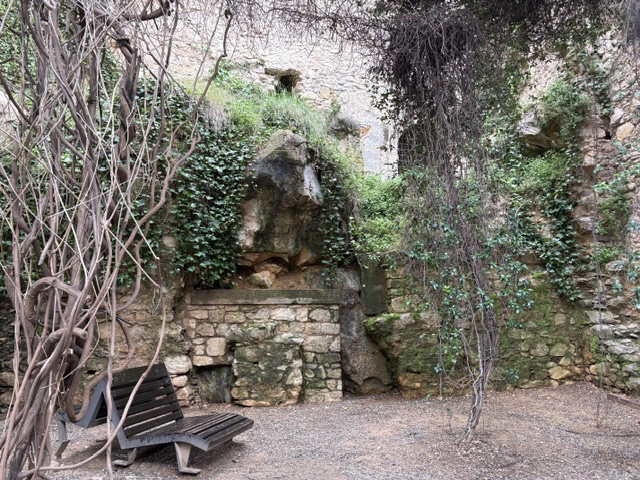
Within a quiet, overgrown corner of Girona, an informational panel recalls a conflict that once placed the city at the center of a struggle for the Spanish throne. The War of the Spanish Succession began after King Charles II died without an heir in 1700. European powers divided their support between two claimants: Philip of […]
Passeig Arqueològic
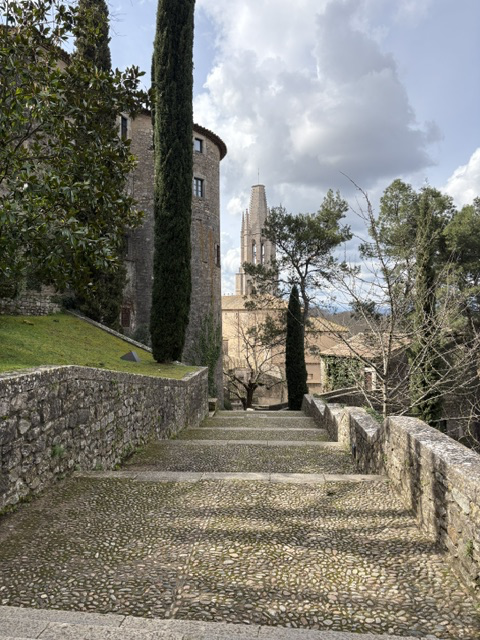
The Passeig Arqueològic follows the northeastern edge of Girona’s historic center, winding among sections of the city’s ancient walls, medieval towers and religious buildings. Stone stairways, terraces and pathways pass beneath tall cypress trees, creating a peaceful transition between the densely built Old Quarter and the greener landscape of the Galligants Valley. Although the walkway […]
The 1492 Edict of Expulsion
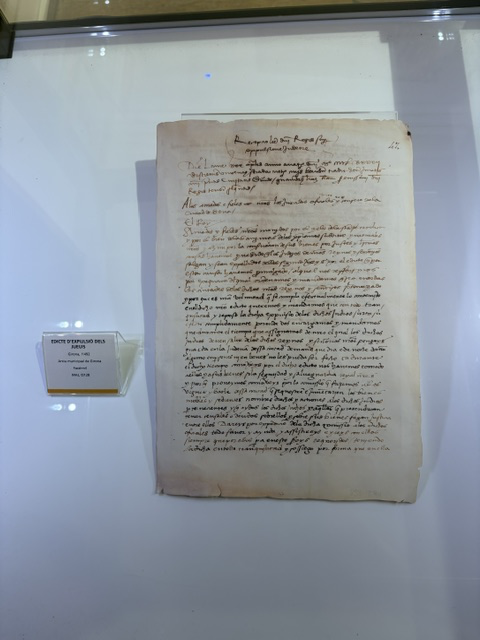
This document records the order that brought Girona’s centuries-old Jewish community to an end. Issued by Ferdinand and Isabella on March 31, 1492, the Edict of Expulsion required practicing Jews to leave the kingdoms under their rule unless they accepted baptism and converted to Christianity. The edict was closely connected to the Spanish Inquisition and […]

