War of the Spanish Succession
Within a quiet, overgrown corner of Girona, an informational panel recalls a conflict that once placed the city at the center of a struggle for the Spanish throne. The War of the Spanish Succession began after King Charles II died without an heir in 1700. European powers divided their support between two claimants: Philip of Anjou, the grandson of France’s Louis XIV, and Archduke Charles of Austria.
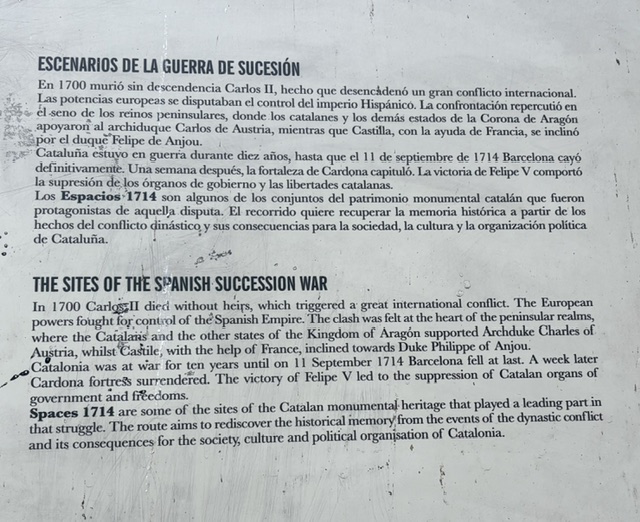
Catalonia supported Archduke Charles, while Castile largely supported Philip, who became Philip V. Girona’s location near the French border made the fortified city strategically important. In December 1710, approximately 19,000 French and Bourbon troops commanded by the Duke of Noailles surrounded Girona. The city endured a winter siege before its Habsburg defenders surrendered on January 25, 1711.
The siege caused extensive damage and hardship for Girona’s population. Bourbon control brought changes that reached beyond the battlefield. Following the eventual defeat of the Catalan cause, Philip V imposed the Nueva Planta decrees, which abolished Catalonia’s traditional governing institutions and brought the municipal government under greater centralized control.
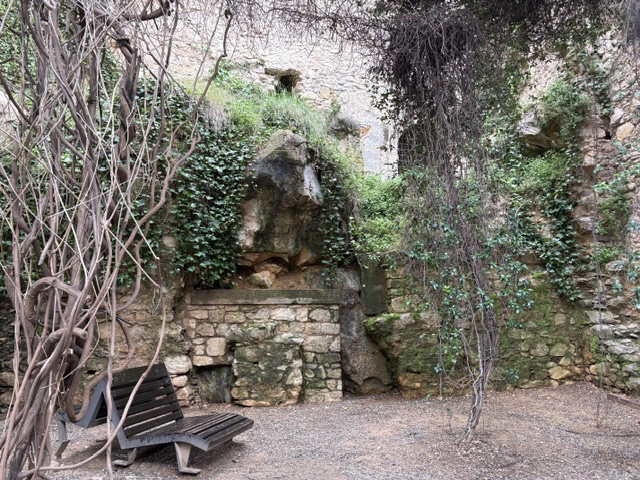
Girona is now included among the “Spaces of 1714,” a network of places connected to the War of the Spanish Succession. The marker and panel place this quiet corner of the city within a much larger story—one in which a dispute over a crown reshaped Catalonia’s government, institutions and relationship with the Spanish monarchy.
Read More From Nancy
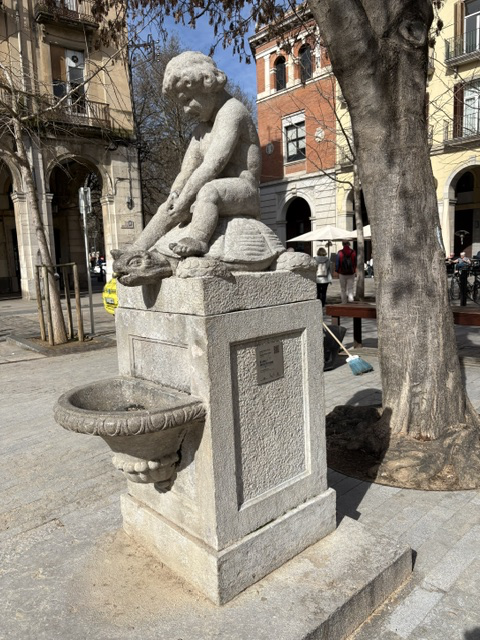
The Boy and Turtle Fountain
While exploring Plaça de la Independència in Girona, we noticed this small and playful fountain beneath the trees. Officially known as the Font del Nen de la Tortuga, it depicts a young boy seated in an unusual position on the back of a sea turtle. Water originally flowed from the turtle’s mouth into the decorative […]
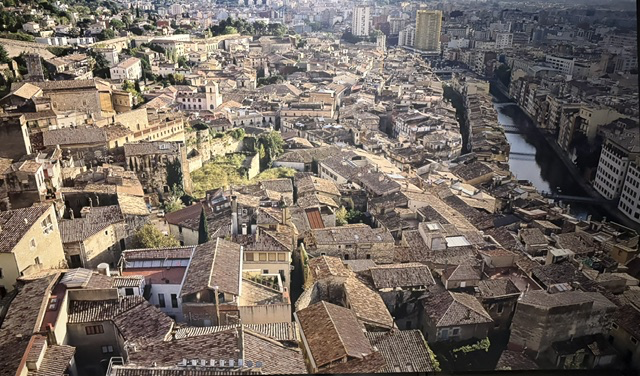
A Neighborhood Within the City
We traveled to Girona specifically to explore its Jewish Quarter, known in Catalan as the Call. Although we had seen photographs of its narrow streets and stone passageways, the aerial view in the Museum of Jewish History helped us understand the neighborhood in a different way. From above, the Call appears woven into the densely […]
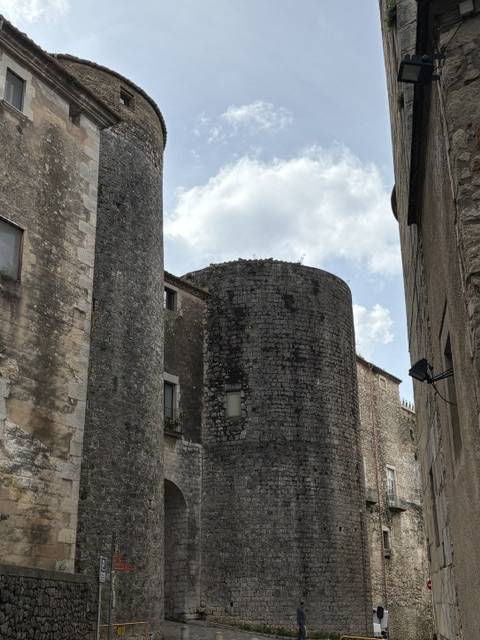
The Portal de Sobreportes
As we walked through Girona’s old quarter, two enormous circular towers rose above the narrow cobblestone street. Their height, thickness and close position immediately suggested that this was once more than an ordinary passageway. These towers guarded the Portal de Sobreportes, one of the principal entrances into the historic city. The gateway originated as the […]

