Caryl Farm Museum
The Caryl Farm Museum, also known as the Benjamin Caryl House, was built around 1777 for the Reverend Benjamin Caryl. At the time, the area was still Springfield Parish, part of the much larger town of Dedham. It later became the District of Dover in 1784 and was incorporated as a separate town in 1836.
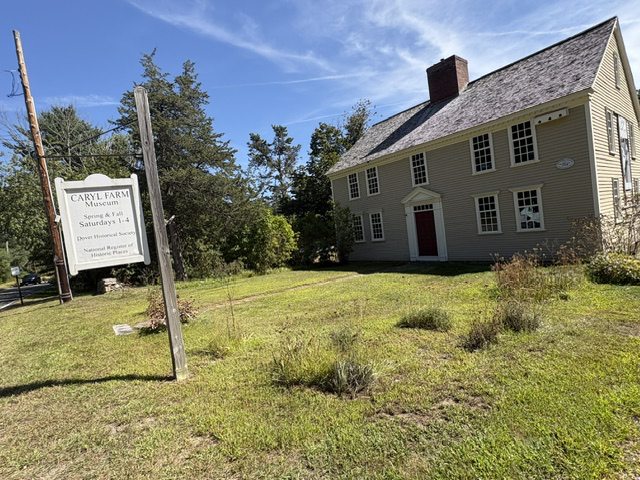
Benjamin Caryl was the first minister of Springfield Parish and served the community for approximately fifty years. Like many rural ministers of his time, his responsibilities extended beyond the meetinghouse. He maintained a working farm and prepared young men for college, making his home a place of agriculture, education and religious life.
Caryl’s surviving sermons also reflect the political changes taking place within the colonies. In 1766, he expressed gratitude for British government and the king. By March 1776, as the conflict moved toward independence, his words supported the colonial cause. His changing position reflected the difficult decisions faced by ministers and their congregations during the American Revolution.
His son, Dr. George Caryl, became Dover’s first physician and practiced from the family home. Members of the Caryl family continued to occupy the property until 1897, preserving a connection between the house and several generations of the same family.
The town acquired the property in 1920, and the Dover Historical Society now maintains it as a museum. Its restored rooms, period furnishings, kitchen fireplace, writing areas and weaving displays recreate the domestic and working life of the Caryl family during the 1790s. The house was added to the National Register of Historic Places in 2000.
Within this one household, several parts of early Dover’s history come together. The home and farm served a minister, a teacher and the town’s first physician, connecting the daily life of the Caryl family to the development of the surrounding community.
Read More
Read More From Nancy
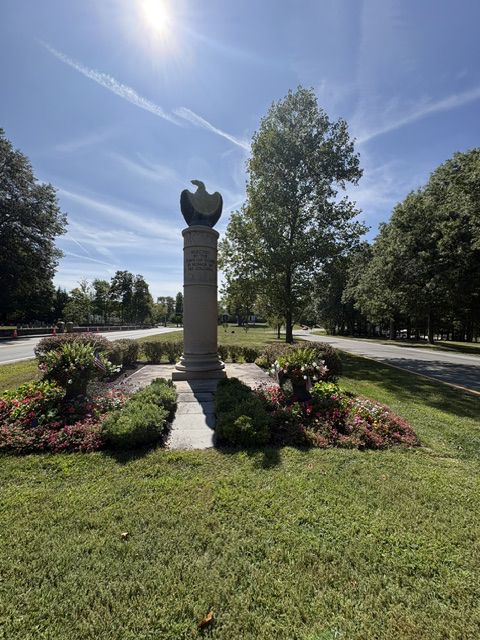
Dover Soldiers’ Monument
The idea of creating a soldiers’ monument in Dover began soon after the Civil War. As early as 1875, Civil War veteran Ansel K. Tisdale advocated for a permanent memorial. The effort continued through the work of other residents, and a portion of the town’s annual Memorial Day appropriation was eventually set aside to establish […]
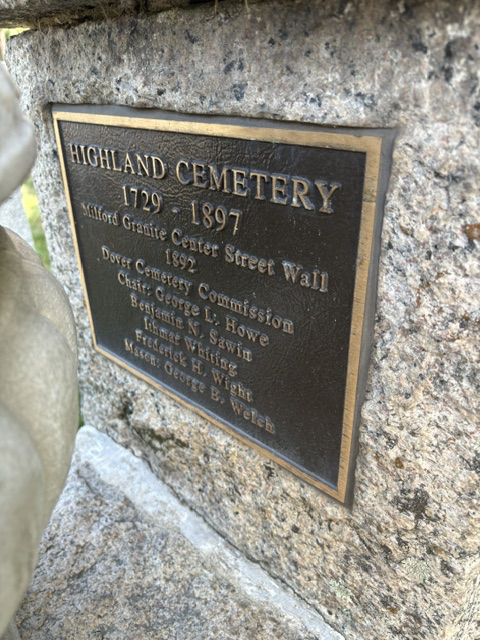
Highland Cemetery
Highland Cemetery began as a small colonial burying ground on land belonging to Nathaniel Chickering. Dating to 1729, it was established when Dover was still part of Dedham and consisted of scattered farms connected by narrow roads and footpaths. Chickering later formally gave the original tract to the community, ensuring that local families would have […]
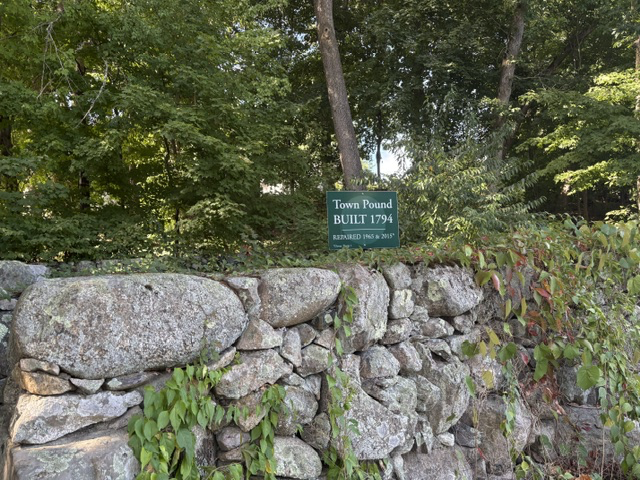
Town Pound
Dover’s Town Pound was built in 1794, when farming shaped nearly every part of community life. Families depended upon cattle, pigs, sheep and other animals for food, labor and income. Before the pound was constructed, cattle and swine were generally permitted to roam, creating problems when they wandered onto neighboring farms or damaged fields and […]

