Postal de Sitges: A Camera by the Sea
An oversized metal camera stands above the Mediterranean, its tripod planted firmly on the promenade. With circular details on its body and a star framed within its upper opening, it invites a closer look. This is Postal de Sitges, a sculpture by photographer and artist Joan Iriarte i Ibarz. Its camera form introduces a different chapter of the town’s cultural history: the people who helped make Sitges a place for photography and cinema.
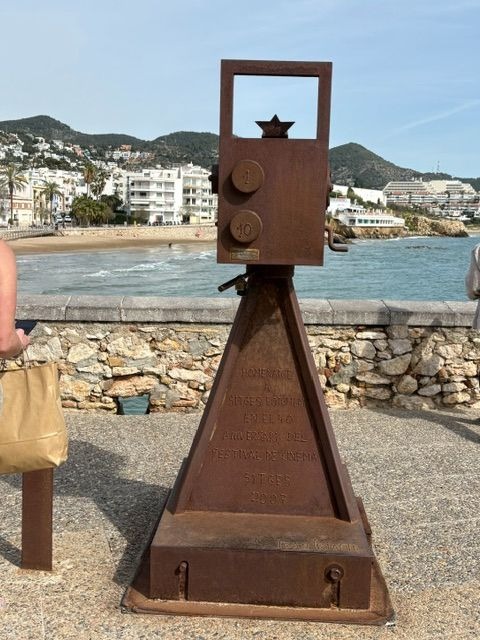
The inscription dedicates the work to Sitges Fotofilm on the occasion of the film festival’s fortieth edition in 2007. That local organization played a role in the festival’s beginnings, linking the monument to the community enthusiasm behind an event that would gain international recognition.
The festival began in 1968 as the International Week of Fantastic and Horror Film. Its focus gave Sitges a distinctive place in cinema, creating a gathering point for films exploring imagined worlds, suspense, and the supernatural. Over time, it developed into an international meeting place for filmmakers and audiences drawn to those genres.
The 2007 edition connected that history with another cinematic milestone: the twenty-fifth anniversary of Blade Runner. Actor Rutger Hauer came to Sitges to present the film’s final cut and receive a Time Machine Award. The anniversary celebrated by the waterfront sculpture therefore belonged to a festival already bringing major figures and influential films into the town.
The title, Postal de Sitges—“Postcard of Sitges”—fits its coastal setting. A camera selects a view and turns it into an image that can travel elsewhere. Here, the sculpture stands against the sea and the town’s waterfront, suggesting that familiar act of capturing a place to remember or share.
Beyond its playful appearance, the monument acknowledges the local people behind Sitges’s screen culture. It gives photography and film a lasting presence outdoors, where a passerby can encounter their story without entering a cinema.
Read More From Nancy
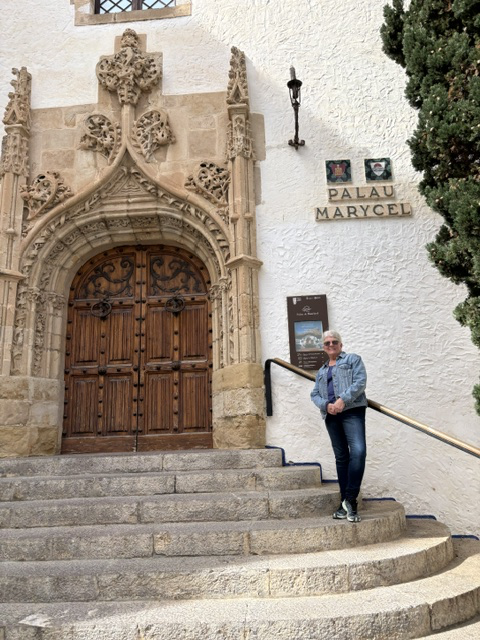
Palau Maricel
Walking through the historic streets of Sitges, Spain, we came upon one of the town’s architectural treasures: Palau Maricel. Standing before its beautifully carved Gothic doorway, it is easy to imagine that this is a medieval palace. It is the product of an extraordinary vision that brought together centuries of Spanish architectural traditions to create […]
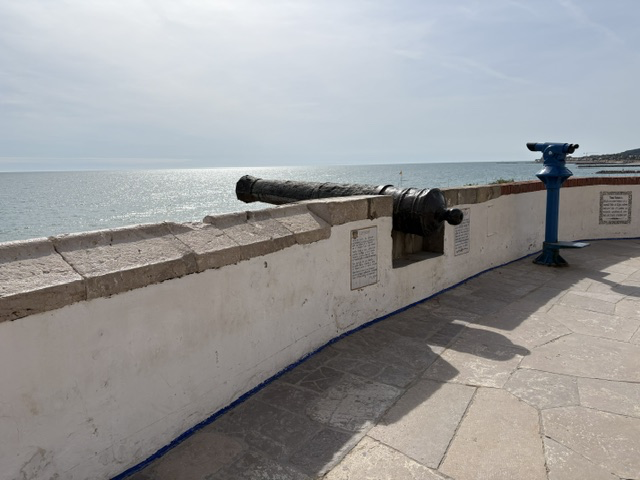
The Cannons of Sitges
Standing beside these weathered cannons on the Baluard overlooking the Mediterranean, it is easy to think of them simply as historic decorations. Visitors stop to admire the sea, photograph the coastline, and enjoy the peaceful atmosphere of Sitges. Yet these cannons were once an essential part of the town’s defense, guarding a community whose prosperity […]
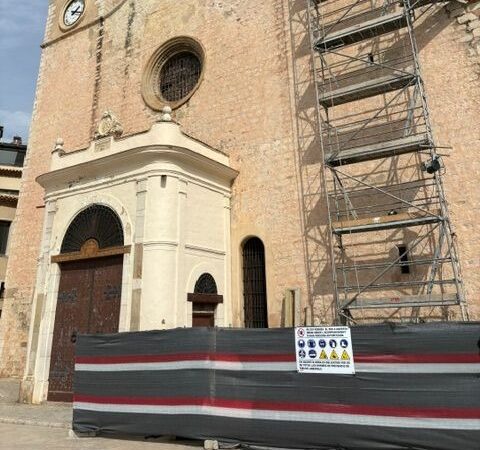
Sant Bartomeu i Santa Tecla
Rising above the Mediterranean at the edge of Sitges, the Church of Sant Bartomeu i Santa Tecla has become the symbol of this historic coastal town. Its stone walls and towers stand on La Punta, a rocky promontory that has looked over the sea and the town below for centuries. From this location, the church […]

