The Holstentor
While traveling through northern Germany, Marty and I visited the historic city of Lübeck, where one building immediately captures every visitor’s attention: the Holstentor. With its twin towers, red brick construction, and distinctive silhouette, it has become the enduring symbol of the city.
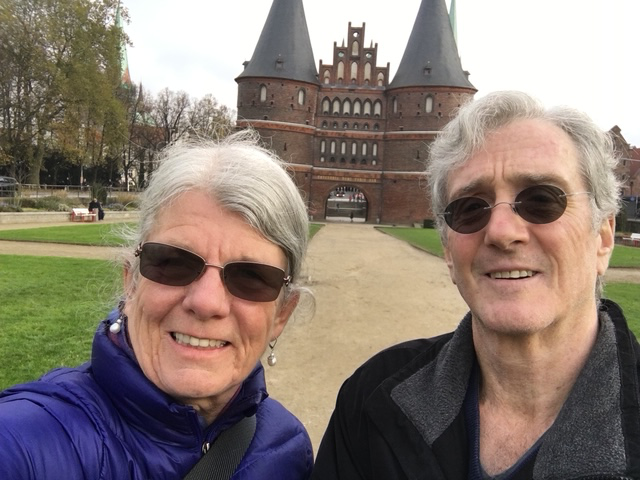
Construction of the Holstentor began in 1464 and was completed in 1478 as part of Lübeck’s medieval fortifications. It served as the western entrance to the city, protecting one of the most prosperous trading centers in Europe. Built of brick in the Gothic style characteristic of northern Germany, the gate was designed to be both an imposing defensive structure and a visible demonstration of the city’s wealth and importance.
During the Middle Ages, Lübeck was known as the “Queen of the Hanseatic League.” From here, merchants directed a vast trading network that connected more than 200 cities across northern Europe. Ships carried salt, grain, timber, furs, fish, cloth, and countless other goods through Lübeck’s harbor, making the city one of Europe’s leading commercial centers. Every merchant, sailor, and traveler approaching from the west passed beneath the Holstentor.
One of the gate’s most famous features is the Latin inscription above the city-facing entrance: Concordia domi, foris pax—”Harmony within, peace without.” The words reflected Lübeck’s desire for unity among its citizens while maintaining peaceful relations with the outside world, an appropriate message for a city whose prosperity depended upon trade.
The Holstentor narrowly escaped demolition during the nineteenth century when many medieval walls and gates across Europe were removed to accommodate expanding cities. Fortunately, public support saved the structure, and extensive restoration preserved it for future generations. Today, it houses a museum interpreting the history of Lübeck and the Hanseatic League and stands as part of Lübeck’s UNESCO World Heritage Old Town.
More than a medieval city gate, it represents the commercial power, architectural achievement, and international influence of one of Europe’s greatest trading cities. For nearly six centuries, it has welcomed visitors while preserving the story of a city that helped shape the economic history of northern Europe.
Read More
Read More From Nancy
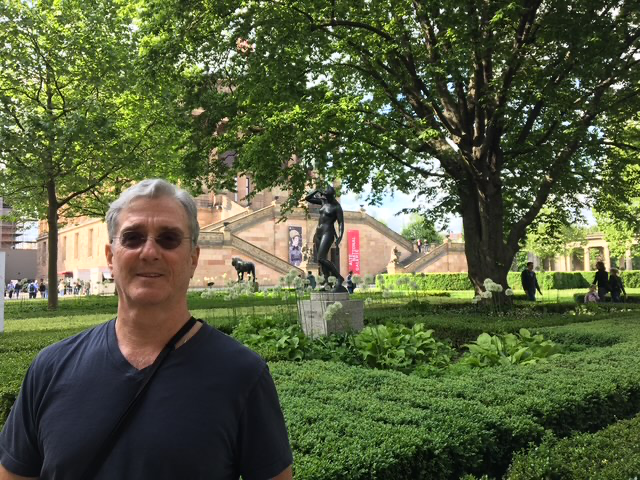
The Kolonnadenhof, Museum Island
On our trip to Berlin, we spent time exploring the museums on Museum Island. There was so much to see inside that it would have been easy to hurry from one collection to the next. Instead, we found ourselves lingering in the Kolonnadenhof, the garden shared by the Alte Nationalgalerie, the Neues Museum, and the Pergamon Museum. It gave […]
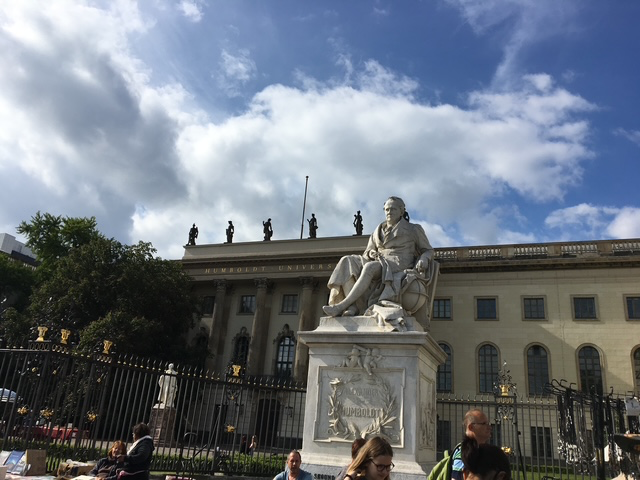
Alexander von Humboldt
While walking along Unter den Linden in Berlin, we came across this imposing statue in front of Humboldt University. It honors Alexander von Humboldt, one of the great scientists, explorers and thinkers of the 19th century. His name was familiar to me, but seeing his monument in front of the university that bears the Humboldt […]
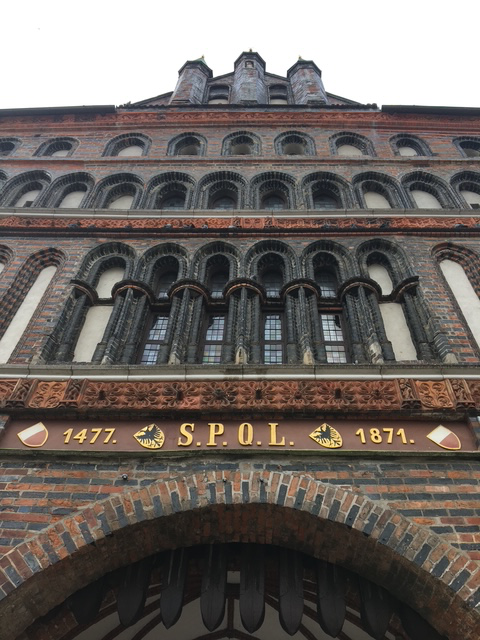
S.P.Q.L. – The Senate and People of Lübeck
While standing beneath the Holstentor in Lübeck, one detail caught my attention. Above the entrance are the letters S.P.Q.L., an inscription modeled after the famous Roman initials S.P.Q.R., meaning “The Senate and People of Rome.” In Lübeck, the letters stand for Senatus Populusque Lubecensis—”The Senate and People of Lübeck.” The inscription reflects the city’s pride in its long […]

