Peace Field
There are some historic homes that you visit once, and there are others that continue to draw you back. For me, the Adams National Historical Park in Quincy is one of those places. Living in Massachusetts, we have had the opportunity to visit many times, and each visit reveals something new about one of America’s most remarkable families.
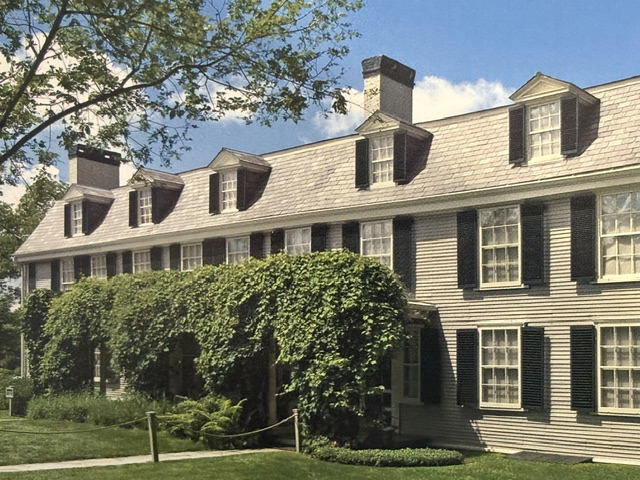
Known simply as “Peace Field“, this stately home became the residence of four generations of the Adams family. Although built in 1731, it is forever associated with John and Abigail Adams, who purchased it in 1788 after years of public service and made it their permanent home. It was here that John Adams spent the final years of his life, surrounded by his family, his books, and the quiet routines of retirement. The house later became home to President John Quincy Adams, historian Charles Francis Adams, and author Brooks Adams, making it one of the most extraordinary family homes in American history.
Walking through the rooms, I always find myself thinking about the conversations that must have taken place within these walls. John and Abigail exchanged thousands of letters during their marriage, revealing a partnership built on mutual respect, intellect, and an unwavering commitment to the new nation. Those same qualities shaped the generations that followed, producing diplomats, writers, historians, and another president.
One of the most memorable parts of every visit is stepping into John Adams’ library. The shelves are filled with volumes that reflect a lifetime devoted to learning. It is easy to understand why Adams believed that an informed citizenry was essential to preserving liberty. Standing among those books, I am reminded that many of the ideas that shaped the early republic were not developed only in legislative halls but also in the quiet study of a man who never stopped reading, thinking, and writing.
Yet it is the final chapter of John Adams’ life that gives this house its deepest meaning. On July 4, 1826, exactly fifty years after the signing of the Declaration of Independence, Adams died here at Peace field at the age of ninety. According to family tradition, his last words were, “Thomas Jefferson survives,” unaware that his friend, political rival, and fellow founder had died earlier that very day at Monticello. It was an extraordinary coincidence that seemed to symbolize the closing of the Revolutionary generation.
Perhaps that is why this house continues to draw me back. It is not simply the home of two presidents or a beautifully preserved eighteenth-century residence. It is a place where an American family lived through the birth of a nation, where generations devoted themselves to public service, and where one of our Founding Fathers completed a life that helped shape the United States. Standing on these grounds, it is easy to appreciate that history is not only preserved in monuments and museums. Sometimes it is found in the home where a family lived, learned, loved, and quietly changed the course of a nation.
Read More From Nancy
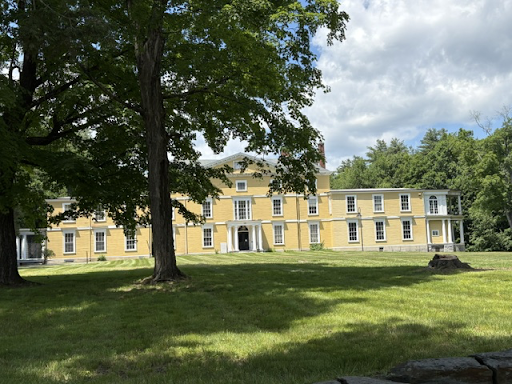
Nathaniel Thayer Estate
Driving through South Lancaster, I was surprised to come upon one of the grandest estates in central Massachusetts: the Nathaniel Thayer Estate, later known as Thayer Hall. Set amid expansive lawns and towering trees, the stately yellow mansion immediately conveyed the elegance and prosperity of nineteenth-century New England. Although many visitors associate South Lancaster with […]
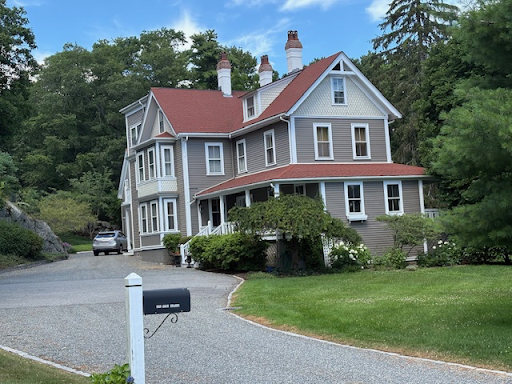
Oliver Wendell Holmes
Oliver Wendell Holmes, Jr., remains one of the towering figures in American legal history, whose ideas continue to shape constitutional law and the way we think about freedom and the role of courts. His life spanned history from the Civil War through the Great Depression with nearly 30 years on the U.S. Supreme Court. Holmes […]
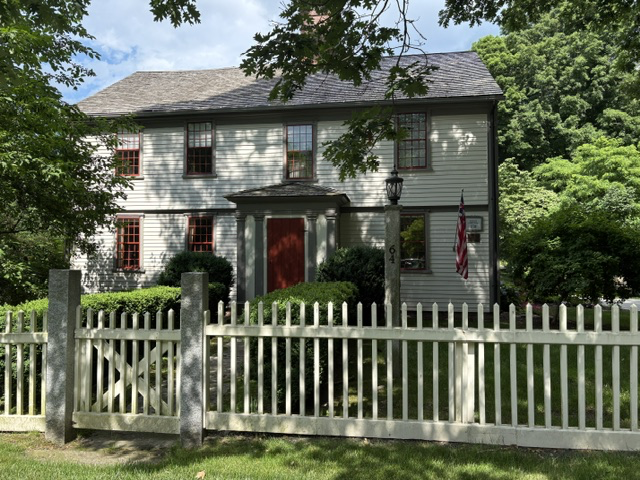
The Jonah and Elizabeth Warren House
Driving along Warren Street in Westborough, this house is easy to admire simply for its age. But its story begins even before Westborough existed as a town and, in an important way, even before European settlement of this area. Jonah Warren and his wife, Elizabeth Seaverns Warren, came from Watertown to the newly developing community […]

