Old Burying Ground and Welsford-Parker Monument
Established in 1749, the same year Halifax was founded as a British settlement, the Old Burying Ground served the community until 1844. Originally located outside the fortified town, it became the resting place of people from different religious denominations. Today, its enclosed grounds preserve a chapter of early Halifax within the surrounding downtown streets.
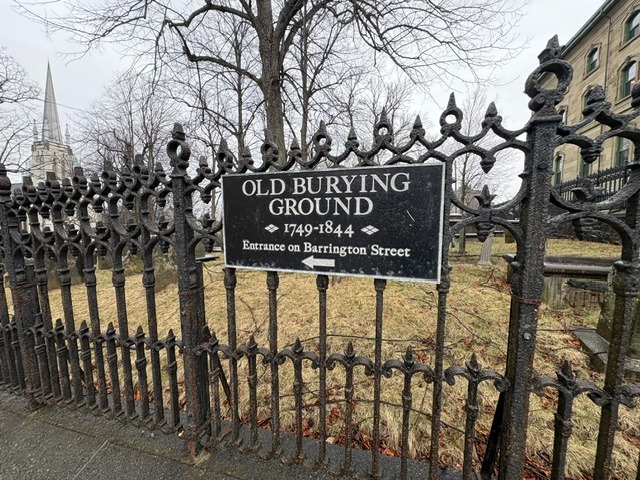
More than 1,200 surviving grave markers record individual lives and nearly a century of changing memorial traditions. Their carved lettering, decorative motifs, and varied forms reveal both the wishes of grieving families and the skills of the craftspeople who made them. Headstones, footstones, and box tombs stand in an irregular arrangement, reflecting a burial ground that developed over generations.
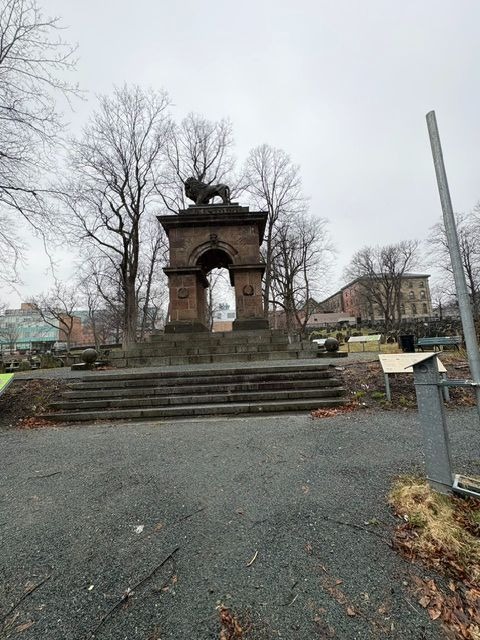
At the entrance stands the Welsford-Parker Monument, a stone arch crowned by a carved lion. Erected in 1860, after the cemetery had closed to burials, it commemorates Major Augustus Welsford and Captain William Parker, two Nova Scotians who died in the Crimean War. Both participated in the September 1855 assault on the Great Redan, part of the defenses of Sevastopol. Their memorial connects Halifax with a conflict fought thousands of miles away.
The monument’s scale and form give it a different presence from the surrounding gravestones. Raised above broad steps, the arch creates a ceremonial entrance, while the lion recalls British imperial symbolism. Its construction introduced a public military memorial into a place already devoted to personal and family remembrance. The grounds were also fenced and landscaped when the monument was erected.
Together, the cemetery and monument preserve two forms of remembrance. The gravestones record the lives of Halifax’s early residents, while the lion-topped arch honors two men whose deaths became a public cause for commemoration. Within the same small space, local family history meets the wider military history of nineteenth-century Nova Scotia.
Read More


Read More From Nancy
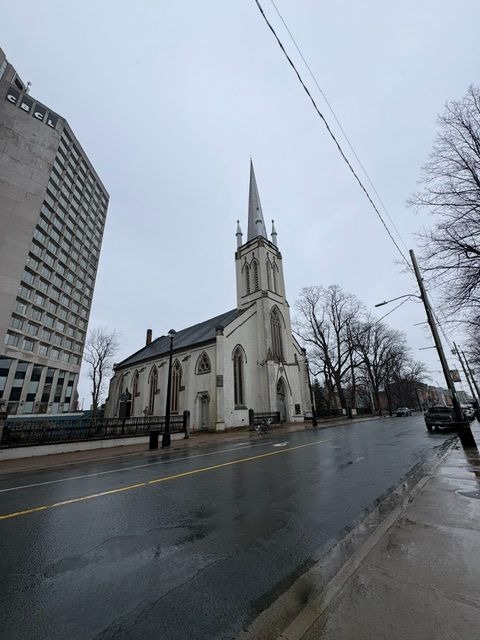
St. Matthew’s Church
On Barrington Street near Spring Garden Road, St. Matthew’s Church preserves the history of a congregation whose origins reach back to Halifax’s founding in 1749. Its tall spire, pointed windows and buttressed walls belong to a building completed in 1859, but the community that built it had already worshipped in the town for more than […]
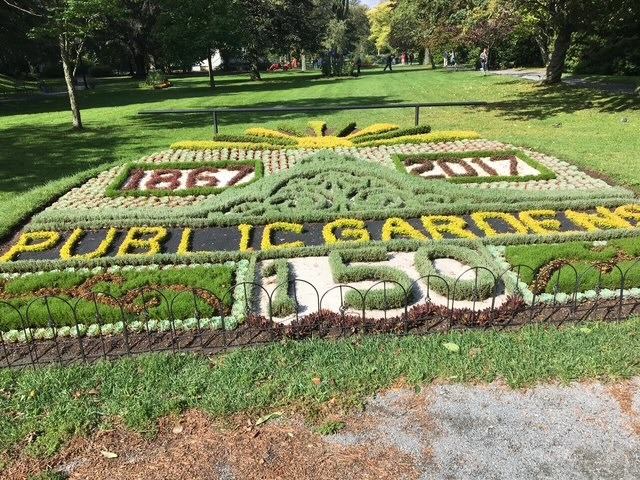
Halifax Public Gardens
The Halifax Public Gardens preserve a rare example of a Victorian public garden in the heart of a modern city. Across approximately sixteen acres, winding gravel paths connect carefully maintained lawns, ornamental flower beds, mature trees, and water features. The landscape was designed for leisurely walking and close observation, offering opportunities to appreciate both individual […]
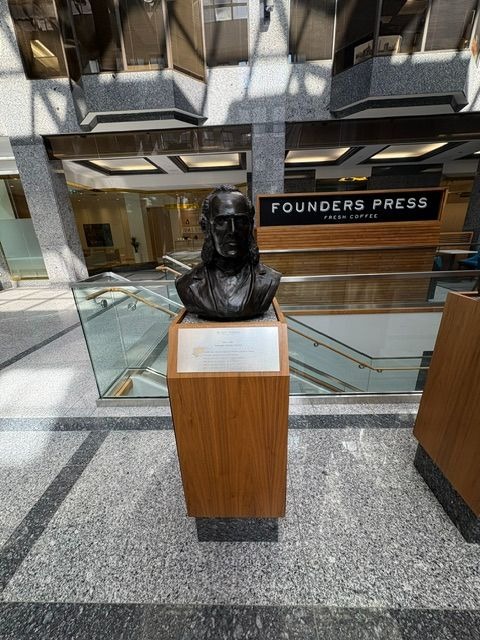
William Annand
A portrait bust in Halifax’s Founders Square commemorates William Annand, a newspaper publisher and political leader whose career spanned Nova Scotia’s struggle for responsible government and its contested entry into Confederation. Born in Halifax in 1808, Annand was first elected to the provincial House of Assembly in 1836, where he supported demands for a government […]

