William Annand
A portrait bust in Halifax’s Founders Square commemorates William Annand, a newspaper publisher and political leader whose career spanned Nova Scotia’s struggle for responsible government and its contested entry into Confederation. Born in Halifax in 1808, Annand was first elected to the provincial House of Assembly in 1836, where he supported demands for a government accountable to elected representatives.
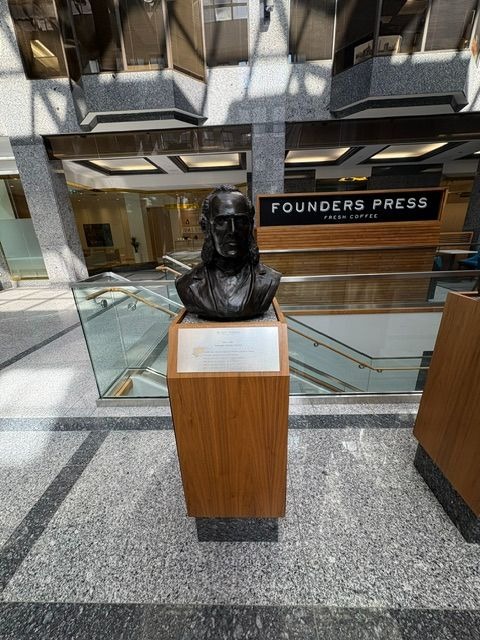
His influence grew through the newspaper business. In 1843, Joseph Howe helped him purchase the Novascotian, an established Halifax weekly. Annand founded the Morning Chronicle the following year, giving him another platform for political debate. His newspapers became important vehicles for discussing the province’s government and future.
When Confederation became a serious prospect, Annand emerged as a leading opponent. In 1866, he joined Howe in a delegation to London seeking to prevent Nova Scotia’s inclusion in the proposed union. Their campaign failed, and Nova Scotia became one of Canada’s founding provinces on July 1, 1867. Annand’s opposition nevertheless reflected a substantial division within the province over the terms and legitimacy of the arrangement.
Annand became premier in 1867, leading an administration elected under the Anti-Confederation banner. He remained in office until 1875, then moved to London, where he served as an agent-general for Canada and subsequently for Nova Scotia. He died there in 1887. His commemoration preserves a less celebratory side of Canada’s founding story: Confederation was debated and resisted, and some of the people who helped shape the new country had opposed its creation.
Read More

Read More From Nancy
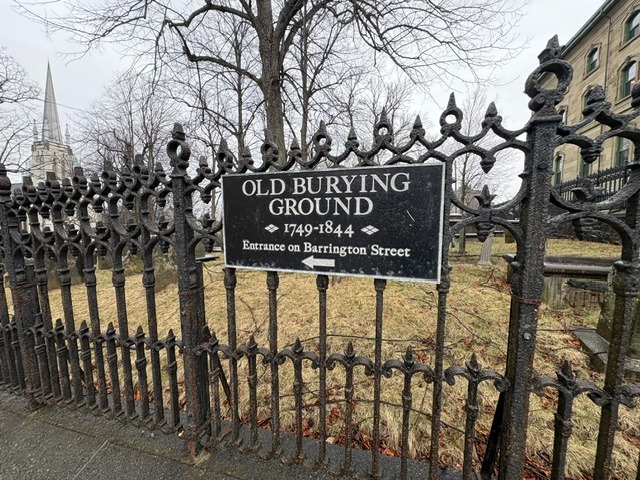
Old Burying Ground and Welsford-Parker Monument
Established in 1749, the same year Halifax was founded as a British settlement, the Old Burying Ground served the community until 1844. Originally located outside the fortified town, it became the resting place of people from different religious denominations. Today, its enclosed grounds preserve a chapter of early Halifax within the surrounding downtown streets. More […]

The Halifax Town Clock
On the eastern slope of Citadel Hill, the Halifax Town Clock overlooks Brunswick Street and the downtown streets below. Its white tower, blue clock faces and copper dome form one of the city’s most recognizable landmarks. The clock began keeping time on October 20, 1803, providing a public reference for both the military garrison and […]
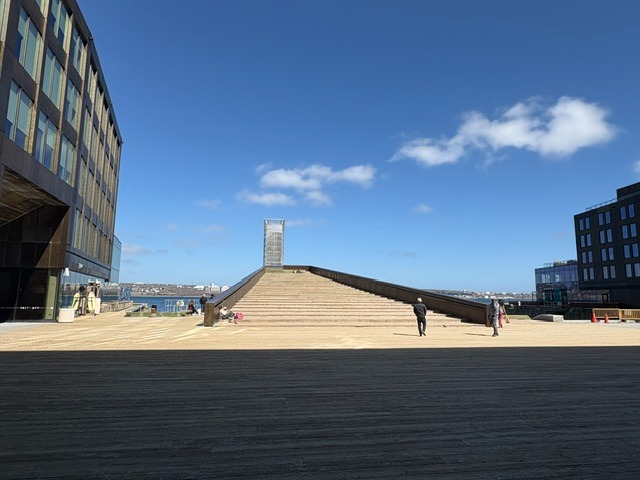
Tidal Beacon and Rise Again
At Queen’s Marque on Halifax’s waterfront, a broad timber staircase rises toward a shimmering tower overlooking the harbour. The staircase, called Rise Again, forms a public gathering place and an elevated lookout. At its summit stands Tidal Beacon, an artwork by Ned Kahn that responds to the wind and the changing tides. Together, the structure […]

