Halifax, NS
Located on Nova Scotia’s Atlantic coast, Halifax grew around a deep, sheltered harbor that has shaped its history for centuries. Known to the Mi’kmaq as K'jipuktuk, meaning “Great Harbour,” the area became the site of a British settlement in 1749. Shipping, trade, and naval activity helped establish Halifax as an important Atlantic port and the provincial capital.
As a gateway between North America and the Atlantic world, Halifax developed through the movement of people, goods, and ideas. Its harbor supported merchants, sailors, shipbuilders, and military personnel, while successive generations established homes and businesses throughout the city. These connections gave Halifax an influence that extended well beyond Nova Scotia.
Today, Halifax combines the activity of a working waterfront with the character of a historic Maritime city. Its streets and neighborhoods offer stories of public life, commerce, and the people who shaped the community. The harbor remains central to its identity, connecting the city’s beginnings with its continuing place in the wider world.
Recent Posts

The Bell Buoy
Outside the Maritime Museum of the Atlantic, a weathered red bell buoy represents an essential part of navigation at sea. Its broad metal float supported a framework carrying a bell and a light, combining a visible marker with an audible signal. Equipment like this helped mariners recognize navigational markers when darkness or fog made the […]
Mitchell House
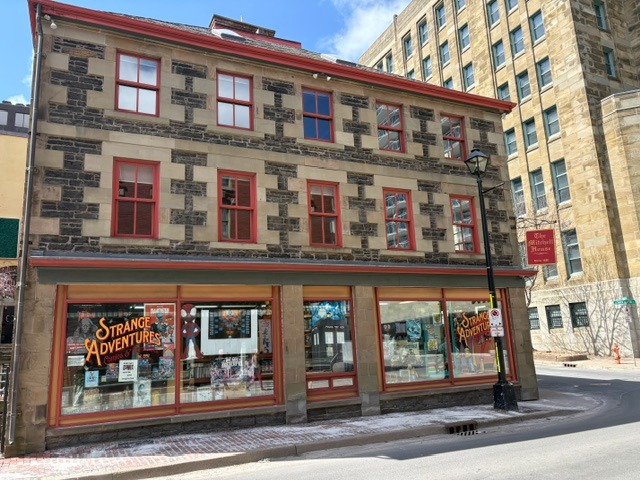
At the corner of Prince and Lower Water Streets, Mitchell House preserves a chapter of Halifax’s history when a merchant’s home and business could share the same building. George Mitchell purchased the property in 1819 and, in the mid-1820s, replaced an earlier wooden house with an ironstone residence and warehouse. The location placed his family […]
NovaScotian Crystal Mural
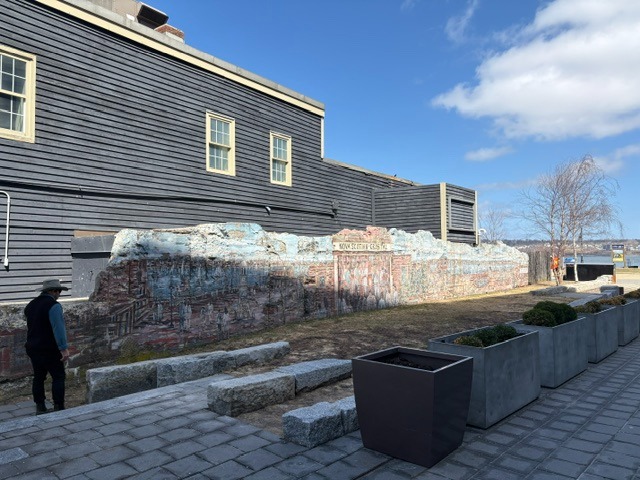
Along Halifax’s waterfront near Cable Wharf, a painted stone wall preserves a connection to a craft once practiced within sight of the harbour. Created by artist Zeqirja “Zack” Rexhepi, the NovaScotian Crystal mural recalls a business that brought traditional Irish crystal making to Nova Scotia. Its weathered surface carries the company’s name, linking this stretch […]
The Imperial Oil Building
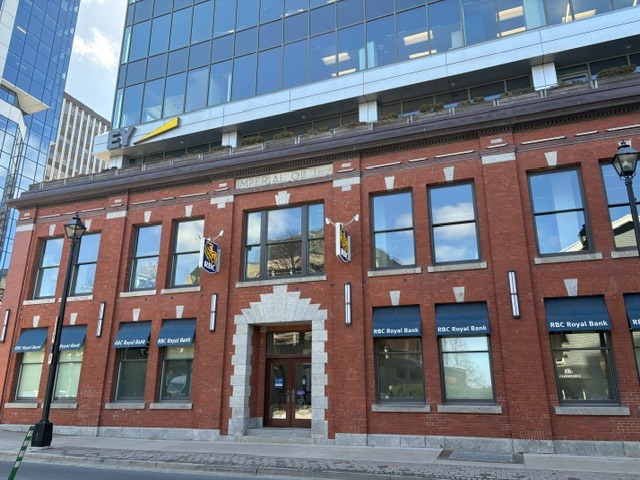
At the corner of Duke and Upper Water Streets, the Imperial Oil Building records a twentieth-century chapter in Halifax’s waterfront commerce. Completed in 1926, the two-storey brick building provided office space for Imperial Oil Limited. The company’s name, carved above the central entrance, preserves its original identity. The property’s history reaches further back. It was […]
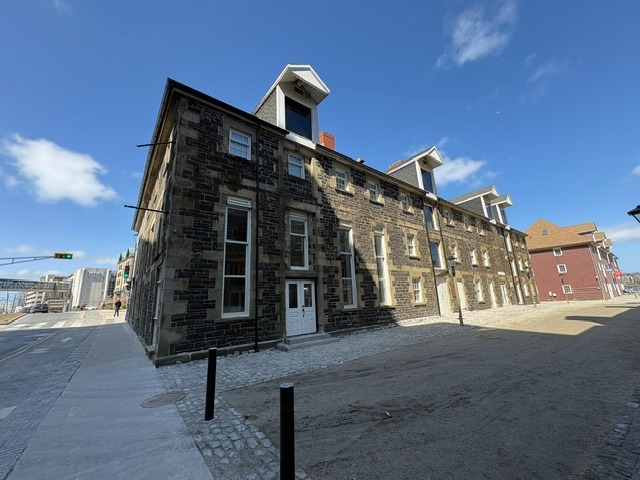
Historic Properties
Along Halifax’s harbour, a closely grouped collection of stone and wooden buildings preserves the character of the city’s nineteenth-century working waterfront. Known as Historic Properties, these former warehouses and commercial premises stood where merchants conducted business and stored goods moving through the port. In 1963, the Halifax Waterfront Buildings were designated a National Historic Site, […]
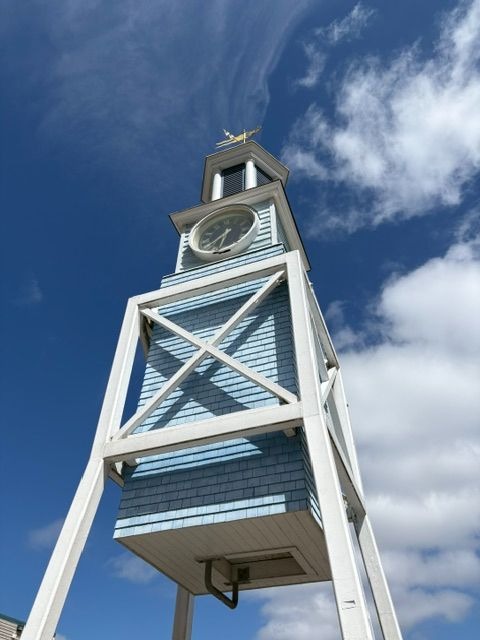
The Dockyard Clock
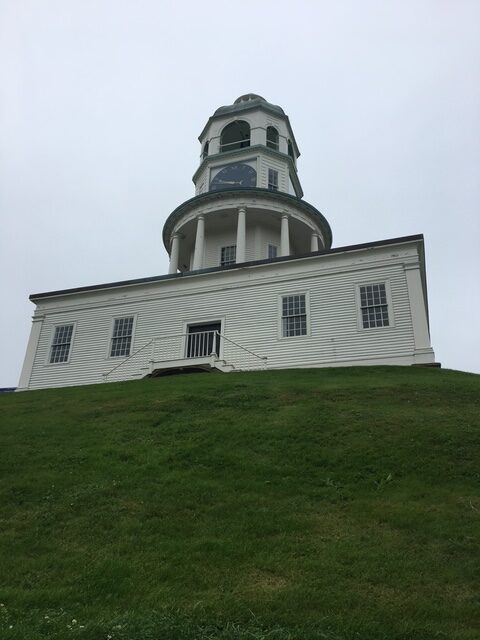
At Chebucto Landing on Halifax’s waterfront, the Dockyard Clock stands above the boardwalk in a blue-shingled tower supported by an open framework. Its public setting is relatively recent, but the timepiece dates to 1767. Made in London, England, it was installed in Halifax’s naval dockyard in 1772, where it served generations of sailors and civilian […]
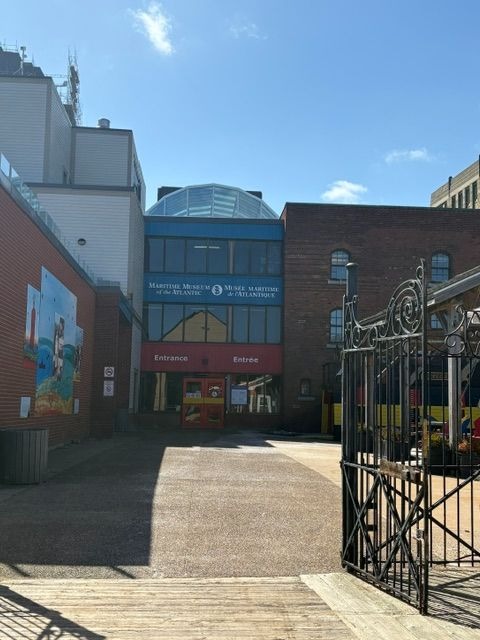
Maritime Museum of the Atlantic
On Lower Water Street beside Halifax Harbour, the Maritime Museum of the Atlantic preserves the history of a province whose communities and livelihoods have long been connected to the sea. Its collections explore shipbuilding, fishing, coastal travel, ocean commerce and naval service, bringing together the vessels, tools and personal belongings through which that history can […]

Sitamuk Kjipuktuk Cultural Post
On Halifax’s waterfront, the Sitamuk Kjipuktuk Cultural Post provides a place for Mi’kmaw and other Indigenous artists to share and sell their work. Developed by the Mi’kmaw Native Friendship Centre as a social enterprise, the post connects cultural expression with economic opportunity, bringing Indigenous art and craftsmanship into one of the city’s most visited public […]
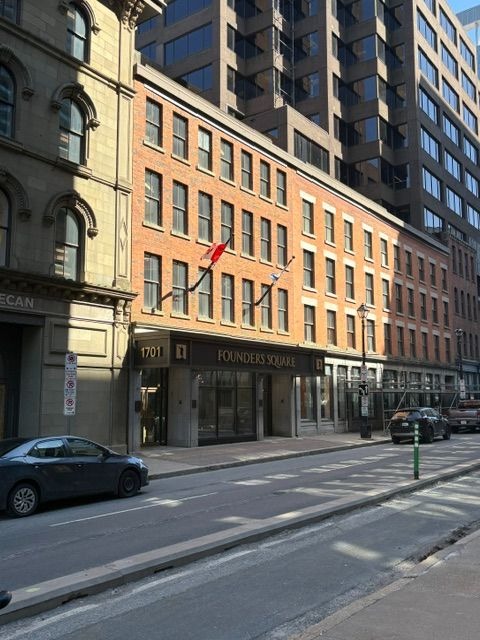
Founders Square
Along Hollis and Prince Streets in downtown Halifax, Founders Square preserves a row of nineteenth-century commercial façades within a development completed in 1986. The historic buildings associated with the complex date from 1816 to 1865, spanning decades when Halifax’s business district grew around the harbour and the provincial seat of government. Their surviving street fronts […]
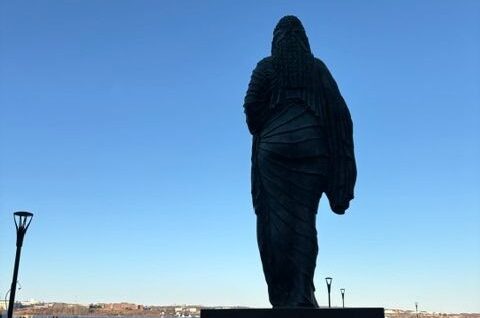
The Sirens’ Calling
At Queen’s Marque on Halifax’s waterfront, four sculpted figures stand on black granite bases, each oriented toward a different point of the compass. Created by Nova Scotia artist John Greer and installed in 2020, The Sirens’ Calling draws on ancient Greek sculpture and mythology to explore departure, return and the harbour’s role as a place […]
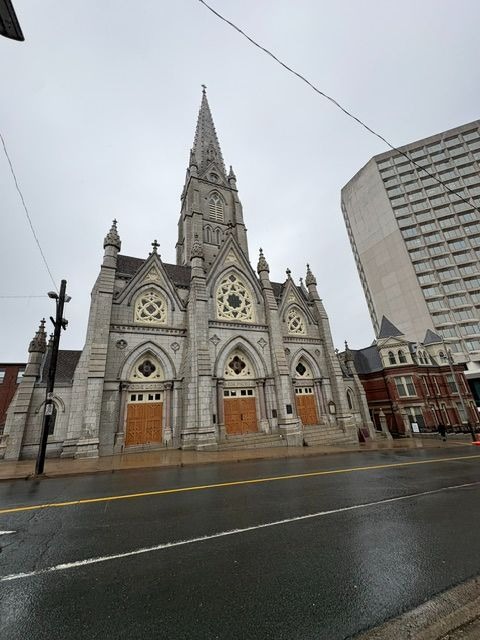
St. Mary’s Cathedral Basilica
On Spring Garden Road near its intersection with Barrington Street, St. Mary’s Cathedral Basilica rises directly from the streetline, its granite spire overlooking downtown Halifax. The three entranceways, pointed arches and elaborate stone tracery make it a prominent example of Gothic Revival architecture. Its construction and later expansion also reflect the growing presence and standing […]
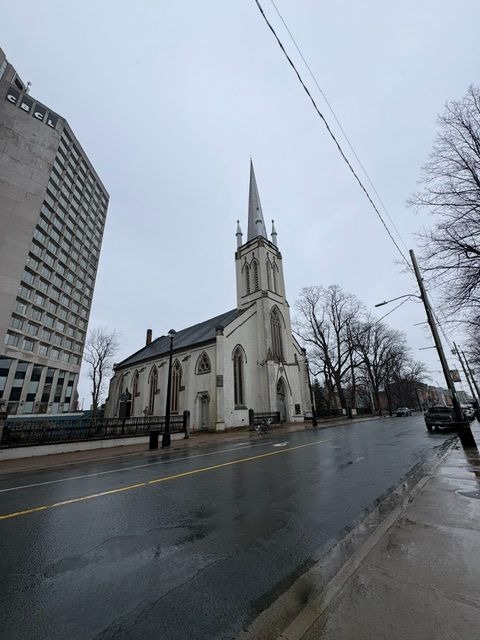
St. Matthew’s Church
On Barrington Street near Spring Garden Road, St. Matthew’s Church preserves the history of a congregation whose origins reach back to Halifax’s founding in 1749. Its tall spire, pointed windows and buttressed walls belong to a building completed in 1859, but the community that built it had already worshipped in the town for more than […]

