Founders Square
Along Hollis and Prince Streets in downtown Halifax, Founders Square preserves a row of nineteenth-century commercial façades within a development completed in 1986. The historic buildings associated with the complex date from 1816 to 1865, spanning decades when Halifax’s business district grew around the harbour and the provincial seat of government. Their surviving street fronts retain the scale and architectural variety of that earlier city.
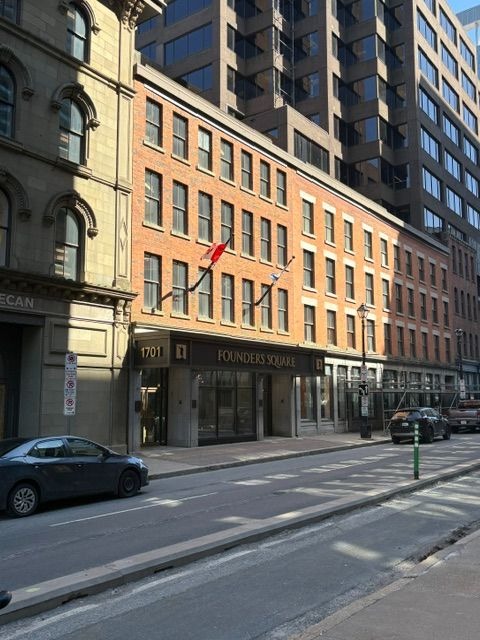
The buildings developed as individual properties, each with its own history. Among them is the Lenoir Building, constructed in 1816 after a fire destroyed many commercial premises in the area. It is recognized as one of the oldest surviving commercial buildings in downtown Halifax. The collection also includes buildings historically known as the Geldert, Nova Scotian, Heffernan, Queen, Steampress, Victoria and Hunter buildings. Together, they record the gradual development of the block rather than a single coordinated building project.
During the 1980s, the Province of Nova Scotia assembled the properties on the block bounded by Hollis Street, Prince Street, Sackville Street and Bedford Row. The land was leased for the Founders Square redevelopment, which incorporated historic façades and buildings along the street edges while introducing a substantial office tower behind them. Completed in 1986, the project changed the interiors and overall organization of the block while retaining much of its familiar appearance at street level.
The resulting architecture makes both periods visible. Brick walls, regularly spaced windows and stone detailing establish the older streetscape, while the dark tower rises behind it with recessed corners and stepped forms. Halifax’s heritage inventory recognizes the individual historic façades and also identifies the later tower as a contributing heritage resource for its Postmodern design. Founders Square therefore records two chapters in the city’s development: the growth of its nineteenth-century commercial centre and a twentieth-century effort to incorporate that inheritance into a larger urban project.
Read More
Read More From Nancy
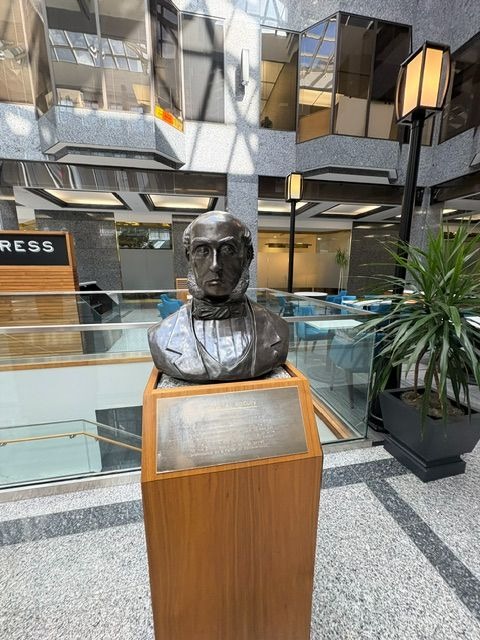
Jonathan McCully
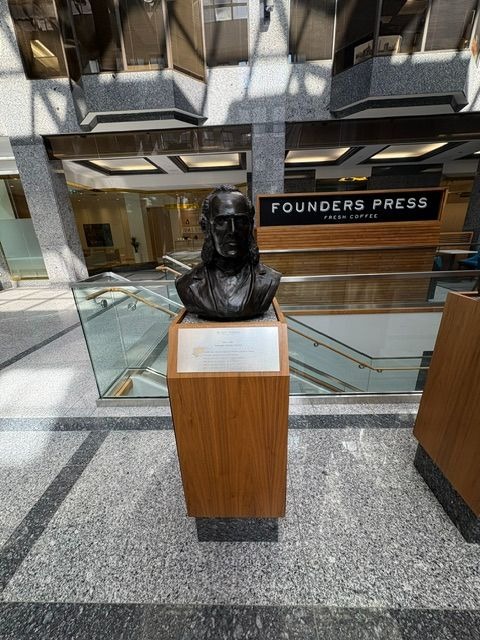
A portrait bust in Halifax’s Founders Square commemorates Jonathan McCully, a lawyer, newspaper editor and political leader remembered as one of Canada’s Fathers of Confederation. Born in Cumberland County, Nova Scotia, in 1809, McCully practised law in Amherst before entering provincial politics. Appointed to the Legislative Council in 1848, he later served as solicitor general […]
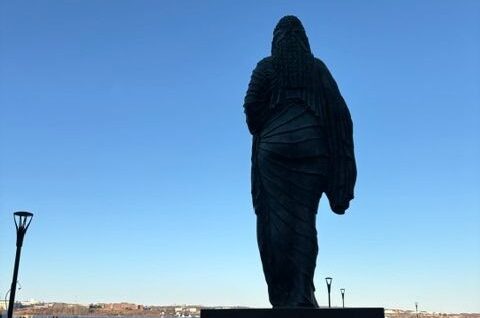
The Sirens’ Calling
At Queen’s Marque on Halifax’s waterfront, four sculpted figures stand on black granite bases, each oriented toward a different point of the compass. Created by Nova Scotia artist John Greer and installed in 2020, The Sirens’ Calling draws on ancient Greek sculpture and mythology to explore departure, return and the harbour’s role as a place […]
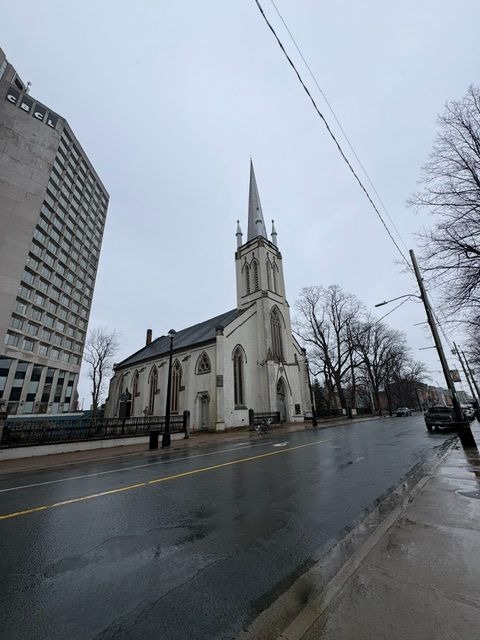
St. Matthew’s Church
On Barrington Street near Spring Garden Road, St. Matthew’s Church preserves the history of a congregation whose origins reach back to Halifax’s founding in 1749. Its tall spire, pointed windows and buttressed walls belong to a building completed in 1859, but the community that built it had already worshipped in the town for more than […]

