Needham Votes for Hancock and Adams
A handwritten election return preserved at the Needham History Center & Museum records the town’s votes on April 2, 1792. Among its names are two familiar figures from the American Revolution: John Hancock, running for governor of Massachusetts, and Samuel Adams, seeking another term as lieutenant governor.
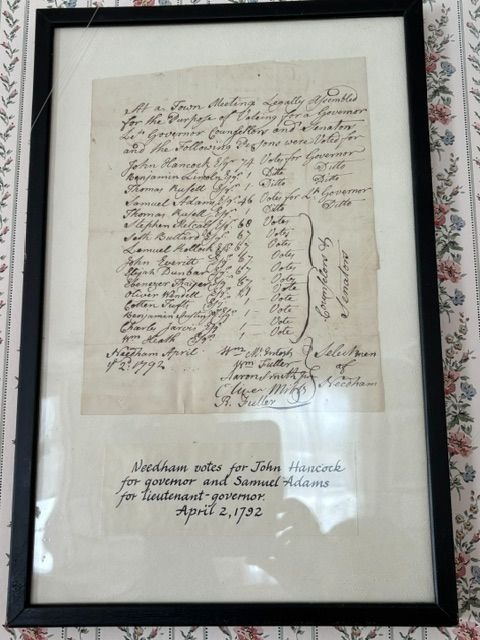
Hancock received seventy-four votes in Needham. His signature on the Declaration of Independence had already secured his place in national history, but governing Massachusetts remained an important part of his public life. He had served as the Commonwealth’s first governor under its 1780 constitution and returned to office in 1787. Adams would succeed him as governor in 1793.
The document also reveals how limited political participation was. According to the museum’s exhibit, Needham had approximately 1,200 residents in 1792, but only seventy-six men cast ballots in this election. Voting eligibility depended on requirements that excluded women and many men, leaving electoral decisions to a small portion of the community.
Alongside the famous candidates appear residents who carried out the work of local government. McIntosh, Fuller, Smith, Mills, and Clark were names associated with military service, town offices, and the development of Massachusetts government after independence.
The return connects those local responsibilities with the larger political world. Needham’s voters were choosing leaders whose Revolutionary reputations were still living memories.
Preserved in handwriting and columns of numbers, the document offers a record of government taking shape through ordinary town proceedings, and a reminder that the right to participate was far narrower than it is today.

Read More From Nancy
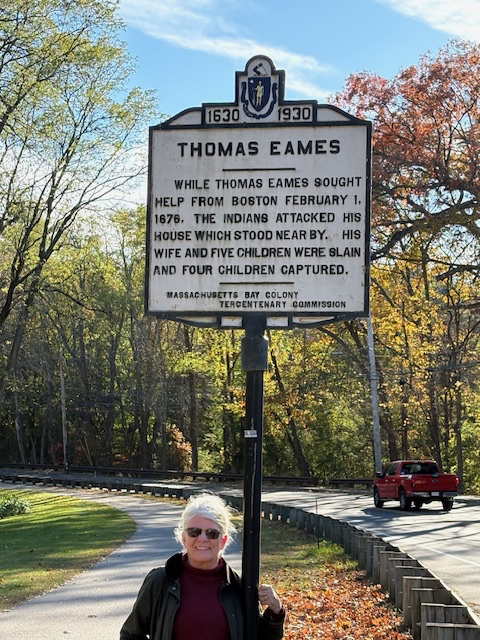
Thomas Eames Sign
Driving along a road in Framingham is this roadside sign that marks the location where the home of Thomas Eames once stood. There is no remaining structure, only the sign indicating that this was the site of a 17th century homestead. On February 1, 1676, during the King Philip’s War, the Eames house was attacked. At […]
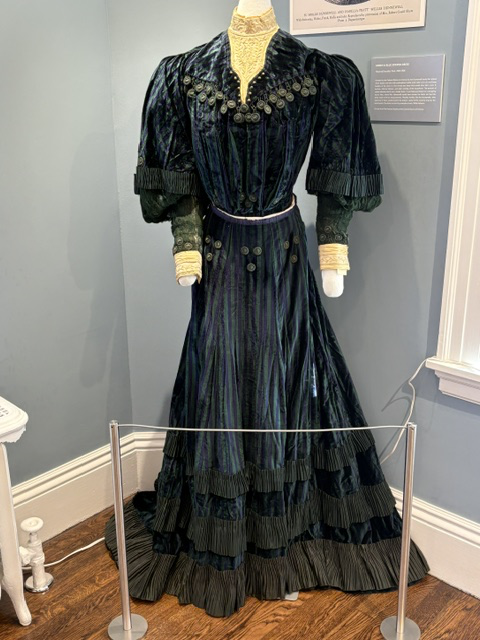
A Dress from Paris
One of the exhibits that caught my attention at the Wellesley Historical Society was this elegant green and blue striped dress, a reminder that fashion can tell us as much about history as letters, photographs, or documents. Created by the House of Doeuillet in Paris between 1905 and 1906, the dress was worn by a […]
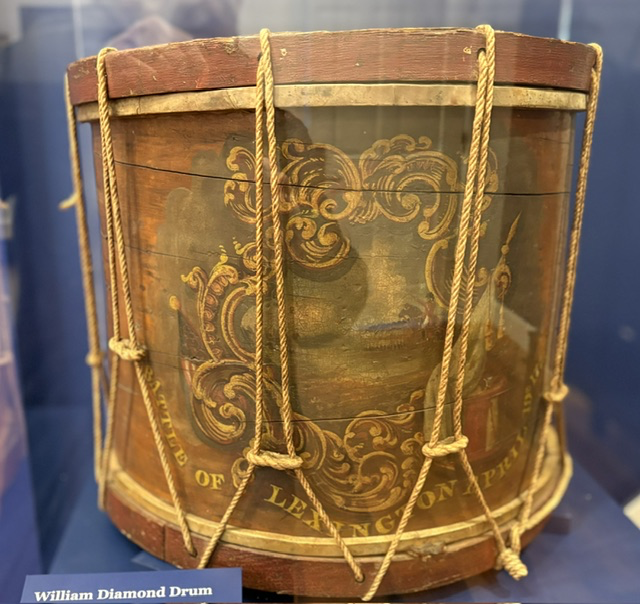
William Diamond’s Drum
Among the treasures preserved in Lexington is this beautifully decorated drum that once belonged to William Diamond, the young drummer of Captain John Parker’s Lexington militia. According to tradition, Diamond beat this very drum to summon the townspeople on the night of April 18, 1775, after Paul Revere and other riders brought word that British troops […]

