Island of San Michele
While traveling by boat from Venice to Murano, we passed the island of San Michele. Surrounded by the waters of the Venetian Lagoon, its long brick walls, historic buildings and solitary bell tower gave it the appearance of a quiet city separated from the activity of Venice.
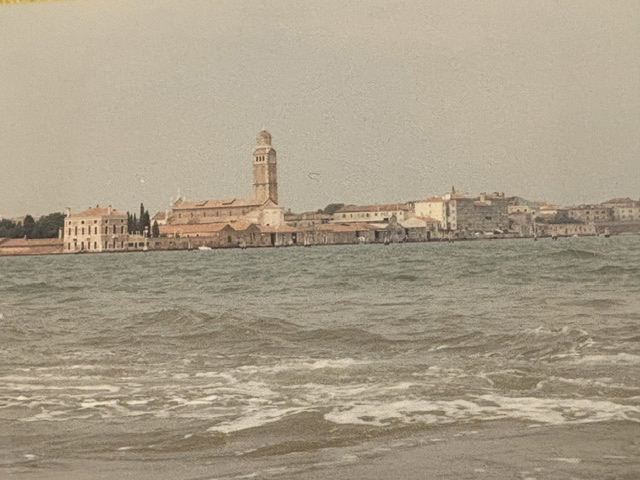
San Michele is the principal cemetery of Venice. It was originally composed of two neighboring islands: San Michele and San Cristoforo della Pace. After Napoleon’s 1804 Edict of Saint-Cloud prohibited burials within populated areas and churches for public-health reasons, Venice needed to establish a burial ground outside the city.
The island of San Cristoforo was selected for the new cemetery in 1807, and its first section was completed in 1813. As additional space became necessary, burials expanded onto San Michele. The canal separating the two islands was filled between 1835 and 1839, joining them into the single island visible today.
Several of San Michele’s most prominent buildings predate the cemetery. Its brick bell tower was constructed in 1456, while the Church of San Michele in Isola was built between 1468 and 1477. Designed by Mauro Codussi, the church is considered one of the earliest examples of Renaissance architecture in Venice. The island also preserves a former monastery, cloisters and several chapels.
Generations of Venetians have been buried on San Michele, along with several internationally known writers, artists and composers. Among them are composer Igor Stravinsky, ballet impresario Sergei Diaghilev and poet Ezra Pound. Separate sections of the cemetery reflect Catholic, Orthodox and Protestant traditions.
We did not visit the island but passed close to it as our boat continued toward Murano. Seeing San Michele from the water offered another view of Venice’s distinctive relationship with the lagoon. Even the city’s cemetery occupies its own island, reached by boat and set apart from everyday life by the surrounding water.
Read More
Read More From Nancy
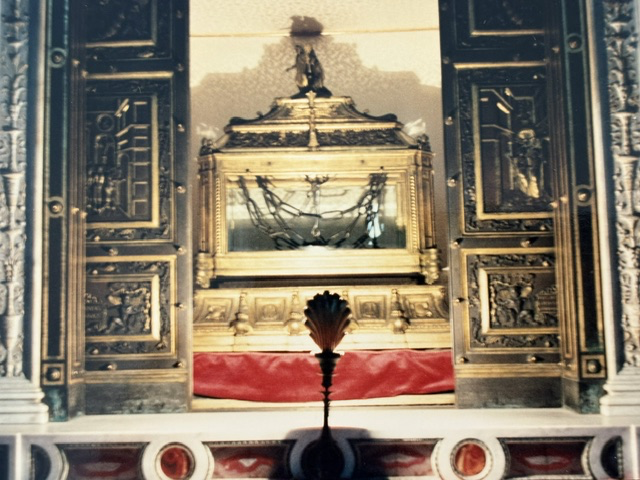
The Chains of Saint Peter
On our visits to Rome, we entered the Basilica of San Pietro in Vincoli, whose name literally means “Saint Peter in Chains”. The church is best known today by many visitors for Michelangelo’s magnificent statue of Moses, but beneath the main altar is something much older and even more connected to the earliest history of […]
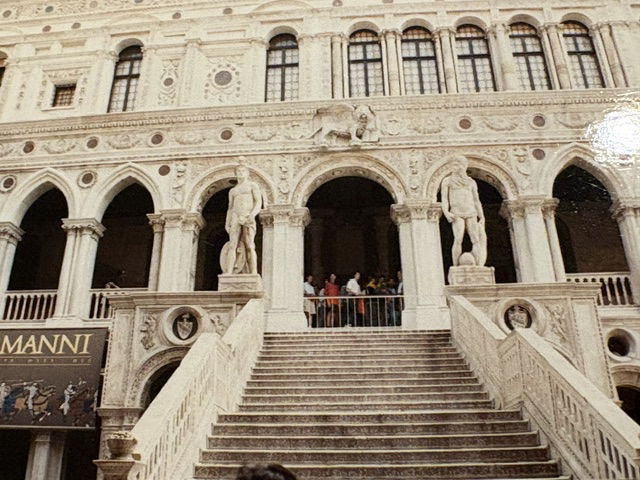
The Giants’ Staircase at the Doge’s Palace
The Giants’ Staircase stands within the courtyard of the Doge’s Palace, once the political and administrative center of the Republic of Venice. More than an entrance to the palace, the staircase formed part of a carefully designed ceremonial route leading from St. Mark’s Square into the heart of Venetian government. The staircase was designed by […]
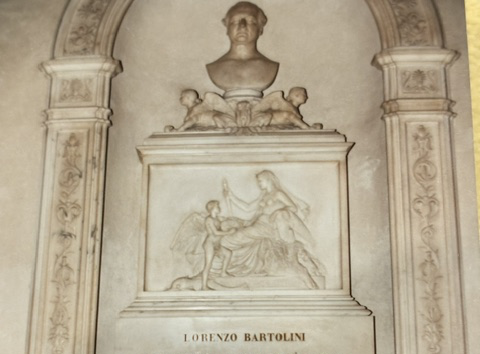
Memorial to Lorenzo Bartolini at the Basilica of Santa Croce
The Basilica of Santa Croce contains the tombs and memorials of many individuals who shaped Italian history and culture. Among them is the monument honoring Lorenzo Bartolini, one of the most important Italian sculptors of the nineteenth century. Bartolini was born near Prato in 1777 and studied at the Academy of Fine Arts in Florence […]

