Masonic Hall
Walking along Greenfield’s Main Street, I found another reason to pause: a small historical marker beside the entrance to an imposing building. It identified Masonic Hall, built in 1896, and revealed a connection reaching back a century earlier to Paul Revere. The storefronts were only the beginning of the building’s story. Above them, ornate windows and a projecting central bay suggested rooms designed for a different purpose.
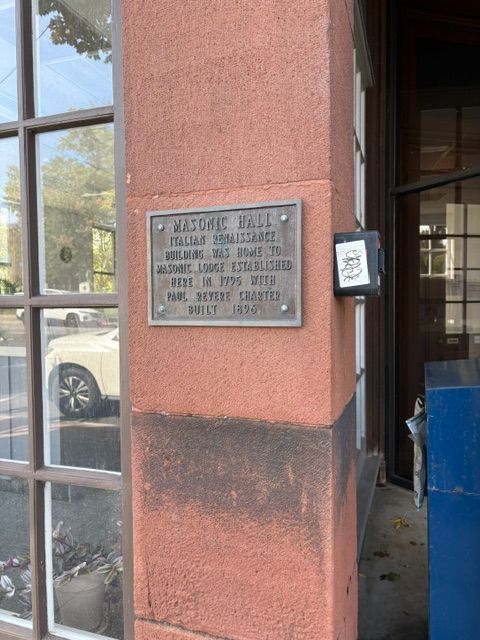
Greenfield’s Republican Lodge began meeting in 1795. Its charter bore the signature of Paul Revere, then Grand Master of the Grand Lodge of Massachusetts. The lodge’s first meeting took place on January 28 in the old Munn Tavern. Long before the organization had this substantial Main Street home, its members gathered in a tavern hall, part of the everyday social life of the young community.
The connection adds another dimension to Revere’s familiar story. Remembered for his midnight ride, he also helped establish Masonic lodges during his leadership of the Massachusetts fraternity. Greenfield’s lodge belonged to that broader network of organizations through which men gathered for fellowship and shared traditions. Its history places this western Massachusetts community within a story often associated with Boston.
Over the nineteenth century, the lodge occupied several meeting spaces. In 1856, a hall was prepared for it in the Mansion House hotel. When the hotel was reconstructed in 1873, the members received improved accommodations there. In January 1895, approximately five hundred Masons gathered to celebrate the lodge’s hundredth anniversary. The following year, the new Masonic building provided a purpose-built home on Main Street.
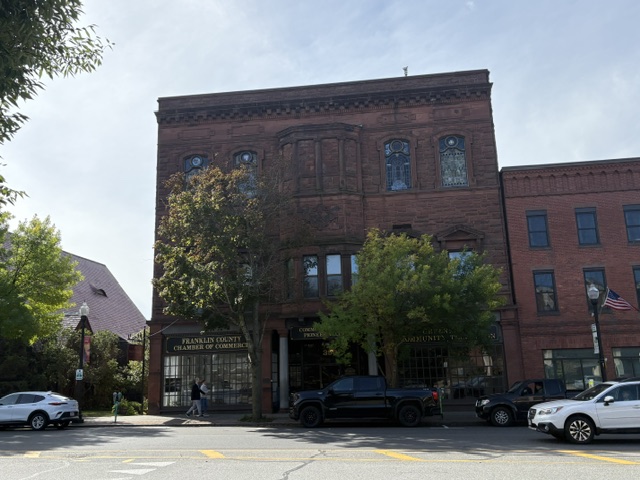
The building combined commerce with fraternal life. Two shops occupied the ground floor, meeting rooms filled the second floor, and a chapel occupied the third. Its Italian Renaissance character gave the organization a prominent presence downtown. The central projection incorporates Masonic symbolism, a second-floor bay window, and a date stone recording 1896 in Roman numerals. Ornate stained-glass windows illuminated the upper floor, where the chapel stood above the activity of the street.
Knowing that arrangement changes how the façade reads. The broad storefront windows served businesses and customers, while the decorative upper stories expressed the identity of the organization that built it. One building accommodated both the practical work of Main Street and the rituals of a longstanding fraternity.
That is what makes these small markers so rewarding to discover. A few lines beside a doorway can lead from a nineteenth-century building to an eighteenth-century tavern meeting, and to the signature of someone whose name is woven into the nation’s history.
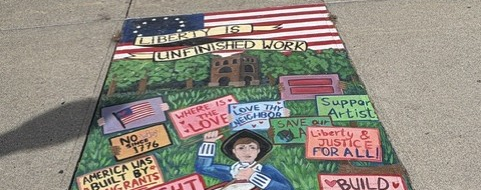
Read More From Nancy
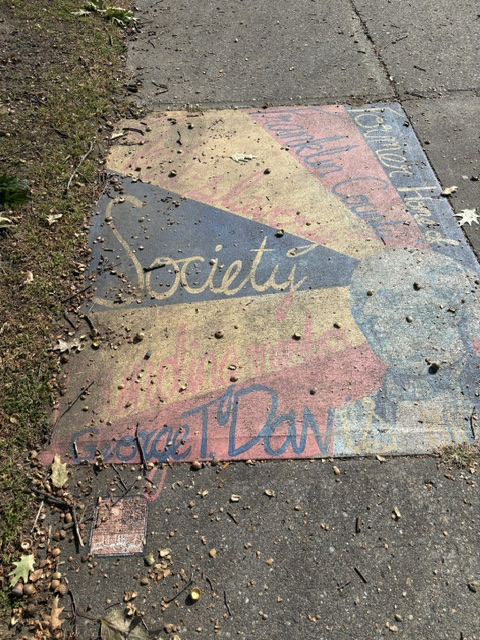
George T. Davis: Working for Freedom
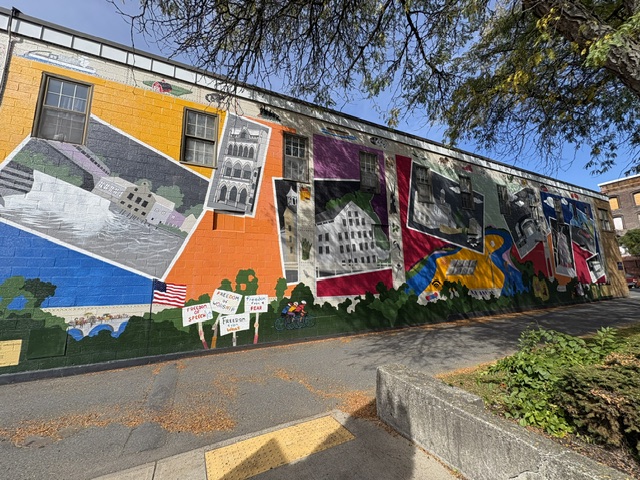
Once I discovered Greenfield’s sidewalk art, I began looking for the next piece and the story it might reveal. This mural carried the name George T. Davis among colorful shapes and lettering referring to the anti-slavery movement. It introduced me to a man whose work connected Greenfield’s local history with the larger struggle to end […]
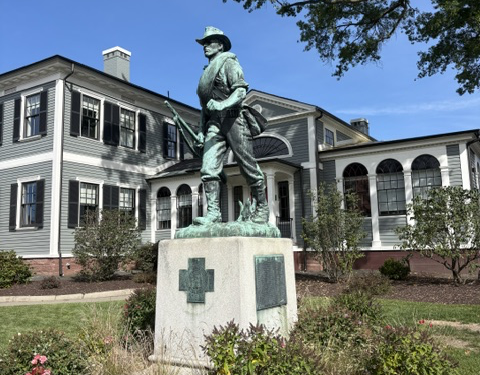
The Spanish-American War Memorial
I drove into Greenfield for a quick stop, and the first monument I noticed was this bronze soldier standing above a granite pedestal on Main Street. As always, I was curious. Who did he represent, and what had brought this memorial to the center of town? Those questions led me to a chapter of Greenfield’s […]
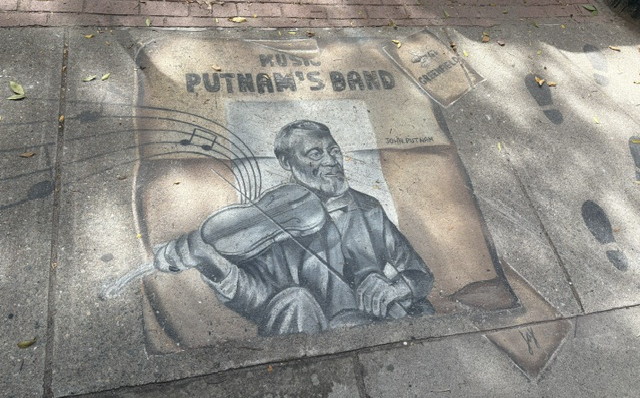
Music and the Road to Freedom
Once I knew Greenfield’s sidewalk art existed, I went looking for more. The next mural introduced me to John Putnam, shown holding a violin beneath the words “Putnam’s Band.” Musical notes curve through the artwork, inviting a closer look at a man whose story connects the town’s musical life with its history of resistance to […]

