Maritime Museum of the Atlantic
On Lower Water Street beside Halifax Harbour, the Maritime Museum of the Atlantic preserves the history of a province whose communities and livelihoods have long been connected to the sea. Its collections explore shipbuilding, fishing, coastal travel, ocean commerce and naval service, bringing together the vessels, tools and personal belongings through which that history can be understood.
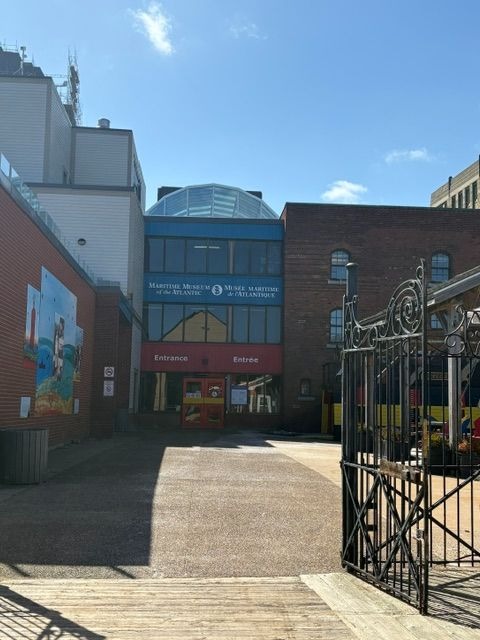
The museum began in 1948, when Royal Canadian Navy officers established a small collection at the Halifax Dockyard to conserve objects associated with Canada’s naval past. It moved to the Halifax Citadel in 1952 and became the Maritime Museum of Canada in 1957. A succession of temporary locations followed, with fires, floods and limited space complicating the search for a permanent home. In 1967, it became the marine history section of the Nova Scotia Museum.
That permanent home opened on January 22, 1982, on waterfront properties formerly occupied by Robertson & Son Ship Chandlery and A.M. Smith and Company. The setting placed the museum within the commercial landscape it interprets. The Robertson building, parts of which date to 1829, was incorporated into the museum, preserving a direct connection to the businesses that supplied Halifax’s working harbour.
Within that historic building, a reconstructed ship-supply store shows how businesses ashore supported the fishing and shipping industries. Its counters, shelving, coils of rope and equipment recall the everyday preparations behind a vessel’s departure. These practical supplies help explain the network of workers and merchants needed to keep ships operating and connect the museum’s waterfront home to the harbour’s working life.
The galleries extend that story from the shore to life at sea. They trace the development of sailing vessels and steamships, the work of naval and merchant crews, and Halifax’s role in the aftermath of the Titanic disaster. Small boats, ship models and maritime artifacts give these subjects a physical presence, connecting the province’s history to the people who built, supplied and sailed its vessels.

Read More From Nancy
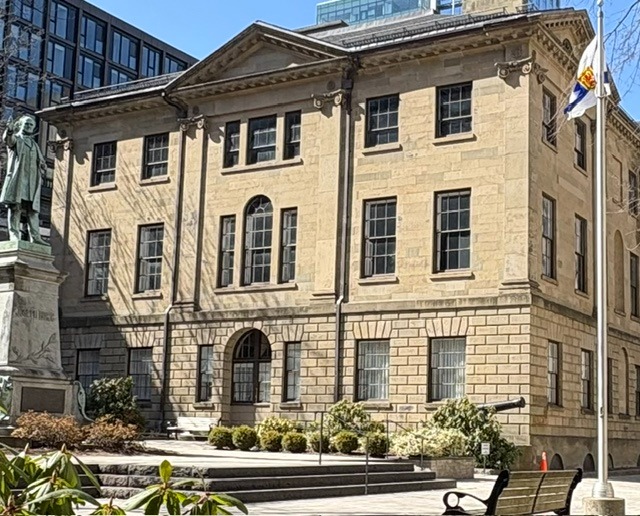
Province House
Province House has been the home of Nova Scotia’s legislature since its official opening on February 11, 1819. As Canada’s oldest legislative building, it preserves more than two centuries of parliamentary history within a structure still serving its original purpose. Its construction gave the province’s elected Assembly a permanent home after decades in temporary accommodations. […]
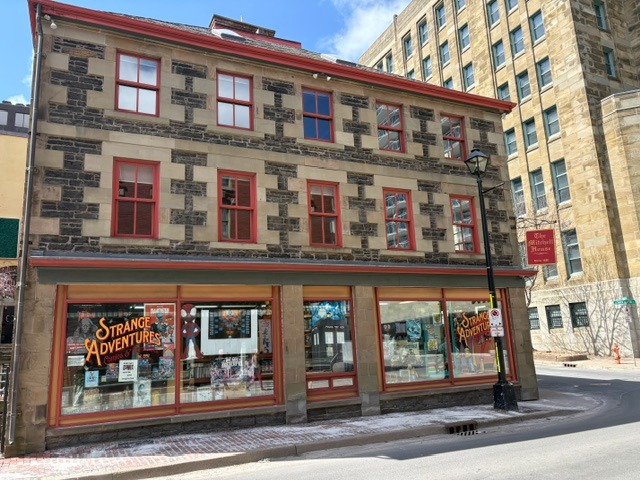
Mitchell House
At the corner of Prince and Lower Water Streets, Mitchell House preserves a chapter of Halifax’s history when a merchant’s home and business could share the same building. George Mitchell purchased the property in 1819 and, in the mid-1820s, replaced an earlier wooden house with an ironstone residence and warehouse. The location placed his family […]

The Sirens’ Calling
At Queen’s Marque on Halifax’s waterfront, four sculpted figures stand on black granite bases, each oriented toward a different point of the compass. Created by Nova Scotia artist John Greer and installed in 2020, The Sirens’ Calling draws on ancient Greek sculpture and mythology to explore departure, return and the harbour’s role as a place […]

