Hotel Nautilus
The building known as Hotel Nautilus was constructed in 1914 as part of the Marconi Wireless Telegraph Company of America’s receiving station in Chatham. Although its name suggests a traditional hotel, its original purpose was to provide housing for the unmarried employees who worked at the station.
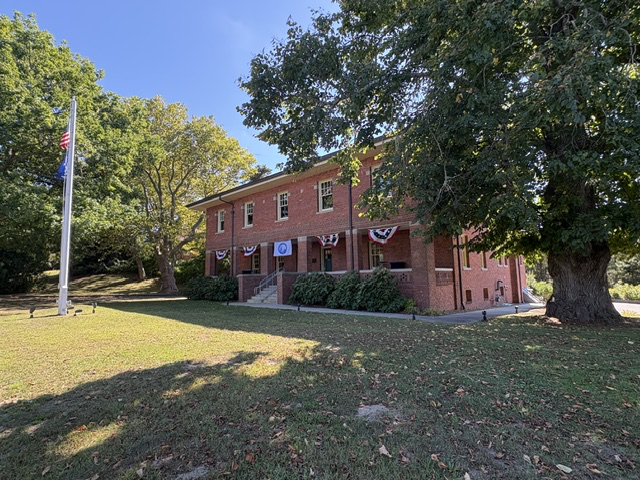
The Chatham facility was designed as more than a single operations building. Its location required a small, largely self-contained campus where employees could both work and live. The Residence Building accommodated unmarried staff members, while nearby brick cottages provided homes for married employees and their families. Other buildings supported the station’s technical and operational needs.
The campus was designed and constructed by the J. G. White Engineering and Building Company, an internationally known firm responsible for large industrial projects throughout the world. The company created a coordinated group of brick buildings suited to the station’s specialized purpose. Despite changes in wireless technology and the passage of more than a century, the buildings have remained largely unchanged in appearance and continue to occupy their original setting.
The people living at the station supported an operation that connected Chatham with ships and receiving stations around the world. Beginning in 1921, the facility operated under RCA as Coastal Marine Station WCC, better known as Chatham Radio. Radio operators received messages from ships at sea and forwarded them to families, businesses and government offices on land.
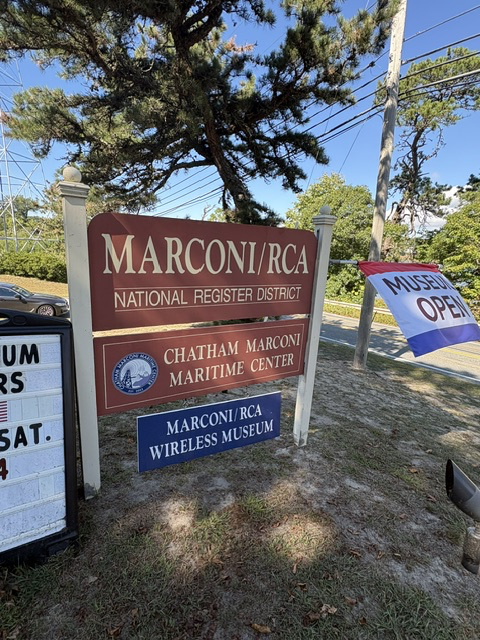
Life at the station required employees to remain close to the communications equipment they operated. Maritime radio service continued throughout the day and night, and messages could arrive from vessels traveling across distant oceans. Housing employees on the grounds created a community centered around the station and the demanding schedule of international maritime communication.
The station remained in service until 1997. Three years earlier, in 1994, the receiving station was added to the National Register of Historic Places. The Town of Chatham completed the exterior restoration of the campus buildings in 2008, preserving an important collection of early 20th-century industrial architecture.
The former Residence Building was later renovated to serve a new purpose. Its interior restoration was completed in 2014, and it now functions as the Education Center for the Chatham Marconi Maritime Center. The building contains classrooms, administrative offices and space for lectures, programs and community events.
Hotel Nautilus has remained connected to the exchange of knowledge. Originally, it housed the people responsible for operating one of the country’s most important maritime radio stations. Today, it provides a place where new generations can learn about communications science and Chatham’s role in the development of wireless technology.
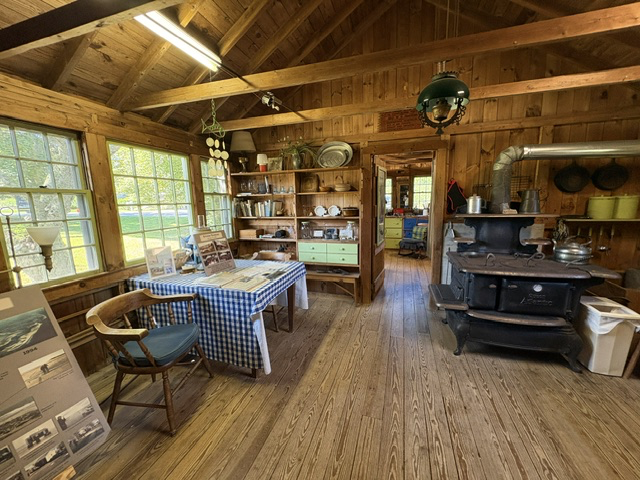
Read More From Nancy
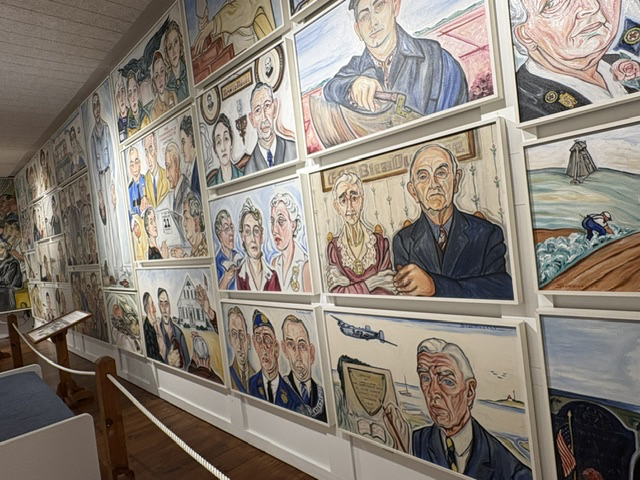
Alice Stallknecht’s Murals of a New England
During the 1930s and 1940s, artist Alice Stallknecht created a series of murals that combined religious imagery with portraits of the people, occupations and institutions of Chatham. Rather than placing biblical figures in a distant historical setting, she presented Christ as a contemporary working man surrounded by recognizable members of the local community. Her first […]
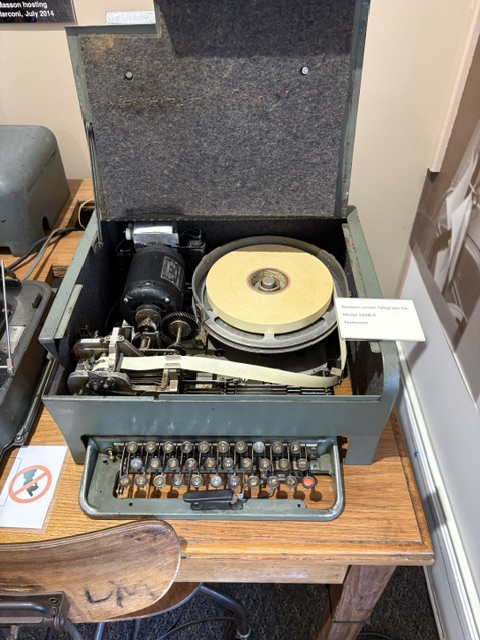
From Telegraph to Teletype
The development of telegraphy transformed long-distance communication. Instead of waiting days or weeks for a written message to travel by ship, train or horseback, information could be transmitted across wires almost instantly. In 1844, Samuel Morse publicly demonstrated an electric telegraph connection between Washington, D.C., and Baltimore. Messages were translated into patterns of dots and […]
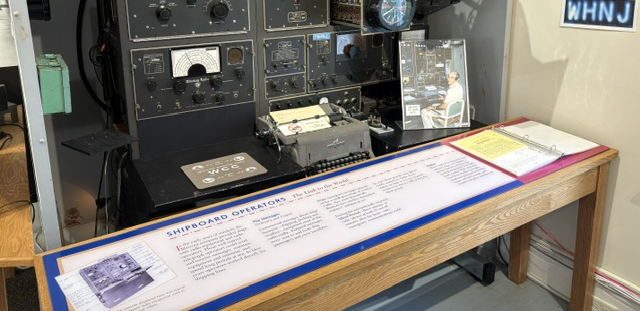
SS HOPE Shipboard Radio
The shipboard radio station from the SS HOPE, preserved at the Marconi-RCA Wireless Museum, represents the vital communications link between a ship at sea and the world on shore. The vessel began its service as the USS Consolation, a United States Navy hospital ship commissioned in 1945. It treated wounded service members during the Korean War and […]

