The Fairbanks House
While exploring Dedham, I stopped at the Fairbanks House, a remarkable reminder of New England’s earliest colonial history. At first glance, it appears to be a simple wooden farmhouse, but it is recognized as the oldest surviving timber-frame house in North America.
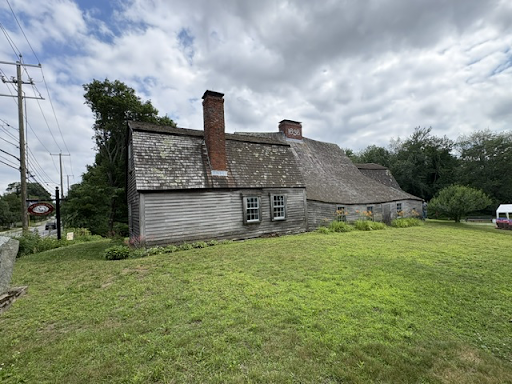
Construction of the original section of the house began around 1637 for Jonathan and Grace Fairbanks, who had immigrated from England as part of the Puritan migration. Over the following two centuries, generations of the Fairbanks family expanded the home as their family grew, creating the structure we see today. Remarkably, the house remained in the Fairbanks family for more than 350 years before being
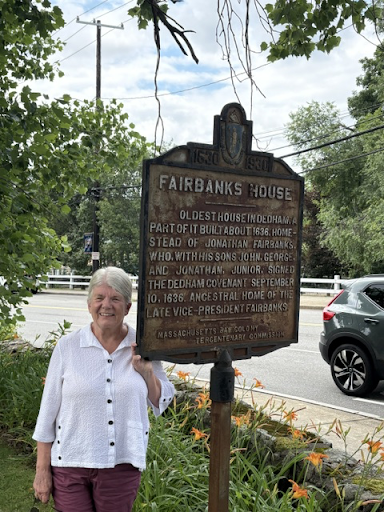
The historical marker notes that Jonathan Fairbanks and his sons George, Jonathan, and John signed the Dedham Covenant on September 10, 1636. The covenant established the principles upon which the new community would be governed, emphasizing cooperation, shared responsibility, and a commitment to the common good. It remains one of the earliest examples of self-government in colonial New England.
The house is also remembered as the ancestral home of Charles W. Fairbanks, who served as Vice President of the United States under Theodore Roosevelt from 1905 to 1909. That connection spans nearly three centuries of American history, linking one family’s colonial beginnings to national leadership.
Standing beside this weathered home, I found it remarkable that its heavy oak beams have witnessed nearly four centuries of American history. The Fairbanks House has survived colonial settlement, the American Revolution, the Civil War, and the modern era. It reminds us that some of our nation’s most enduring landmarks are not grand mansions or public buildings, but the homes where ordinary families lived, worked, and helped build a new society.
Looking at this house today, it is easy to appreciate why it has been so carefully preserved. It is more than the oldest house in Dedham. It is one of the oldest surviving homes in America, offering a rare opportunity to stand before a building that has been part of our nation’s story since the earliest days of colonial New England.
Read More From Nancy
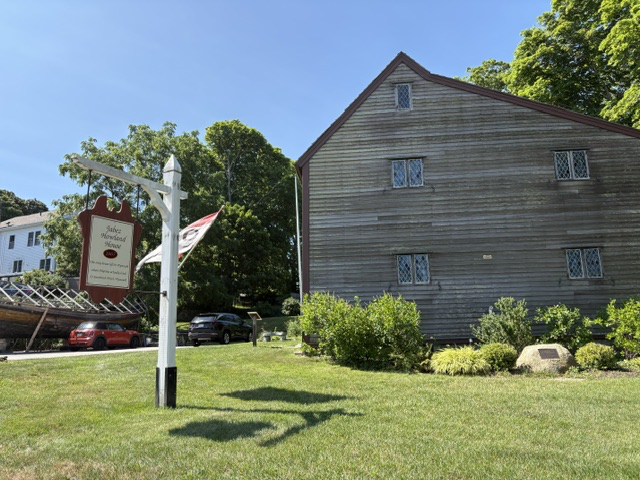
The Jabez Howland House
Among the many historic houses in Plymouth, the Jabez Howland House has a distinction that makes it extraordinary. Built about 1667, it is considered the only surviving building in Plymouth where people who actually arrived aboard the Mayflower are known to have spent time. Those people were John Howland and his wife, Elizabeth Tilley Howland. […]
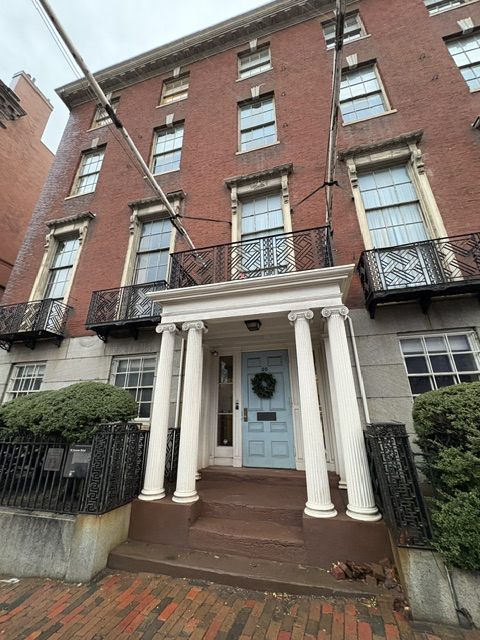
The Third Harrison Gray Otis House
When I came across this house at 45 Beacon Street, I recognized the Otis name because I had already visited the Harrison Gray Otis House near Massachusetts General Hospital. What I didn’t realize was that the Cambridge Street house was only the beginning of the family’s story. Harrison Gray Otis eventually built three Boston houses, […]
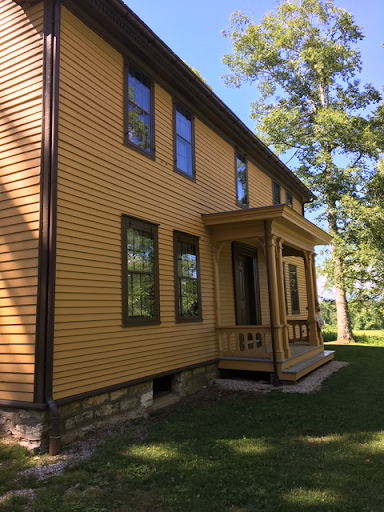
Arrowhead
I’ve visited Arrowhead a couple of times over the years, and each visit leaves me with a deep appreciation of the home and the life that lived within its rooms. Nestled among the hills of Pittsfield, MA, this farmhouse holds an important chapter in American literary history. It was here, from 1850 to 1863, that Herman […]

