Court Crier Box
Inside the 1749 Court House, this simple wooden enclosure caught my attention. It is a reconstruction of a court crier’s box, representing the place occupied by an official whose voice once helped keep the business of the courtroom moving.
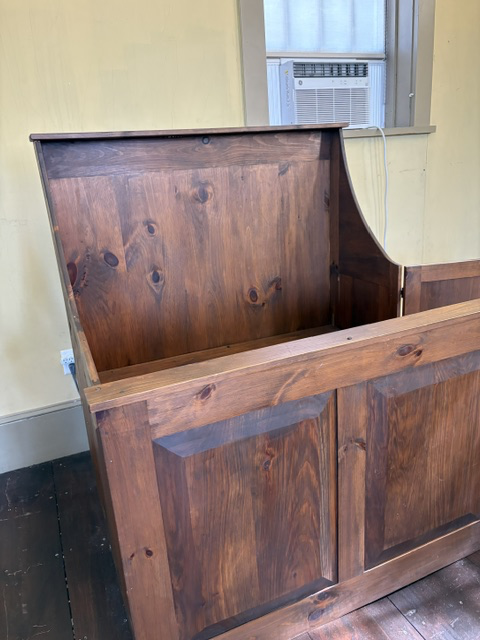
The court crier had a surprisingly important role. He was responsible for maintaining order, announcing the opening and adjournment of court, calling witnesses and jurors, delivering proclamations and performing other duties for the judges. The familiar command “Oyez, Oyez, Oyez”, meaning essentially “Hear ye”, has its origins in this long courtroom tradition.
Court criers were once common in American courts, particularly before microphones, electronic communication, and modern administrative systems made many of their duties unnecessary. In a crowded 18th-century courtroom, however, a strong voice was an essential tool. The crier connected the judge, attorneys, witnesses, jurors, and spectators, making certain everyone knew when court was beginning and who was being summoned before it.
Read More
Read More From Nancy
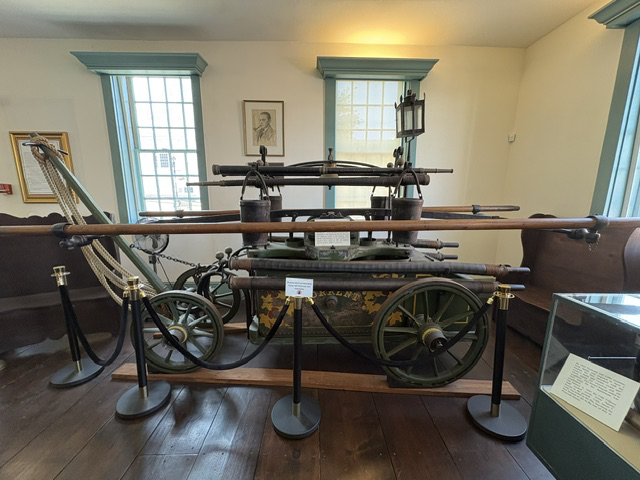
Torrent No. 4
Inside Plymouth’s historic courthouse, we found another remarkable piece of the town’s everyday history: Torrent No. 4, a hand-drawn suction fire engine built in Boston by Stephen Thayer in 1828. Long before motorized fire trucks and modern hydrants, equipment like this represented some of the best technology available to a community trying to protect its […]
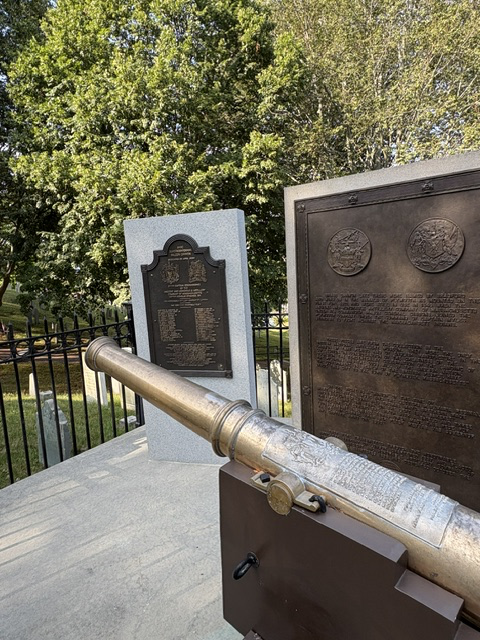
The Burial Hill Cannons
Near the summit of Burial Hill, a cannon and a series of bronze plaques mark the approximate location of Plymouth’s first fort. The settlers chose the hill because its height provided a broad view of the harbor and the settlement below. Their fort, completed in the early 1620s, had cannon mounted on its roof and […]
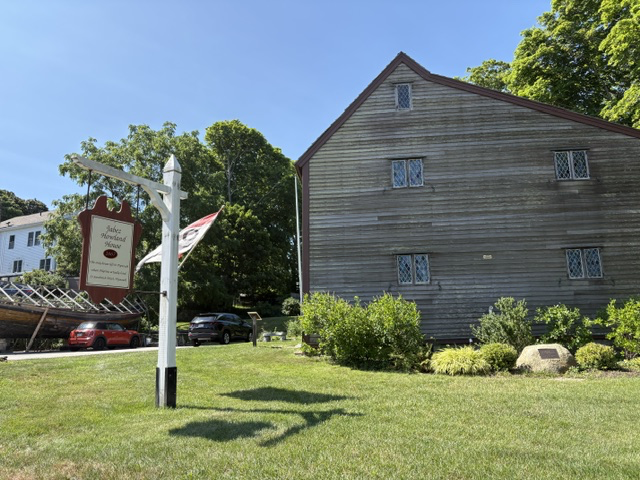
The Jabez Howland House
Among the many historic houses in Plymouth, the Jabez Howland House has a distinction that makes it extraordinary. Built about 1667, it is considered the only surviving building in Plymouth where people who actually arrived aboard the Mayflower are known to have spent time. Those people were John Howland and his wife, Elizabeth Tilley Howland. […]

