Shakespeare and Company
There are bookstores that sell books, and there are bookstores that become destinations. Shakespeare and Company in Paris is one of those rare places where literature, history, and hospitality have come together for generations. Marty and I have visited Shakespeare and Company each time we have traveled to Paris. As someone who has always loved books, it is simply one of those places that I had to experience. Walking through its narrow rooms, where books fill every shelf, staircase, and corner, feels like stepping into another era. Before leaving, we make time to sit next door with a cup of tea, reflecting on the stories we have discovered and the generations of readers and writers who have gathered here.
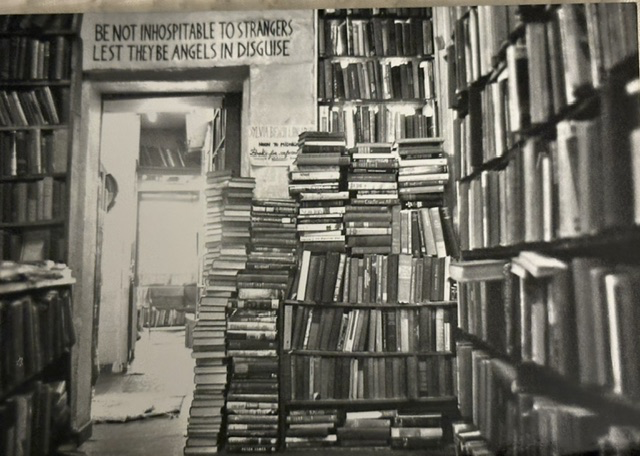
The bookstore that stands today was opened in 1951 by American bookseller George Whitman. His vision was far different from that of a traditional bookstore. He wanted to create a place where books, ideas, and people could come together. Over the years, he welcomed thousands of aspiring writers from around the world, offering them a place to sleep among the books in exchange for helping in the shop, reading a book each day, and writing a short autobiography. Whitman affectionately called these young writers “Tumbleweeds”, believing that every traveler deserved a place of welcome.
Although this bookstore opened decades after the famous original Shakespeare and Company founded by Sylvia Beach in 1919, it carries on that remarkable literary legacy. Beach’s bookstore became legendary for supporting writers such as James Joyce, Ernest Hemingway, F. Scott Fitzgerald, Gertrude Stein, and Ezra Pound. Most famously, she published James Joyce’s Ulysses in 1922 after other publishers refused to take the risk. With Sylvia Beach’s blessing, George Whitman eventually adopted the historic name, ensuring that Shakespeare and Company would continue as one of the world’s most beloved literary landmarks.
As I wandered through the bookstore, one simple quotation above a doorway caught my attention:
“Be not inhospitable to strangers lest they be angels in disguise.”
That sentence seems to capture the very spirit of the bookstore. It is more than a place to buy books; it is a place that celebrates curiosity, kindness, and the belief that literature brings people together.
In an age when so much of our reading takes place on screens, I remain devoted to paper books. There is something about holding a book, turning its pages, writing notes in the margins, and watching a personal library grow over a lifetime that cannot be replaced. Perhaps that is why I seek out bookstores wherever we travel. Each one reflects the community that surrounds it, preserving not only books but also the culture and history of the people who love them.
Shakespeare and Company is one of those places I know I will return to whenever I am in Paris. It reminds me that books are more than stories. They preserve ideas, challenge our thinking, connect us across generations, and help us understand both history and ourselves. Sitting with a cup of tea after wandering through its shelves, I am reminded that some of the world’s most meaningful journeys begin simply by opening the cover of a book.
Read More From Nancy
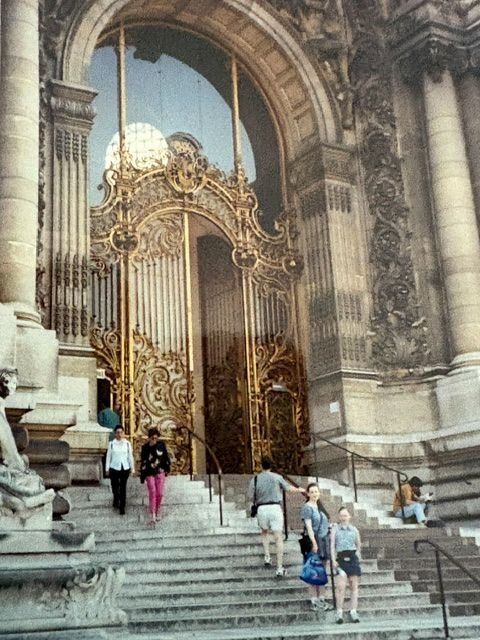
Petit Palais
A sweeping staircase, monumental stone arch, and elaborate gilded gate mark the entrance to the Petit Palais. Designed by architect Charles Girault for the Paris Universal Exposition of 1900, the building made architecture and craftsmanship part of the exhibition itself. Girault also designed the entrance gate. Its curling metalwork and intricate ornament fill the archway […]
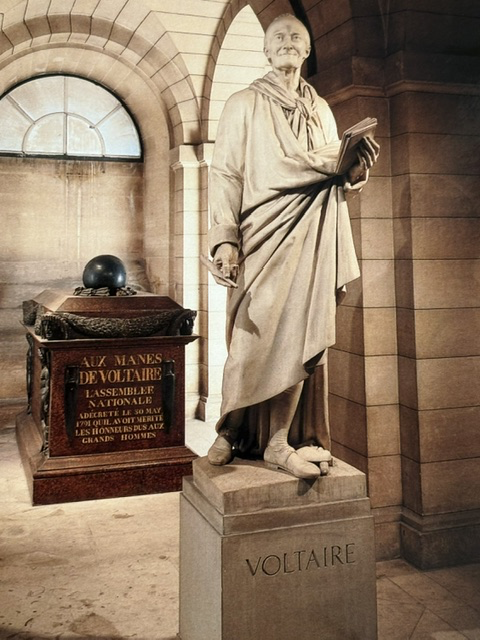
Voltaire in Pantheon
During our visit to the Pantheon in Paris, I took this photo of Voltaire, one of the leading figures of the French Enlightenment. Born in 1694, he was a writer, philosopher and outspoken advocate for freedom of thought and religious tolerance. His ideas challenged the institutions of his day. The statue stands near the entrance to the […]
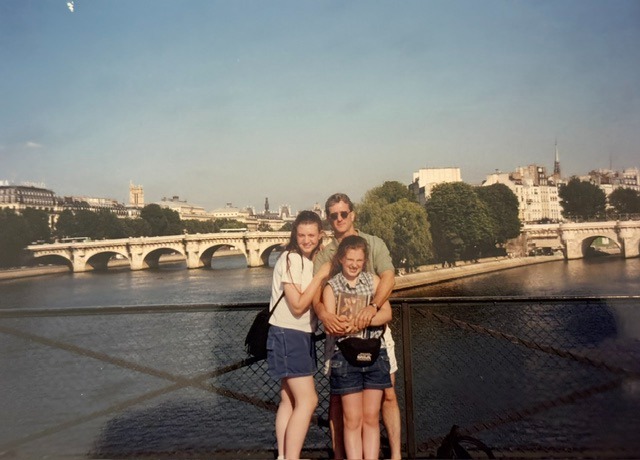
Pont Neuf
Despite its name, which means “New Bridge”, the Pont Neuf is the oldest surviving bridge in Paris. Crossing the Seine in two sections at the western end of the Île de la Cité, it connects the island with both riverbanks. Its construction introduced a different way of moving through, and looking at, the city. Henri […]

