The Winged Victory of Samothrace
Of course, our family vacation in France had to include a visit to the Louvre. We explored its galleries and encountered many of its celebrated works, but this photograph captures our approach to one of the museum’s most dramatic masterpieces: the Winged Victory of Samothrace.
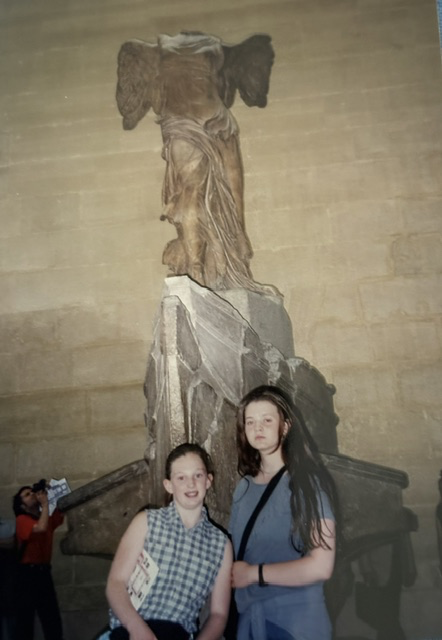
Created around 200–175 BC, the marble sculpture represents Nike, the ancient Greek goddess of victory. She originally stood within the Sanctuary of the Great Gods on the Greek island of Samothrace, where she was presented as an offering to the gods. Although the event it commemorated is uncertain, its naval imagery suggests that it celebrated a victory at sea.
Nike stands on the carved stone prow of a ship. Her wings extend behind her while her clothing appears to be driven against her body by the wind and sea. The sculptor transformed solid marble into something that seems filled with movement. Even without her head and arms, the figure conveys strength, forward motion, and triumph.
The statue was discovered on Samothrace in 1863 by Charles Champoiseau, a French diplomat and amateur archaeologist. It was transported to the Louvre in sections and gradually reconstructed as additional fragments were identified. In 1883, it was placed at the top of the Daru staircase, where its elevated position recalls the way it was originally intended to be viewed from below and at a distance.
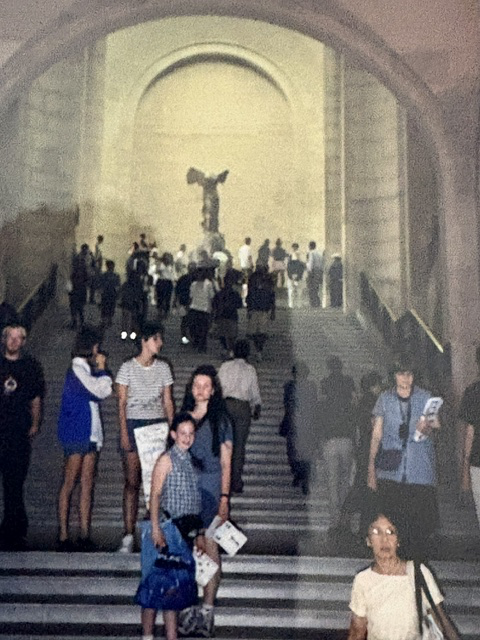
The statue’s position at the top of the Daru staircase makes the approach part of the experience. Our photographs capture our daughters beneath the Winged Victory, bringing our family visit together with a work created more than two thousand years ago.
Read More From Nancy
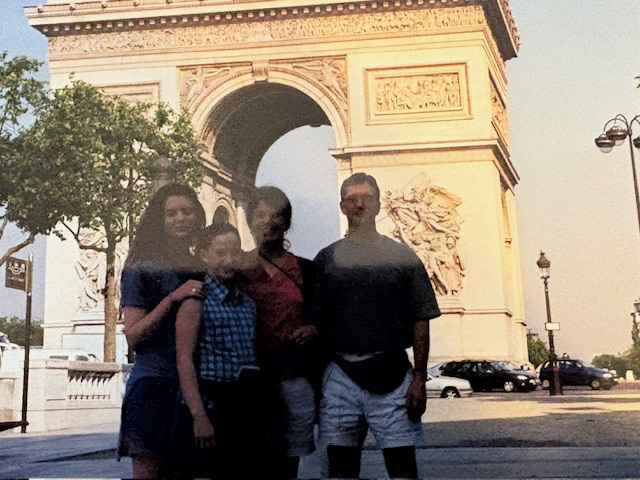
Arc de Triomphe
Few landmarks instantly signal a visit to Paris quite like the Arc de Triomphe. It appears again and again in family photographs, historic parade scenes and images of victory marches. Standing at the western end of the Champs-Elysees, the great arch stands where French history unfolded. The story of the Arc begins in 1806, when Napoleon […]
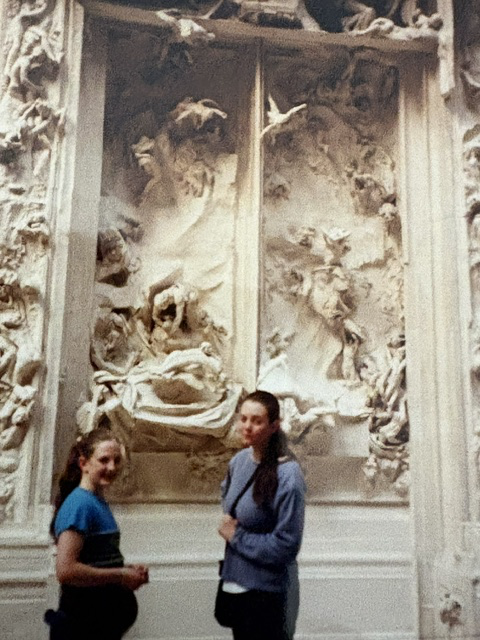
The Gates of Hell
During our time in Paris, we encountered one of Auguste Rodin’s most ambitious creations, The Gates of Hell. More than six meters high and filled with nearly two hundred twisting, falling, and struggling figures, the monumental sculpture presents a vision of humanity suspended between suffering, judgment, and despair. Rodin received the commission from the French […]
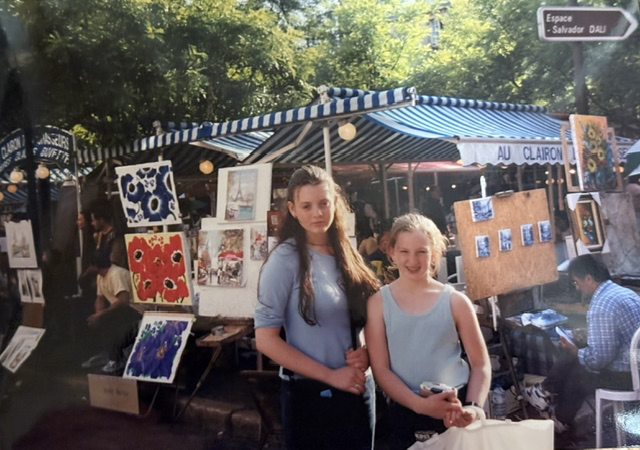
The Artists of Montmartre
During our family visit to Paris, we explored Montmartre, the historic neighborhood that rises above the city on its northern side. This photograph of our daughters was taken among the artists’ stalls near the Place du Tertre, not far from the Basilica of Sacré-Cœur. By the late nineteenth century, Montmartre had become home to a […]

