Messages From the Past
A Window Into Everyday Life on the American Home Front,
These correspondences preserved from World War II, offer a rare, unfiltered look into what it meant to live through World War II as an American civilian. These letters, written by my parents and grandmother, caught in an extraordinary moment in time, capture the realities of a nation mobilized for war: rationing, restricted travel, overcrowded railways, financial strain, and the emotional weight carried by families waiting for news from their loved ones.
In these pages we see how mothers worried about their sons, wives longed to be with their husbands, and how soldiers coped with situations that pushed them to their limits. We also glimpse the infrastructure of wartime America, hospital trains transporting the wounded, shifting railroad schedules as troop movement took priority, and the everyday acceptance of sacrifice as a civic duty.
Beyond the headlines, these letters tell the story of how war shaped daily existence: the uncertainty of when loved ones would return, the struggle to balance hope with hardship, and the quiet resilience found in kitchens, train stations, and small towns across the country. Together, they illuminate a world in which ordinary Americans live with constant shortages, ever-changing rules, and the unspoken expectation to endure.
Recent Letters
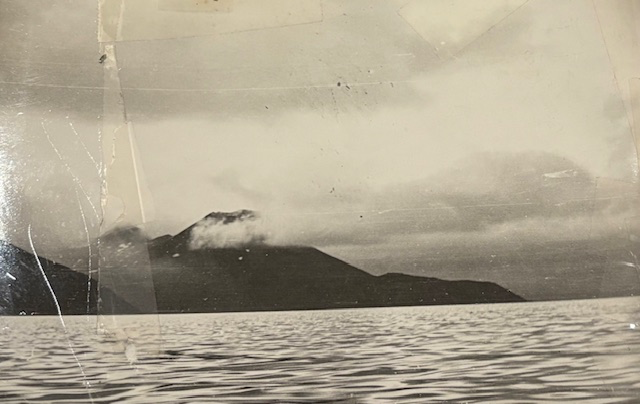
Eider Point on Unalaska Island – Aleutian Island
This photograph my father sent home is of water, land and sky and without the words on the back, I would not know where this was located. My father wrote on the back: “LOOKING FROM ISLAND AMAKNAK, DUTCH HARBOR ACROSS TO EIDER POINT ON UNALASKA ISLAND, EIDER POINT KNOWN AS FORT LEANARD OF “B” BTRY 264 CA” […]
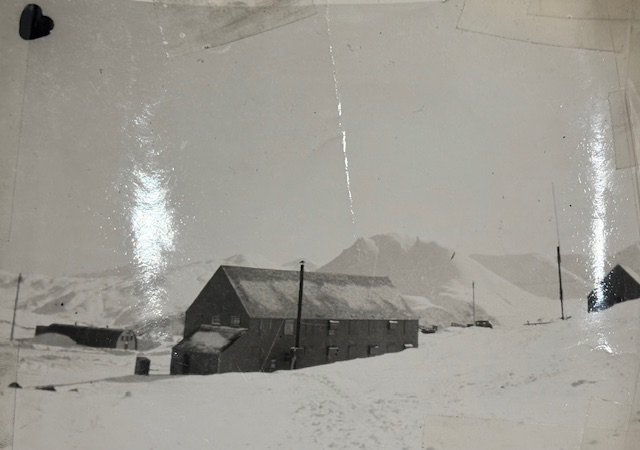
On top of Mt Ballyhoo on Amaknak Island
This photo tells more of my father’s story in the Aleutians. On the back of the photo, my father wrote: “ON TOP OF MT. BALLYHOO (BARRACKS HOUSING HQ BTRY 264TH CA) ON AMAKNAK ISLAND OVERLOOKING DUTCH HARBOR IN ALEUTIAN ISLANDS WINTER OF ’43” This placed my father on Mount Ballyhoo, the steep volcanic rise that […]
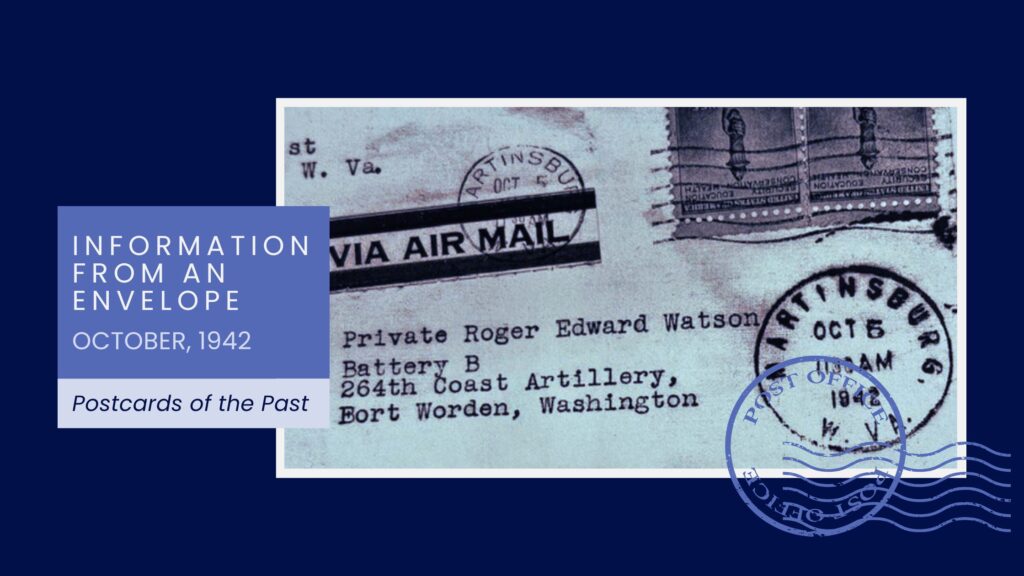
Information from an Envelope
In October 1942, my grandmother’s letters to my father were address to Battery B, 264th Coast Artillery, Fort Worden, Washington. This places my father within the coastal defense system, of the Pacific Northwest during World War II. Fort Worden is located at Point Wilson in Port Townsend, Washington, guiding the entrance to Puget Sound. Along […]
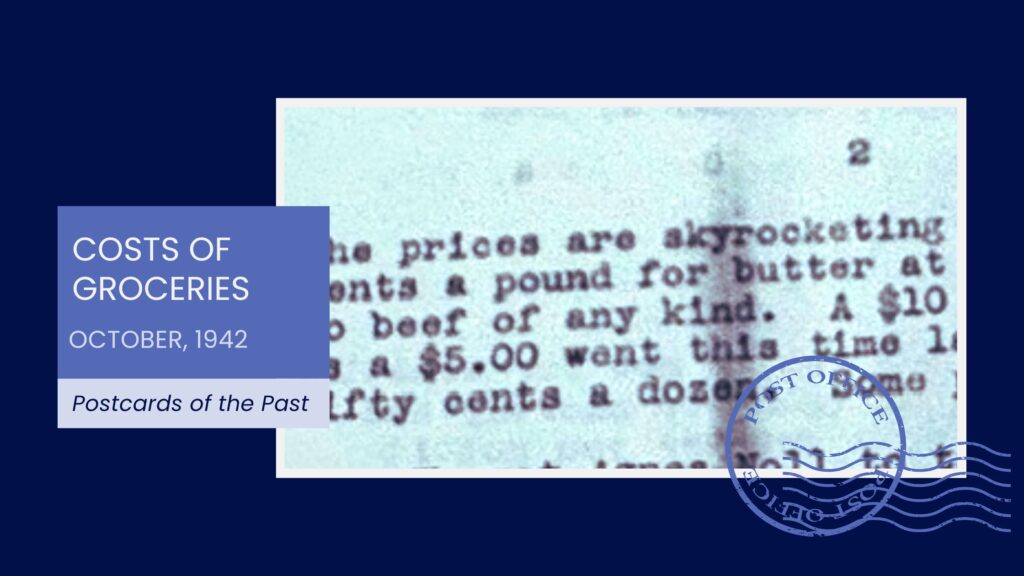
Costs of Groceries
In October 1942, as my father was stationed in Washington State, my grandmother wrote to him describing how profoundly life on the home front had changed. Her letter reflects a nation fully mobilized for war, where shortage, rationing and rising prices had become part of everyday reality. What she shared was not abstract, but lived […]
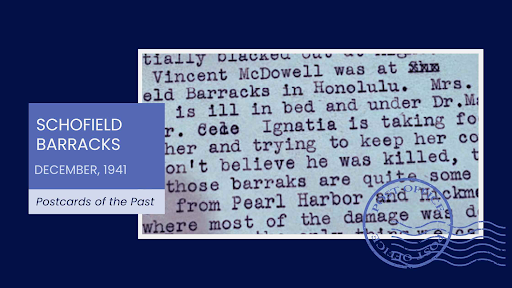
Schofield Barracks
Schofield Barracks sits in the center of Oahu, inland from the coast. Established in 1908 and named for Lt. Gen John M Schofield, the post was deliberately placed away from the shoreline to function as a permanent U.S. Army installation. It was designed for training, housing and command and not for naval operations. By 1941, Schofield […]
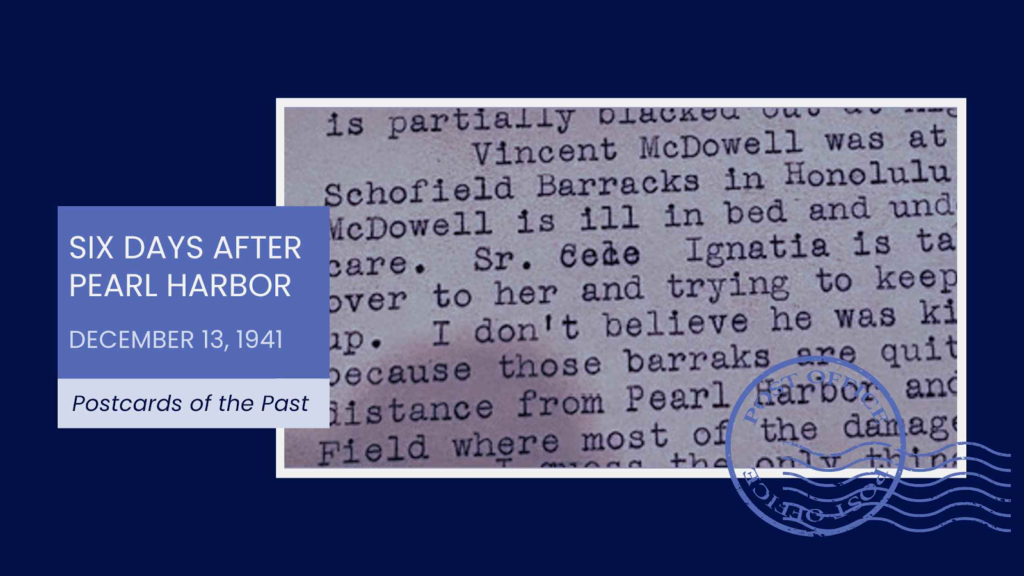
Six Days After Pearl Harbor
In another passage of her December 13, 1941 letter, my grandmother reveals how personally the attack on Pearl Harbor was being felt, even far from Hawaii. The war was no longer an abstract headline, it had names, faces and families attached to it. She wrote: “Vincent McDowell was at Schofield Barracks in Honolulu. Mrs McDowell […]
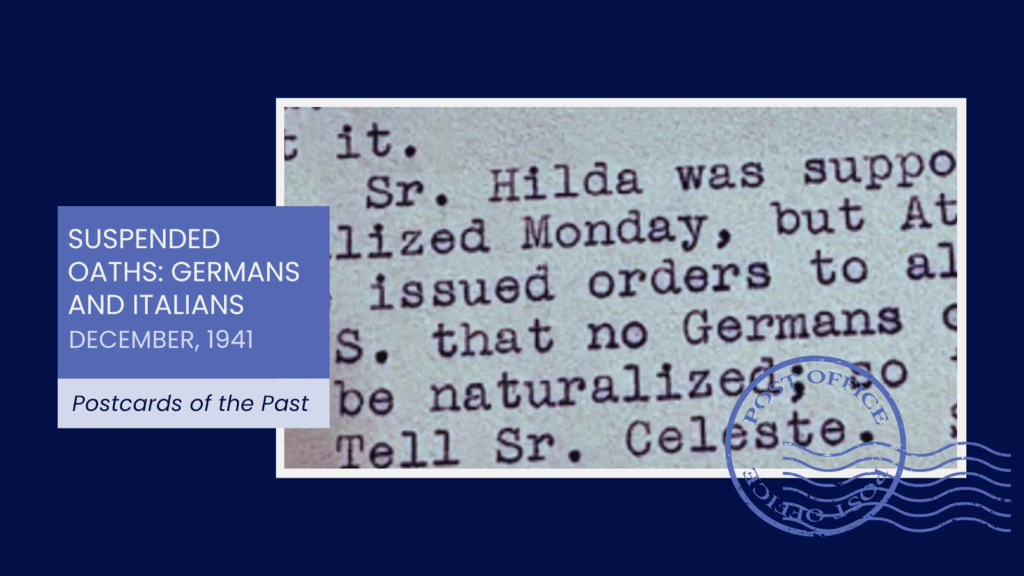
Suspended Oaths: Germans and Italians
In a letter dated December 13, 1941, just six days after the attack on Pearl Harbor, my grandmother recorded how quickly the war reached into ordinary lives. My father was living in Saginaw, Michigan at the time, having just turned twenty-one, and the country was still reeling from the shock of December 7. The United […]
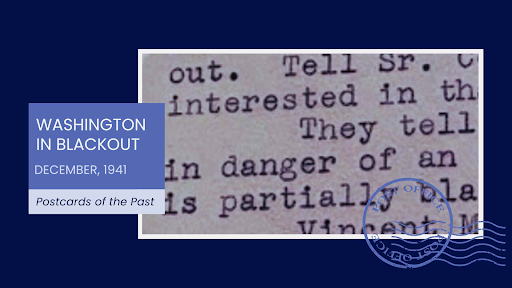
Washington in Blackout
In the December 13, 1941, letter, my grandmother described another unsettling reality of those first days after Pearl Harbor, the fear that the war might reach the American mainland. Information was fragmentary, rumors circulated freely, and no one yet knew what form the conflict would take. She wrote simply and without drama: “They tell us […]
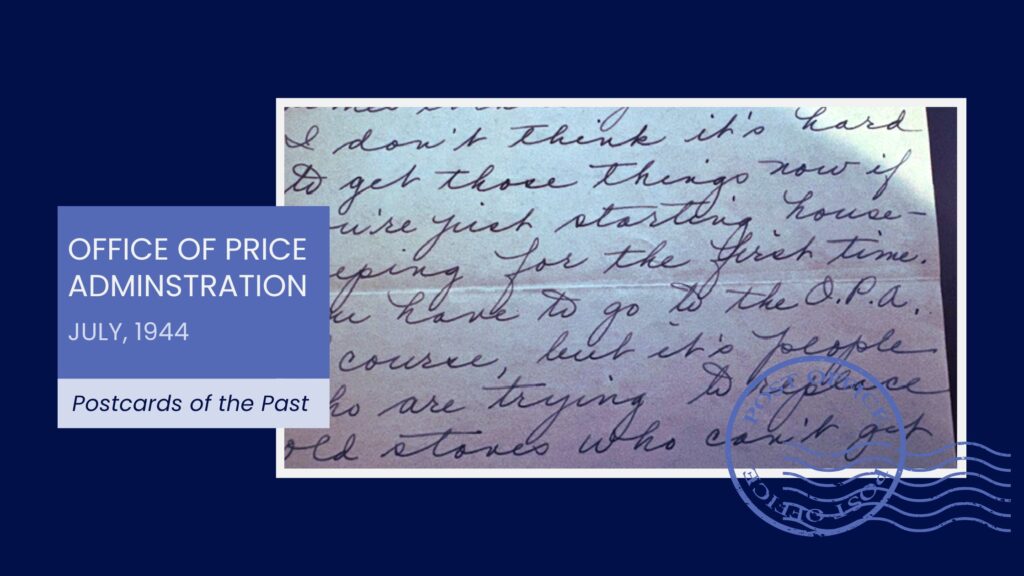
Office of Price Administration
In her July 19, 1944, letter, as my mother was already making plans to begin a life with my father, she turned her attention to the practical details of setting up a household, details shaped by wartime reality. With calm confidence, she wrote: “I don’t think it’s hard to get those things now if you’re […]
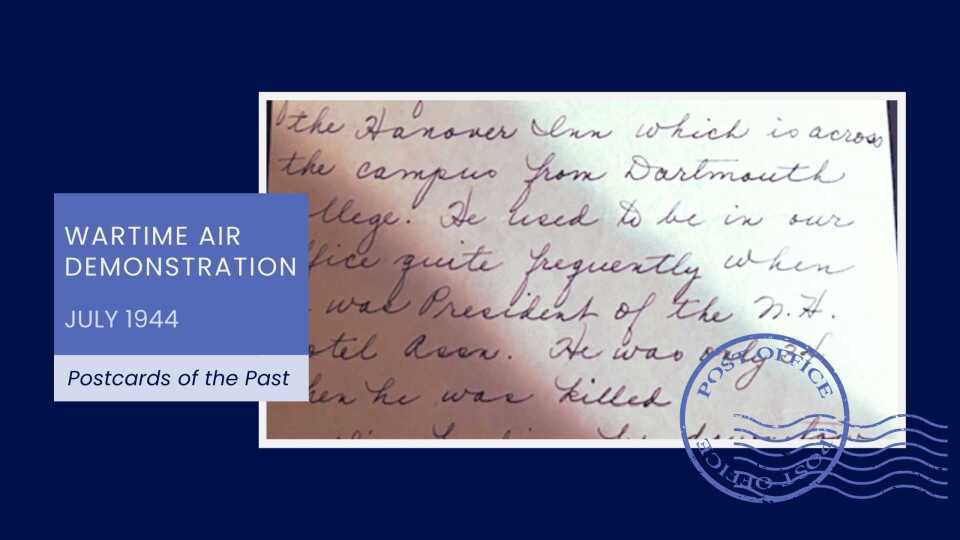
Wartime Air Demonstration
In a letter dated July 28, 1944, my mother responded to news my father had shared about a tragic accident that occurred during an air show. Her words suggest not only how quickly such events traveled through letters and conversations: “Mother read to me what you wrote about that plane accident that occurred while that […]
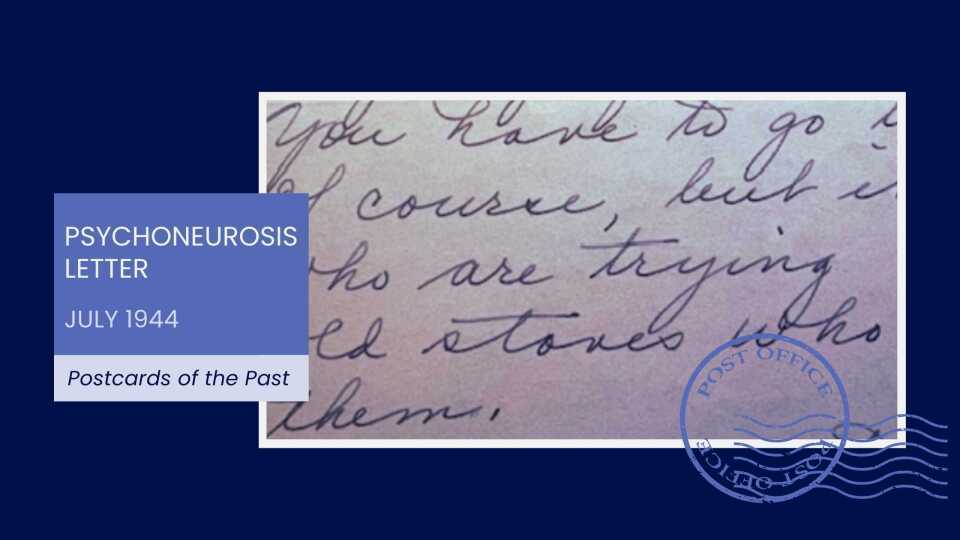
Psychoneurosis Letter
Reading my grandmother’s words, it is clear how complicated and emotionally charged the term psychoneurosis was in 1944, She writes: “You will note that Dr. Link, a noted psychologist, does not believe in the use of that term, that to call a man a ‘psychoneurotic’ is to go a long way towards making him one. […]
Presidential Campaigns
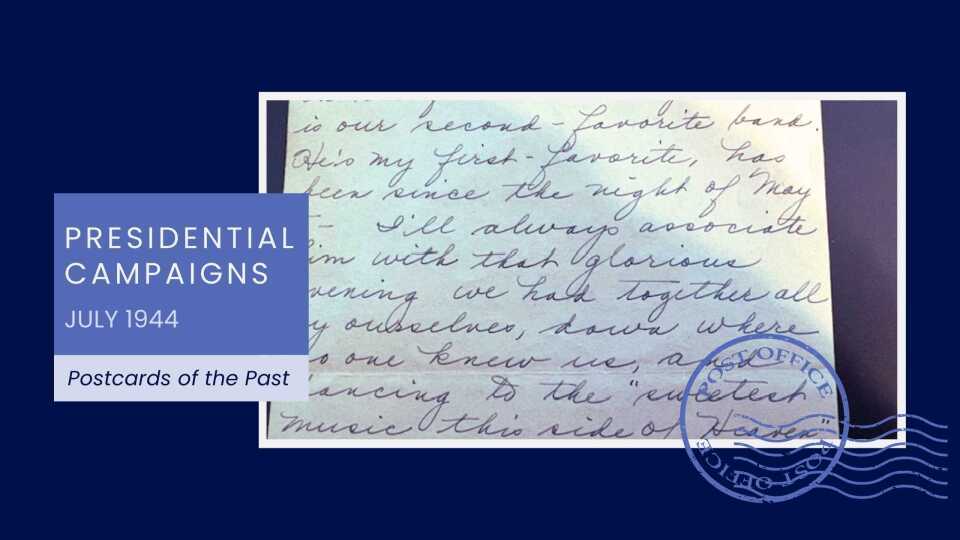
My mother’s letter of July 11, 1944, contains a single line that instantly reveals just how different presidential campaigns were then compared to today: “I see by tonight’s headlines that Roosevelt says he is going to run for a fourth term very reluctantly. Humph!” There was no televised announcement, no rally, no choreographed campaign rollout. Instead, Americans opened […]

