Eider Point on Unalaska Island – Aleutian Island
1942Dearest Reader,
This photograph my father sent home is of water, land and sky and without the words on the back, I would not know where this was located. My father wrote on the back:
“LOOKING FROM ISLAND AMAKNAK, DUTCH HARBOR ACROSS TO EIDER POINT ON UNALASKA ISLAND, EIDER POINT KNOWN AS FORT LEANARD OF “B” BTRY 264 CA”
With this brief description, my father placed himself firmly in the Aleutian Islands during World War II, at one of the most remote and strategically critical locations in the American war effort. He was standing on Amaknak Island, part of the natural harbor system at Dutch Harbor, looking across the cold, often fog-laden water toward Eider Point on Unalaska Island.
Across that stretch of water stood Fort Learnard, home of Battery B, 264th Coast Artillery, my father’s unit. This was a defensive line of sight. The guns positioned at Eider Point were tasked with protecting Dutch Harbor from enemy ships and aircraft, guarding important naval and supply hubs in the North Pacific.
In 1942, Dutch Harbor had already proven its vulnerability. In June of that year, Japanese aircraft attacked the harbor, damaging installations and killing military personnel and civilians.
The assault was part of the broader Aleutian Campaign, which led to the occupation of Attu and Kiska, marking the only instance during World War II in which enemy forces occupied American soil.
Life in the Aleutians was shaped as much by the environment as by the enemy. Fog rolled in without warning. Wind and cold were constant. Isolation was profound. My father’s photo shared this remote place and shared the names of the islands. Standing on Amaknak Island, looking toward Eider Point, my father captured his world inhabited during the war: a distant frontier and a guarded harbor.
Dr. Nancy Watson
Washington
Read More From Nancy
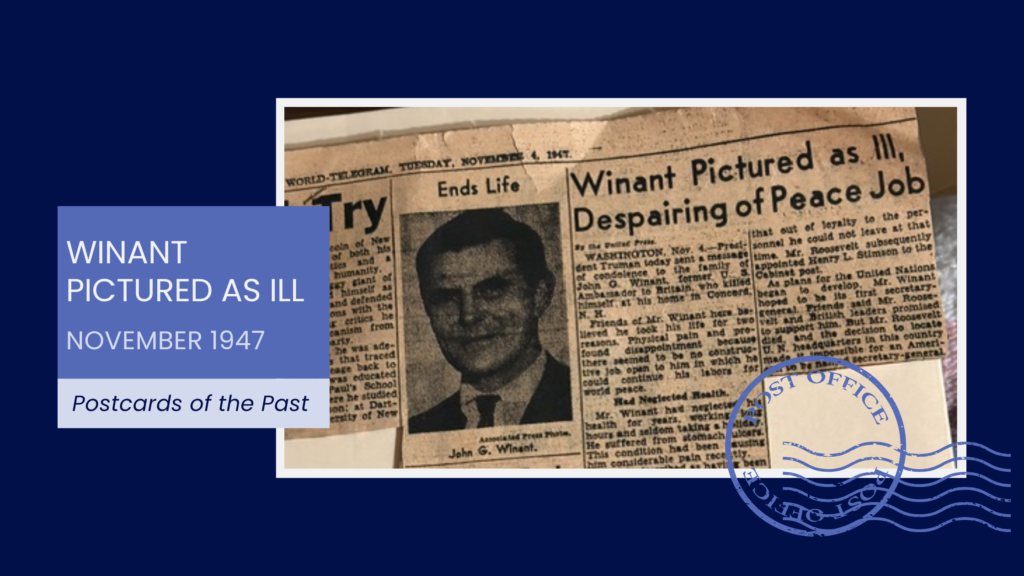
Winant Pictured as Ill
Among my mother’s papers, I found this newspaper clipping from the New York World-Telegram, dated November 4, 1947. At first glance, it appears to be an ordinary newspaper article, but it captures one of the final chapters in the life of one of New Hampshire’s most respected public servants. Just fifteen days after this story was […]
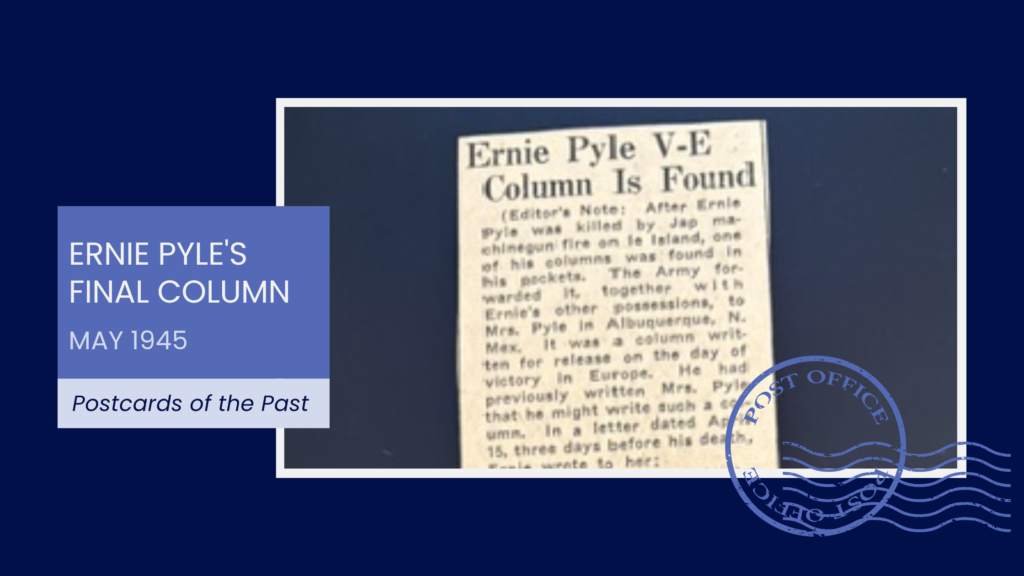
Ernie Pyle’s Final Column
Among my parents’ papers was this newspaper clipping titled “Ernie Pyle V-E Column Is Found,“ with the handwritten date of May 11, 1945. I do not know why they chose to save it, but its preservation suggests that it held some significance for them during the closing days of World War II. The article reports the publication […]

Harold T. Smith
The headlines is direct: “Harold T. Smith, 25, with Coast Guard, Dies of Injuries“ The article tells his story in the same way as the other clippings: name, address, family, education and service. He was from Queen Street in Martinsburg, the only son of his parents, a graduate of Martinsburg High School, trained in aeronautics, and in the Coast […]

