Fall River, MA
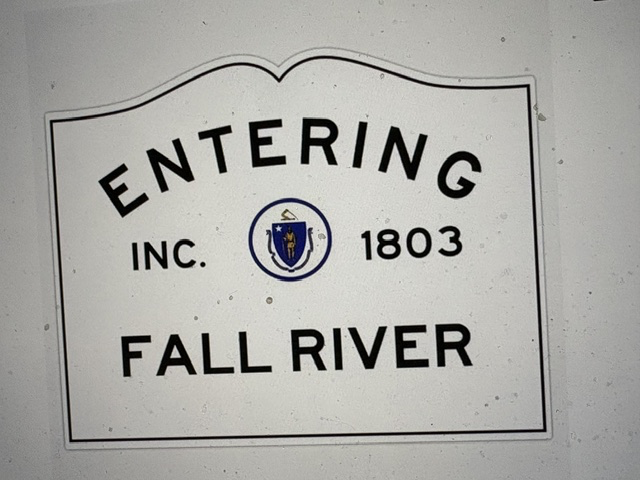
Fall River was incorporated in 1803, though its roots extend back to the colonial era when the area was settled along the Quequechan River and Mount Hope Bay. During the nineteenth century, the city emerged as one of the leading textile manufacturing centers in the United States, earning a reputation as the "Spindle City" for its vast network of cotton mills that powered the local economy and attracted generations of immigrant workers from around the world.
Fall River is perhaps best known for two very different chapters of its history. It was the birthplace of the luxury ocean liner RMS Titanic, whose owner, the White Star Line, maintained strong connections to the city through the American Printing Company and local textile interests. The city is also forever linked to the infamous 1892 Lizzie Borden murders, one of the most famous unsolved cases in American history.
Today, Fall River reflects these many layers of his history: maritime commerce, industry and immigration. Overlooking Mount Hope Bay and home to landmarks such as Battleship Cove and the Lizzie Borden House, the city tells the story of New England's industrial rise and the diverse communities whose labor and traditions helped shape.
Recent Posts
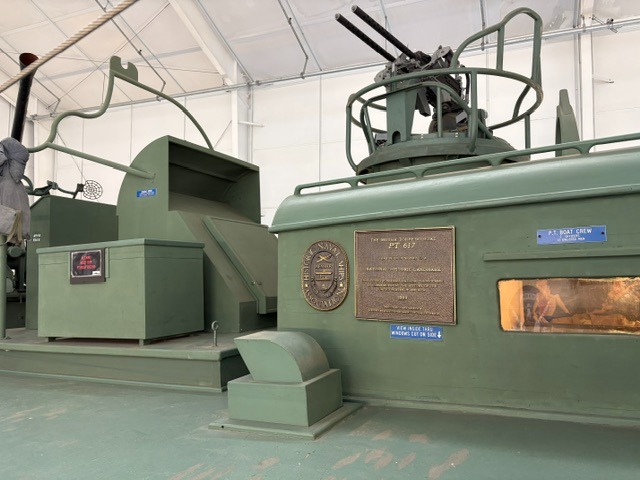
PT 617: A Small Boat with a Wartime Purpose
Preserved indoors at Battleship Cove, PT 617 represents a form of naval warfare built around small crews, speed, and heavily armed wooden boats. Its compact deck brings weapons, equipment, and crew stations close together, revealing how much fighting capability designers fitted into an eighty-foot hull. PT stood for “patrol torpedo.” Built by the Elco Naval […]
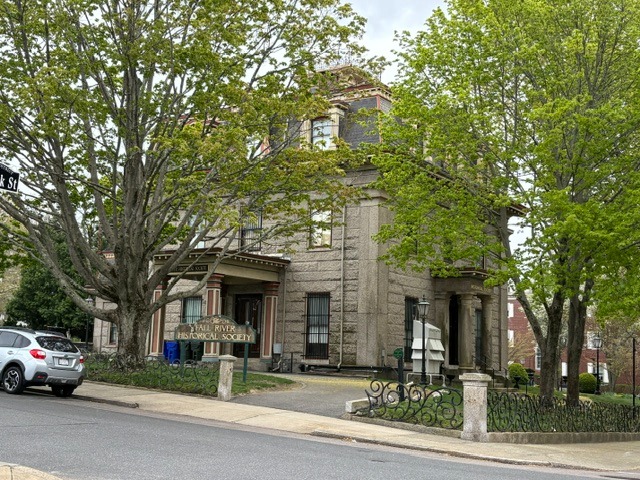
The Fall River Historical Society Mansion
The granite mansion at 451 Rock Street has occupied two locations and served several purposes during its long history. Built as a private home in 1843, it became associated with the Underground Railroad, underwent relocation and architectural transformation, and eventually became the home of the Fall River Historical Society. The house was originally constructed on […]
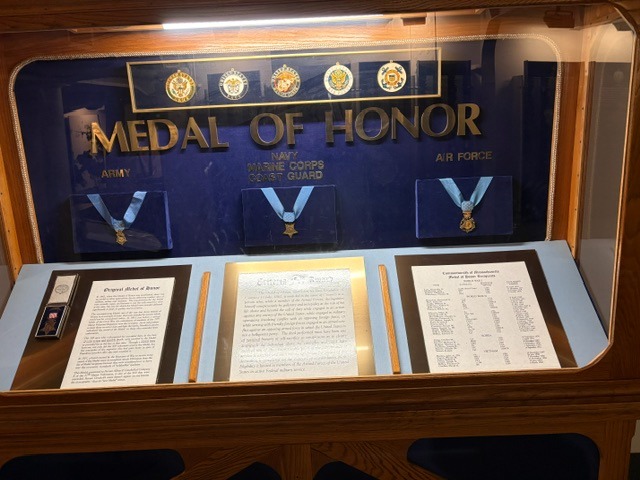
The Medal of Honor at Battleship Cove
At Battleship Cove, a display of the Medal of Honor introduces the history of an award associated with extraordinary courage. The medals are small objects, but their significance rests in the actions they recognize: individuals risking their lives above and beyond the call of duty. The Medal of Honor originated during the Civil War. President […]
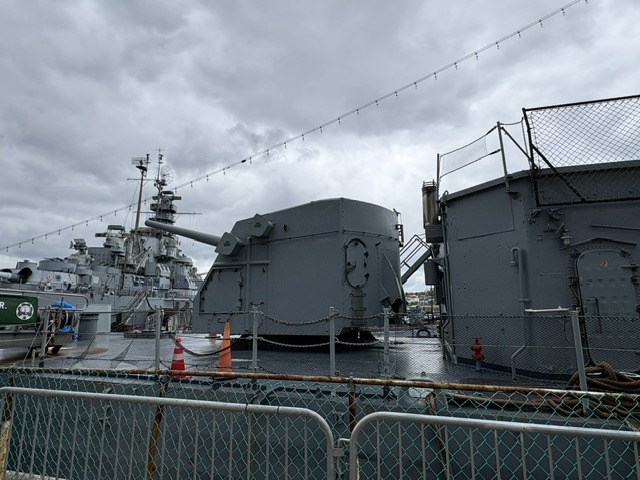
USS Joseph P. Kennedy Jr.
Preserved at Battleship Cove, USS Joseph P. Kennedy Jr. represents a generation of destroyers that served through the changing demands of the postwar Navy. Known to its crew as the “Joey P,” the ship was built at the Fore River Shipyard in Quincy, Massachusetts, and commissioned in December 1945. Its career would include the Korean […]
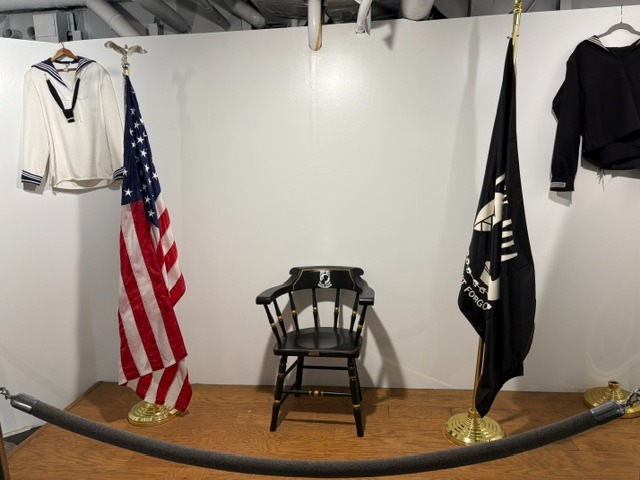
Remembering POWs and the Missing
At Battleship Cove, an empty black chair stands between the American flag and the POW/MIA flag. Naval uniforms hang nearby, placing this quiet memorial within the everyday clothing of military service. The chair’s unoccupied seat gives absence a visible place. Empty chairs are used in POW/MIA remembrance to honor those who endured captivity and those […]
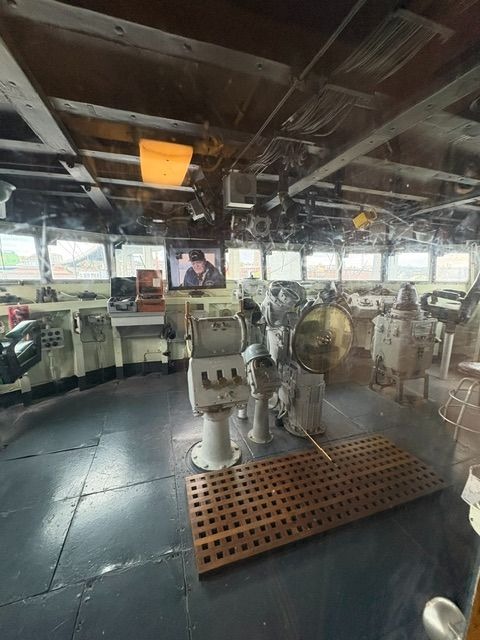
The Ship’s Bridge at Battleship Cove
Surrounded by windows, instruments, and communication equipment, the ship’s bridge was a working space where decisions became movement. From here, officers and sailors directed the vessel’s course and speed, watched surrounding waters, and coordinated with personnel elsewhere aboard ship. The wheel was one part of that operation. A helmsman carried out steering orders, while another […]
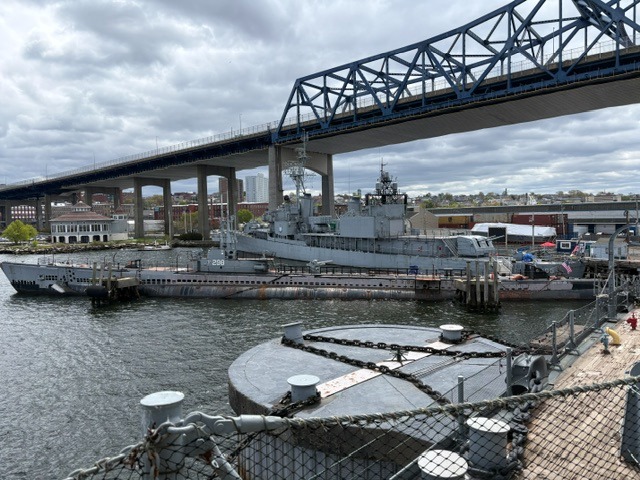
USS Lionfish
Moored at Battleship Cove, USS Lionfish preserves a different experience of naval warfare from the towering surface ships nearby. Its long, low hull belonged to a vessel designed to patrol beneath the water, where concealment, careful observation, and coordination among the crew were essential to survival. Built in Philadelphia, Lionfish was a Balao-class submarine commissioned […]
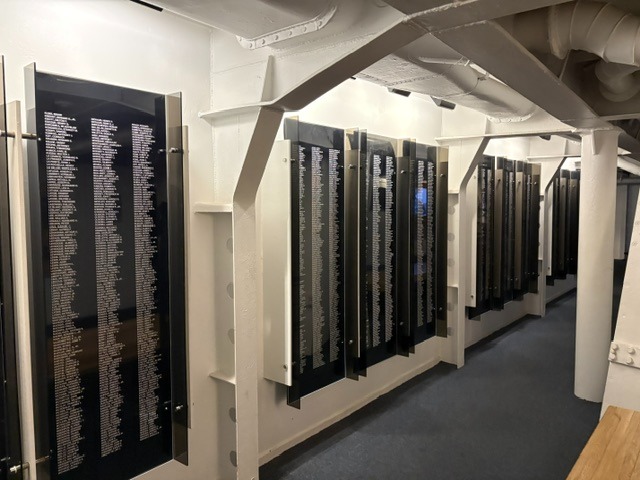
The Memorial Room aboard USS Massachusetts
Inside USS Massachusetts at Battleship Cove, a room lined with names gives the preserved warship a deeply personal purpose. The Memorial Room honors the more than 13,000 Massachusetts men and women from all branches of the armed forces who died in service to their country during World War II. Battleship Cove serves as the Commonwealth’s […]
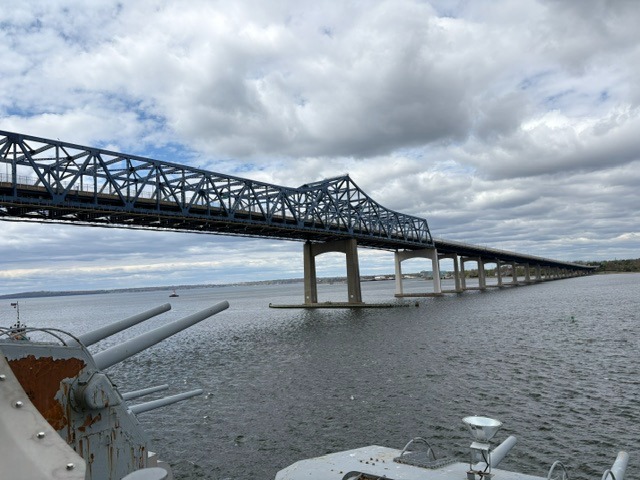
Charles M. Braga Jr. Memorial Bridge
Stretching across the Taunton River between Fall River and Somerset, the Charles M. Braga Jr. Memorial Bridge is one of the most recognizable structures on the city’s waterfront. Its steel framework carries Interstate 195 high above the water, connecting communities across southeastern Massachusetts. Opened in 1966, the bridge became an important part of the region’s […]
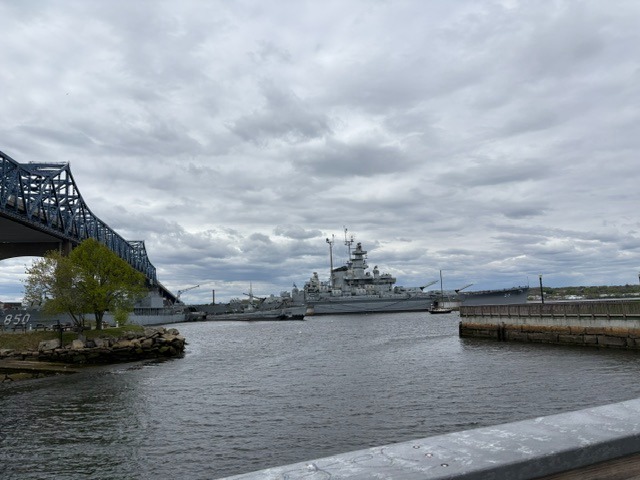
Fall River’s Waterfront
Along the Taunton River, Fall River’s waterfront brings together the city’s industrial past, maritime heritage, and efforts to preserve both. The ships at Battleship Cove occupy a shoreline that once helped connect a manufacturing city with markets and travelers beyond southeastern Massachusetts. Today, the river remains central to Fall River’s identity, while public walkways provide […]
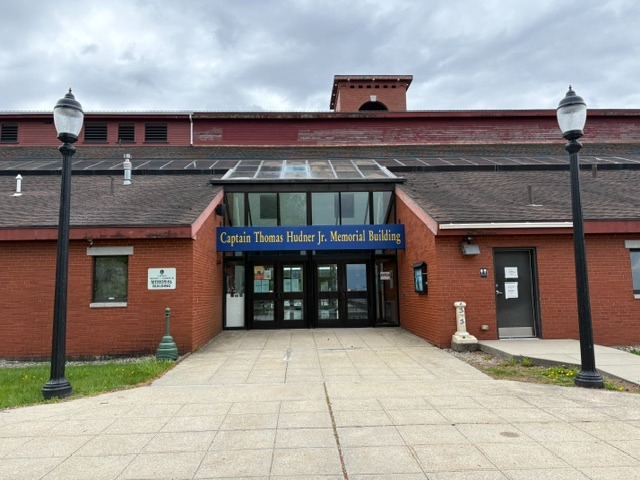
Captain Thomas Hudner Jr. Memorial Building
At Fall River Heritage State Park, the Captain Thomas Hudner Jr. Memorial Building honors a hometown naval aviator whose courage became part of the history of the Korean War. The waterfront building carries the name of a man who risked his life in an attempt to save a fellow pilot stranded behind enemy lines. Massachusetts […]
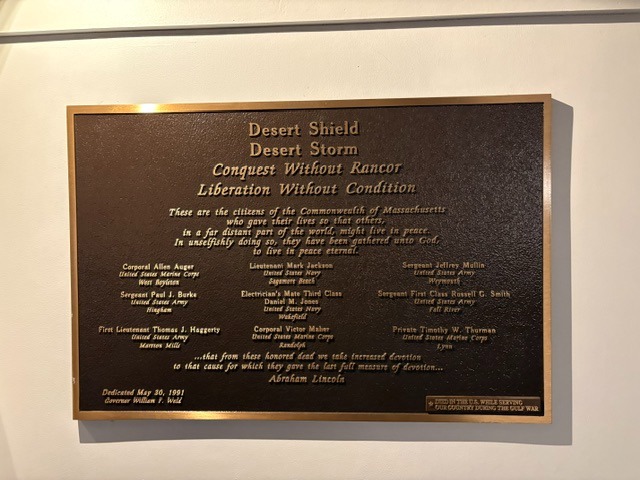
Desert Shield and Desert Storm Memorial
At Battleship Cove, a bronze plaque remembers Massachusetts service members who lost their lives during Operations Desert Shield and Desert Storm. Their names appear with military ranks, branches of service, and hometowns, connecting a conflict in the Persian Gulf with communities across the Commonwealth. The crisis began on August 2, 1990, when Iraq invaded Kuwait. […]

