The Medal of Honor at Battleship Cove
At Battleship Cove, a display of the Medal of Honor introduces the history of an award associated with extraordinary courage. The medals are small objects, but their significance rests in the actions they recognize: individuals risking their lives above and beyond the call of duty.
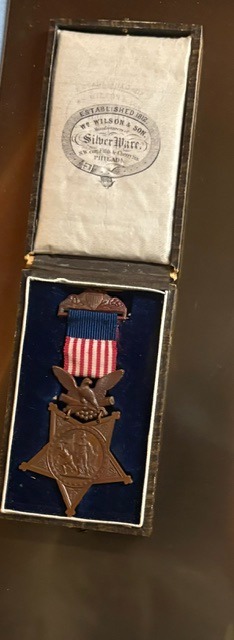
The Medal of Honor originated during the Civil War. President Abraham Lincoln approved legislation creating a Navy medal in December 1861, followed by an Army medal in July 1862. Massachusetts Senator Henry Wilson introduced the legislation for the Army award, giving the Commonwealth a connection to its beginnings.
The award’s appearance and requirements developed over time. Early medals differed from the familiar designs suspended from pale blue ribbons. Three versions eventually emerged, for the Army, Navy, and Air Force, with distinct imagery surrounding the central star. Each represents the same exceptional standard of valor.
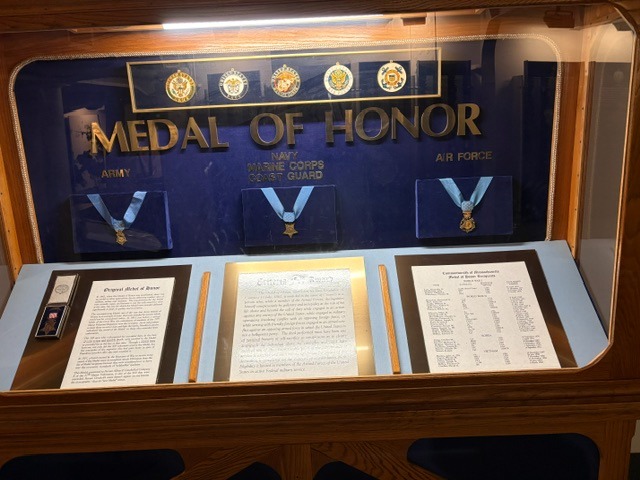
An early medal displayed alongside later examples makes that evolution tangible. The changing ribbons, shapes, and symbols trace the history of the decoration itself, while the accompanying accounts direct attention to the people who received it. Understanding a medal requires looking beyond its design to the circumstances in which someone acted.
Within Battleship Cove, these objects belong to a larger setting devoted to military service and remembrance. The preserved ships reveal the equipment and environments of naval warfare; the Medal of Honor display brings attention to individual decisions made within such dangerous circumstances. Together, they connect the material history of war with the courage of those who served.
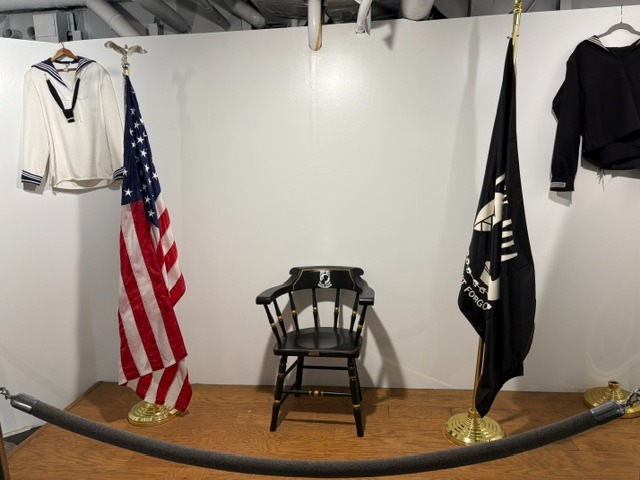
Read More From Nancy
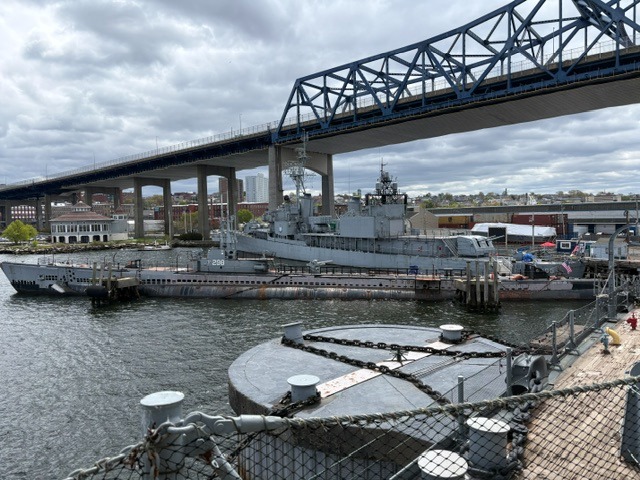
USS Lionfish
Moored at Battleship Cove, USS Lionfish preserves a different experience of naval warfare from the towering surface ships nearby. Its long, low hull belonged to a vessel designed to patrol beneath the water, where concealment, careful observation, and coordination among the crew were essential to survival. Built in Philadelphia, Lionfish was a Balao-class submarine commissioned […]
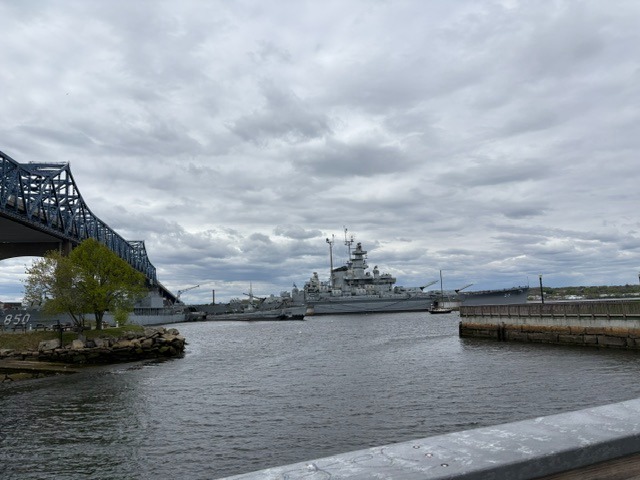
Fall River’s Waterfront
Along the Taunton River, Fall River’s waterfront brings together the city’s industrial past, maritime heritage, and efforts to preserve both. The ships at Battleship Cove occupy a shoreline that once helped connect a manufacturing city with markets and travelers beyond southeastern Massachusetts. Today, the river remains central to Fall River’s identity, while public walkways provide […]
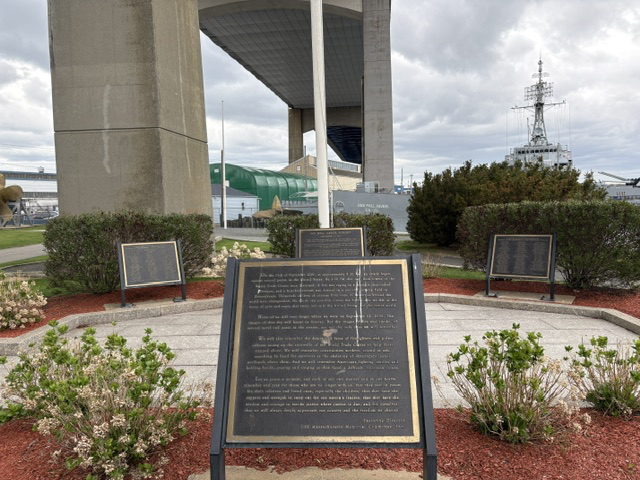
Tribute to “Fall River”
Along the waterfront near Battleship Cove, I came upon the solemn memorial dedicated to the crew of the USS Fall River, the heavy cruiser named in honor of the city. Positioned beneath the towering Braga Bridge and overlooking Mount Hope Bay, the memorial serves as a lasting tribute to the men who served aboard the ship […]

