The Samuel Lincoln House
This house on North Street in Hingham marks the beginning of President Abraham Lincoln’s family story in America. The historical marker beside it identifies the property purchased in 1649 by Samuel Lincoln, the president’s fourth great-grandfather.
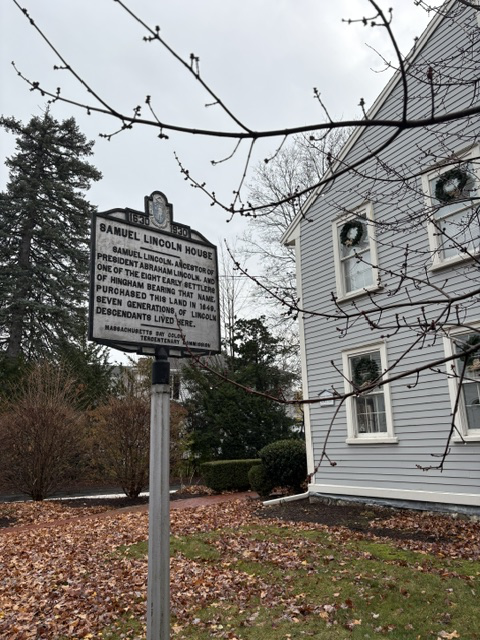
Samuel Lincoln was born in England in 1622 and came to Massachusetts while still a teenager. Known as “Samuel the Weaver”, he was one of several early Hingham settlers who shared the Lincoln name. He married, raised a large family, and established the American branch from which Abraham Lincoln would eventually descend.
The marker commemorates the land Samuel purchased rather than claiming that he constructed the house now standing upon it. The present Samuel Lincoln House is generally dated to about 1721 and is believed to have been built by his grandson, who was also named Samuel. This distinction makes the property no less significant: it remained connected to the same family for generations.
According to the marker, seven generations of Lincoln descendants lived here. The house therefore represents more than one famous ancestral connection. It preserves the story of a family rooted in Hingham for centuries before one of its descendants was born in a Kentucky log cabin and eventually became the sixteenth president of the United States.
The marker itself was erected in 1930 by the Massachusetts Bay Colony Tercentenary Commission. During that anniversary year, markers were placed throughout the Commonwealth to identify people, buildings, roads, and events connected with Massachusetts history.
Read More From Nancy
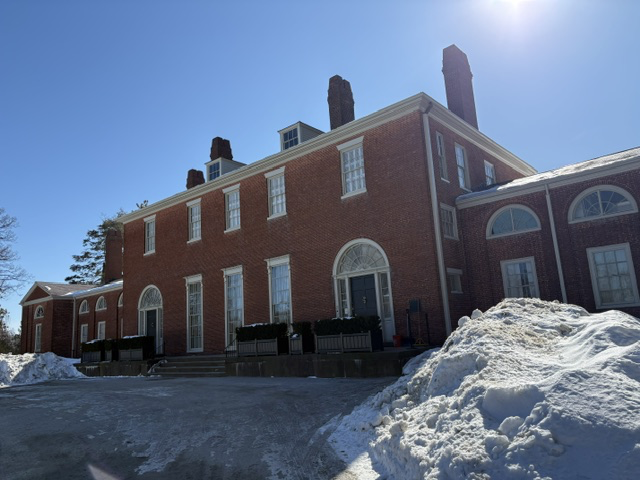
Gore Place
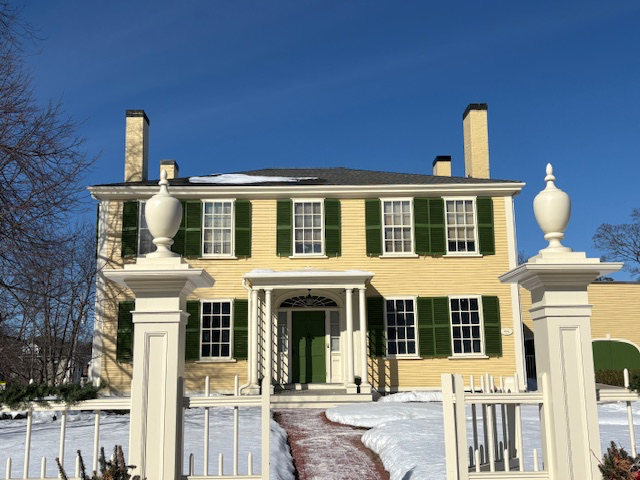
Surrounded by open lawns and mature trees, the Gore Place remains one of the finest surviving Federal-era estates in New England and offers a glimpse into the aspirations of the young American republic. Gore Place was built between 1804 and 1806 for Christopher Gore and his wife, Rebecca Amory Payne Gore. Christopher Gore was one of […]
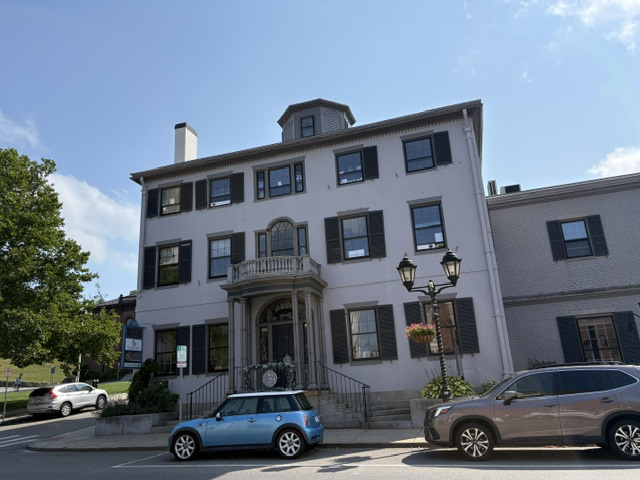
The Bartlett–Russell–Hedge House
Standing prominently on Court Street, the Bartlett–Russell–Hedge House is one of Plymouth’s finest examples of Federal-style architecture. Its symmetrical façade, Palladian window, entrance balcony, and rooftop cupola distinguish it from the surrounding commercial buildings. The house was constructed in 1803 for Joseph Bartlett, a Plymouth Sea captain. Its design has been attributed to Charles Bulfinch, […]
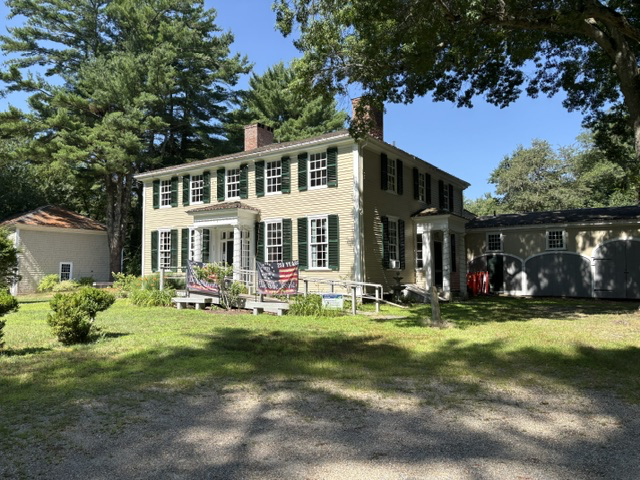
The Oliver Estate
On my way home from our camping trip to Plymouth, I made a side trip to Middleborough specifically to visit the Oliver Estate. I had learned that this was the home of one of Massachusetts’s prominent Loyalist families, and I wanted to understand more about the people who chose to remain loyal to the Crown […]

