New Orleans Jazz National Historical Park
Most national parks preserve a landscape, battlefield or historic building. New Orleans Jazz National Historical Park preserves something less tangible but equally important: the story and continuing sound of jazz.

Jazz emerged in New Orleans as African American musical traditions blended with blues, ragtime, spirituals, brass-band music and influences brought to the city by its Caribbean and European communities. It was heard at neighborhood dances, picnics, funerals, parades and gatherings of social-aid societies. Improvisation allowed musicians to reshape familiar melodies and make every performance their own.
Louis Armstrong was among the musicians who carried the sound of New Orleans to the world. In 1926, Armstrong and his Hot Five recorded “Heebie Jeebies” for Okeh Records. Although he did not invent scat singing, his playful use of improvised syllables helped popularize it and demonstrated how the human voice could become another jazz instrument.
Congress established New Orleans Jazz National Historical Park in1994, through legislation signed by President Bill Clinton. Rather than freezing jazz in the past, the park presents performances, demonstrations and educational programs that allow visitors to hear the music as a living tradition. Our visit helped us understand that jazz is more than a musical style. It is the expression of the communities, experiences and cultural exchanges that shaped New Orleans and ultimately gave America one of its most influential art forms.
Read More From Nancy
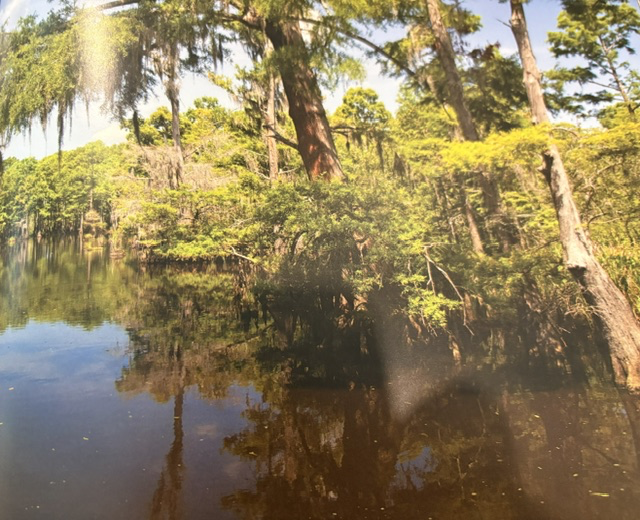
Big Thicket National Preserve
Big Thicket appears to be a single forest stretching across southeast Texas. However, it is something far more remarkable. This is a place where forests, prairies, wetlands, bayous, and bogs exist side by side, creating one of the most biologically diverse landscapes in North America. Established in 1974 as the nation’s first National Preserve, Big […]
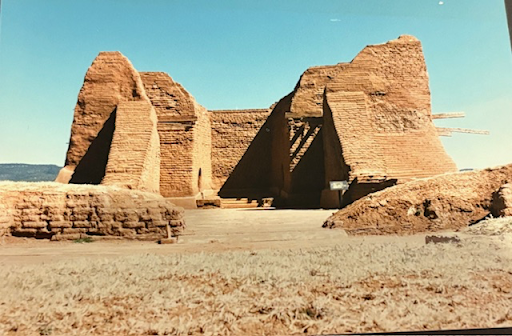
Pecos National Historical Park
Set against the foothills of the Sangre de Cristo Mountains, Pecos National Historical Park is a palace where centuries of history unfold quietly across the land. This land was home to the Pecos Pueblo, one of the most influential pueblos in the Southwest. For hundreds of years, Pecos served as a vital crossroads of trade linking […]

Pea Ridge National Military Park
Many of our National Historic Sites preserve the landscapes of America’s military past, especially Civil War battlefields. So many of these places are found in Pennsylvania, Virginia and the Carolinas, but Pea Ridge stands as one of the important Civil War sites in the West. Here a pivotal chapter of the conflict is found in the […]

