Chaco Culture National Historical Park
The massive stone walls of Chaco Culture National Historical Park rise from the desert floor with a presence that feels ancient. Located deep within the remote high desert of northwestern New Mexico, Chaco is one of the most extraordinary archaeological sites in North America. Even reaching the canyon is a journey, requiring miles of isolated roads through desert landscapes before the great stone ruins suddenly appear against the cliffs and open sky.
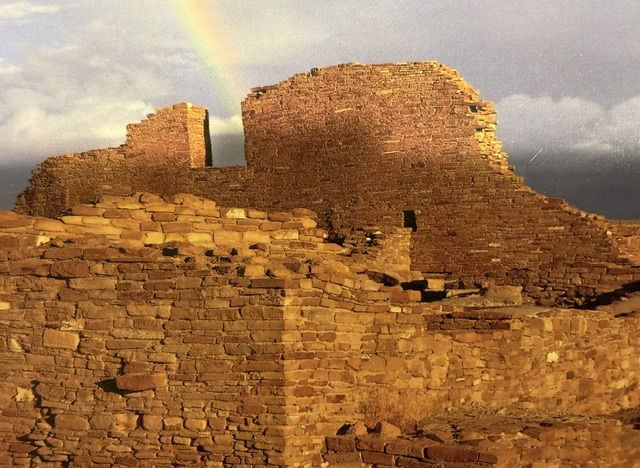
Built between 850 and 1250 AD by ancestral Puebloan peoples, Chaco Canyon became a major cultural, ceremonial and trading center of the Southwest. The scale of the construction is astonishing. Massive “great houses” containing hundreds of rooms were carefully built using shaped sandstone, blocks fitted together with remarkable precision. Multi-story structures, ceremonial kivas, plazas and complex road systems reveal a society with advanced engineering, astronomical knowledge and organizationally ability.
Chaco was not an isolated settlement, but part of a much larger network connected to other ancestral Puebloan communities throughout the Southwest. Roads extending outward from Chaco connected distant communities across difficult desert terrain, demonstrating the canyon’s importance as a regional center.
Recognizing the immense archaeological and cultural significance, the site was first protected as Chaco Canyon National Monument in 1907 by President Theodore Roosevelt. In 1980, Congress expanded and redesignated the area as Chaco Culture National Historical Park to preserve the broader cultural landscape and its connection to the living Pueblo peoples who ancestors built these remarkable communities.
Read More From Nancy
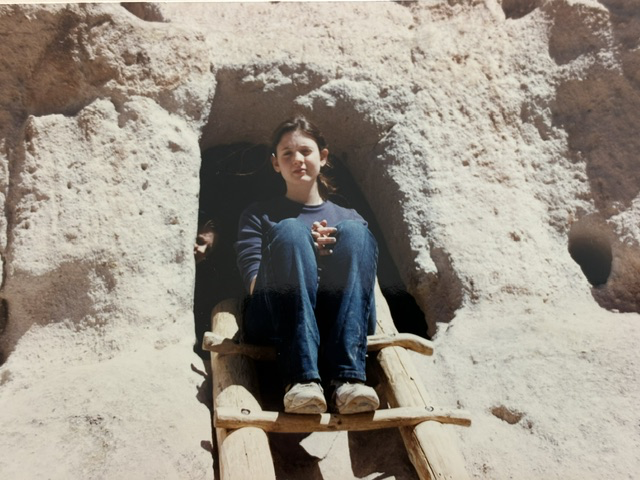
Bandelier National Monument
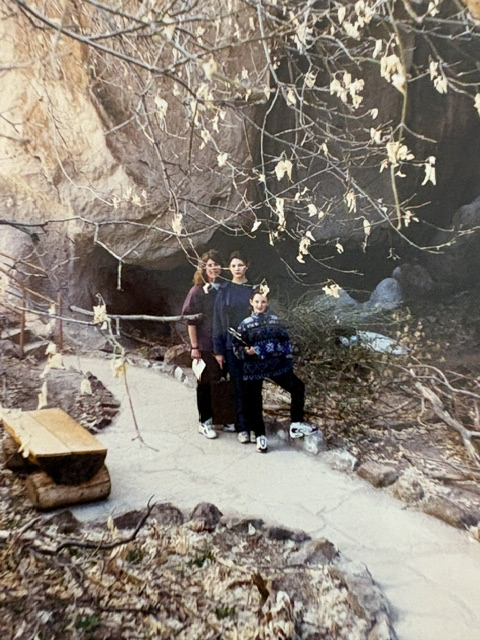
Here at Bandelier National Monument, we walked through canyons, climbed ladders into ancient cliff dwellings and stood inside spaces once occupied by the ancestral Pueblo people. Here history felt immediate and alive. The soft volcanic rock of Bandelier allowed homes, called cavate, to be carved directly into the canyon walls. Climbing those wooden ladders as a family became part […]
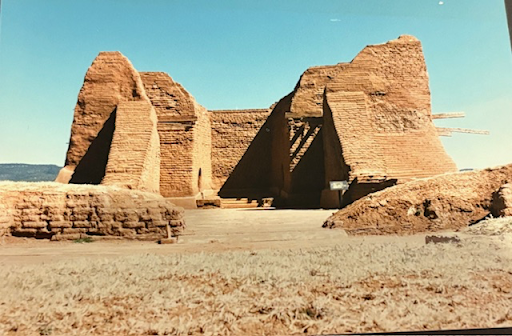
Pecos National Historical Park
Set against the foothills of the Sangre de Cristo Mountains, Pecos National Historical Park is a palace where centuries of history unfold quietly across the land. This land was home to the Pecos Pueblo, one of the most influential pueblos in the Southwest. For hundreds of years, Pecos served as a vital crossroads of trade linking […]

New Orleans Jazz National Historical Park
Most national parks preserve a landscape, battlefield or historic building. New Orleans Jazz National Historical Park preserves something less tangible but equally important: the story and continuing sound of jazz. Jazz emerged in New Orleans as African American musical traditions blended with blues, ragtime, spirituals, brass-band music and influences brought to the city by its […]

