Charlottenburg Palace
While exploring Berlin, we visited Charlottenburg Palace, a place that opened another window into the city’s long history. Berlin is so often associated with the dramatic events of the 20th century that it can be easy to forget that for centuries it was also a royal capital. Charlottenburg takes us back into that earlier world of Prussian kings, queens and elaborate court life.
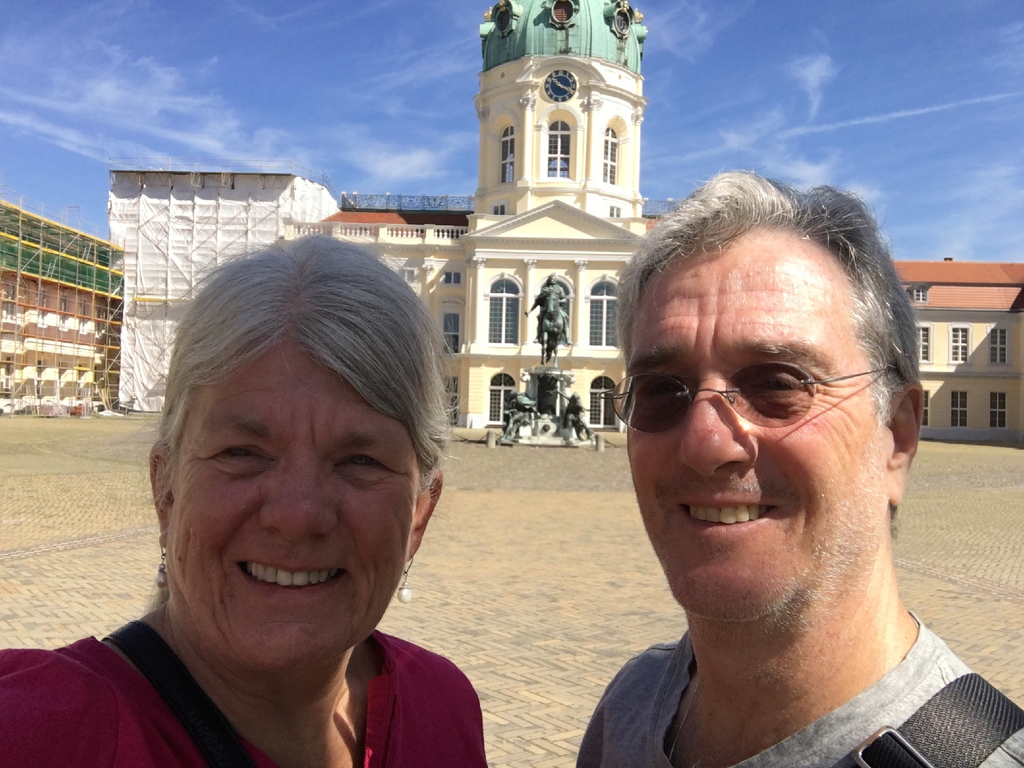
The palace began at the end of the 17th century as a summer residence for Sophie Charlotte, wife of the future King Friedrich I of Prussia. What began as a royal retreat was expanded by successive generations of the Hohenzollern family, eventually becoming the largest surviving palace complex in Berlin. Its rooms and wings reflect different periods of royal life and changing architectural tastes.
Standing in the courtyard, one of the first things that catches the eye is the great equestrian statue of Frederick William, the “Great Elector.” Commissioned by his son and created by sculptor Andreas Schlüter beginning in 1696, the monumental bronze was cast by Johann Jacobi and inaugurated in 1703. It originally stood elsewhere in Berlin and was eventually placed in the courtyard of Charlottenburg Palace after World War II.
The palace continued to evolve with each generation. When Frederick the Great came to the throne in 1740, he commissioned the New Wing, adding magnificent Rococo rooms including the Golden Gallery and White Hall. Later rulers continued to use Charlottenburg as a royal residence, leaving behind rooms and collections that reflect changing tastes from the Baroque and Rococo periods through Neoclassicism and into the early 20th century.
The palace also carries the scars of Berlin’s more recent history. Charlottenburg was severely damaged during World War II and subsequently underwent an extensive reconstruction. Much of what visitors experience today exists because of the decision after the war to restore and rebuild a palace that might otherwise have disappeared from Berlin’s landscape.
Visiting Charlottenburg gave us a chance to see a very different Berlin from the one usually associated with the city’s modern history. Behind us stood a palace that had witnessed more than three centuries of enormous change, yet had survived to tell the story of Berlin when it was a royal capital.
Read More From Nancy
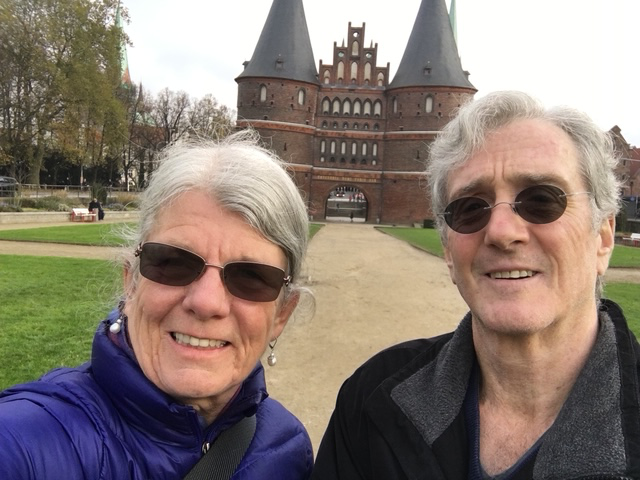
The Holstentor
While traveling through northern Germany, Marty and I visited the historic city of Lübeck, where one building immediately captures every visitor’s attention: the Holstentor. With its twin towers, red brick construction, and distinctive silhouette, it has become the enduring symbol of the city. Construction of the Holstentor began in 1464 and was completed in 1478 […]
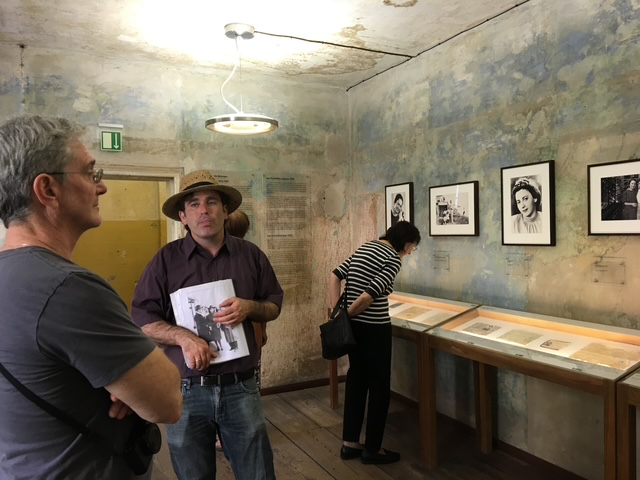
Otto Weidt’s Workshop
While on a Jewish history tour in Berlin, we visited the former workshop of Otto Weidt. Unlike many Holocaust museums that focus on persecution, this small workshop tells the story of a man who chose to help others despite the personal risk. Otto Weidt owned a brush and broom workshop that employed blind and deaf […]
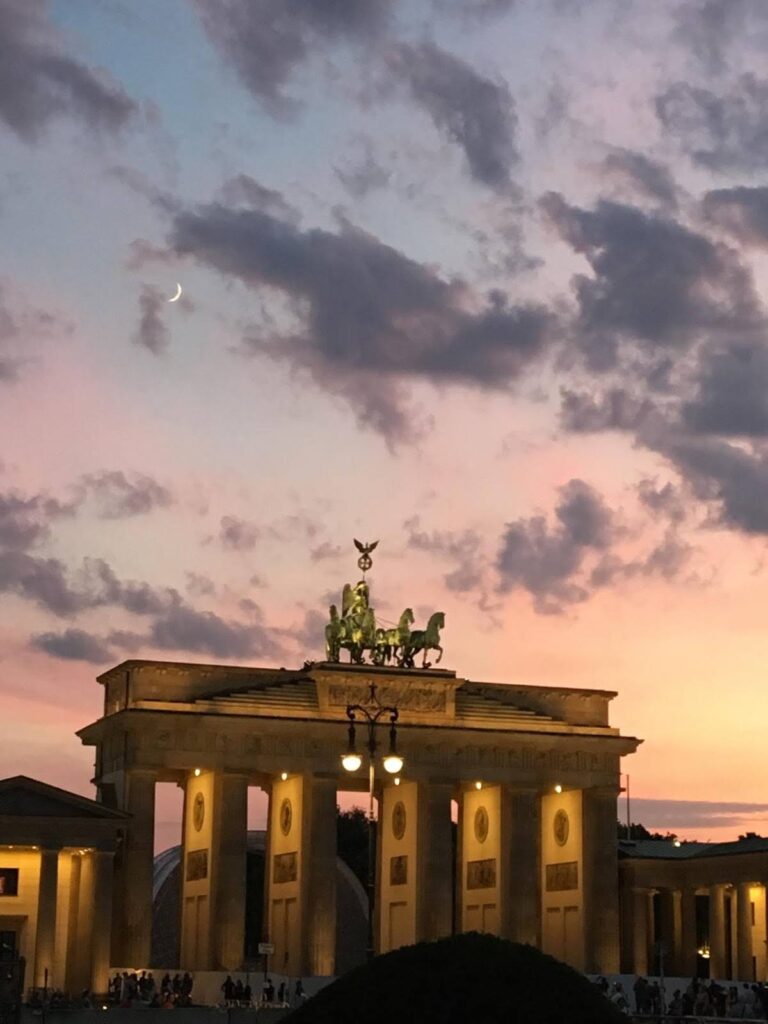
Brandenburg Gate
While visiting Berlin, the Brandenburg gate quickly becomes more than just a landmark, it becomes a focal point of the city’s history. Standing at Pariser Platz, we faced a structure built between 1788 and 1791 under King Frederick William II of Prussia. Designed by architect Carl Gottheard Langhans, the gate was inspired by classical Greek architecture. Its […]

