Holocaust Memorial
There are places that we visit, and then there are places we enter. This memorial in Berlin is one of those places.
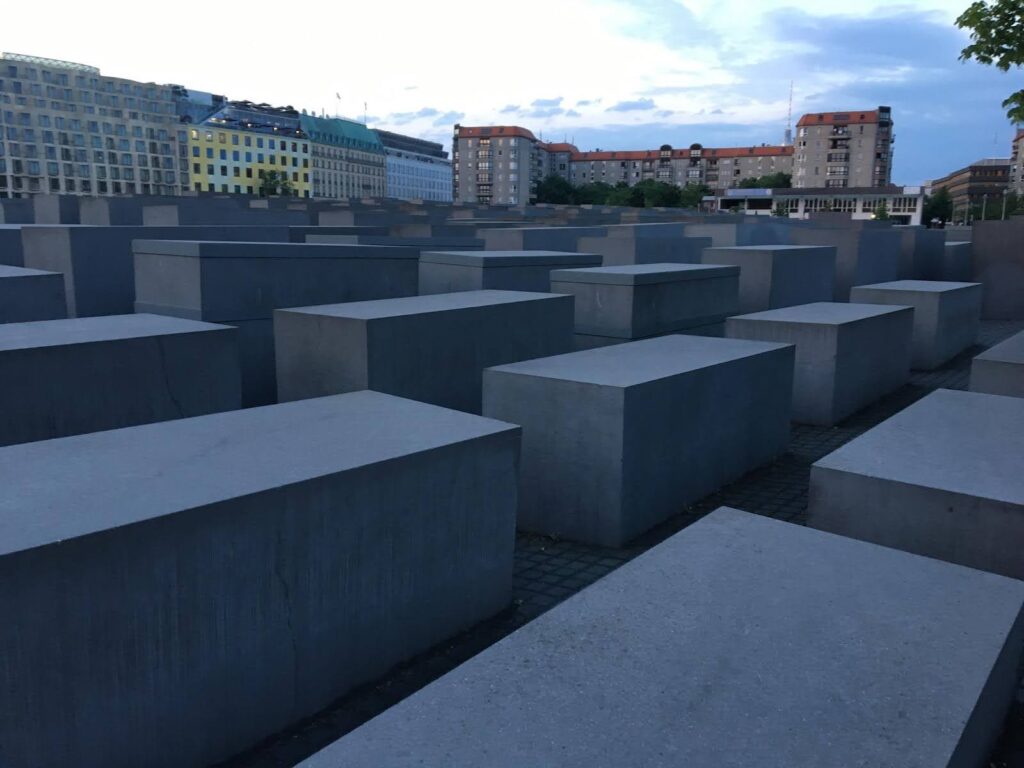
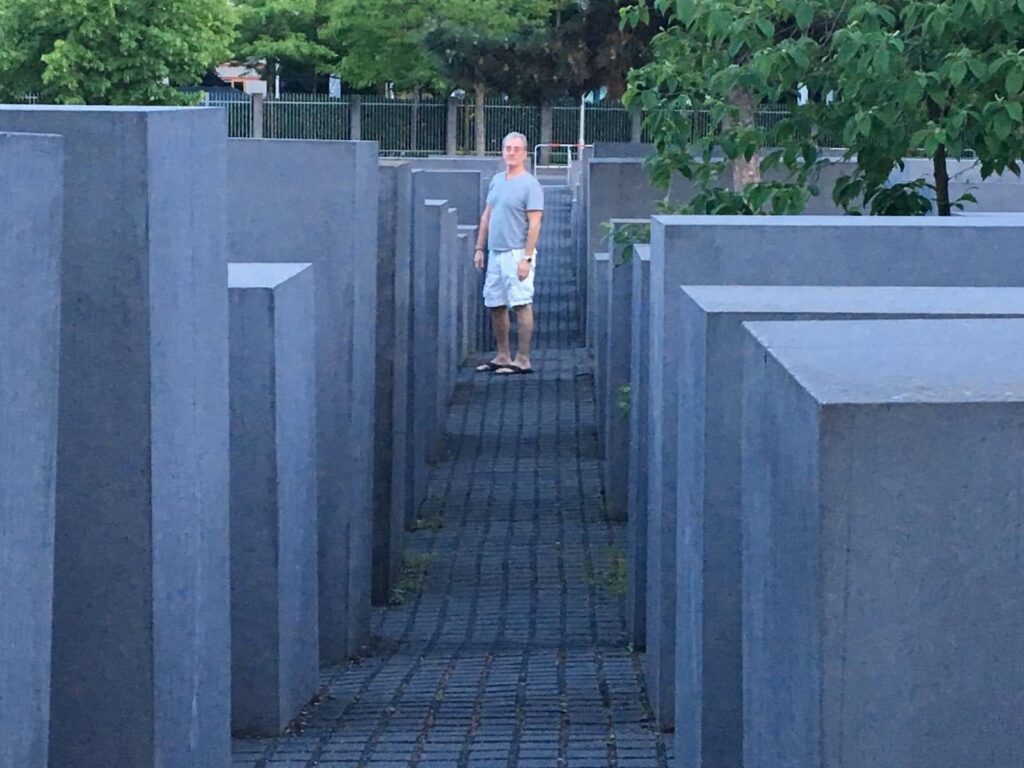
From a distance, the Memorial to the Murdered Jews of Europe, appears like a vast field of concrete blocks stretching across the city near the Brandenburg Gate. But as we walk into it, the ground slopes downward and the slabs grow taller. What begins as open space, slowly narrows and you feel smaller and enclosed. This is not a monument you simply look at, but one that you walk through.
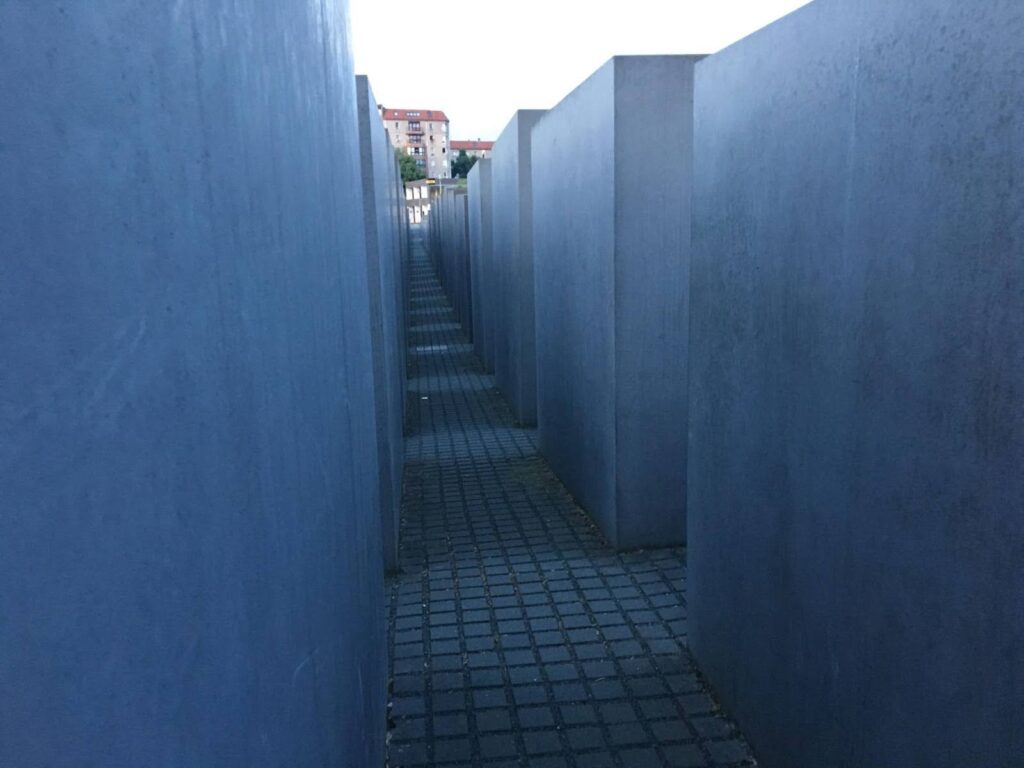
Designed by architect Peter Eisenman and opened in 2005, the memorial contains 2,711 concrete pillars arranged in a rigid grid. There are no inscriptions on the blocks themselves, no names and no dates. This abstraction is intentional. It is meant to evoke the unsettling anonymity of mass loss.
Germany’s decision to place this memorial in the heart of the capital is significant. It is not hidden but stands in the center of national memory. Here history is being taught through experience – it is felt.
Read More
Read More From Nancy
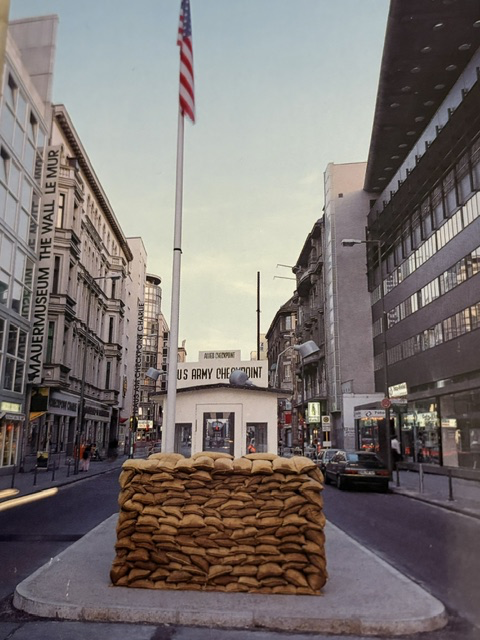
Checkpoint Charlies
The photograph captures one of the most powerful symbols of the Cold War and the division of Berlin during the twentieth century. Standing in the middle of the street is a reconstruction of the famous American checkpoint known as Checkpoint Charlie. This was once the best-known crossing point between East Berlin and West Berlin during […]
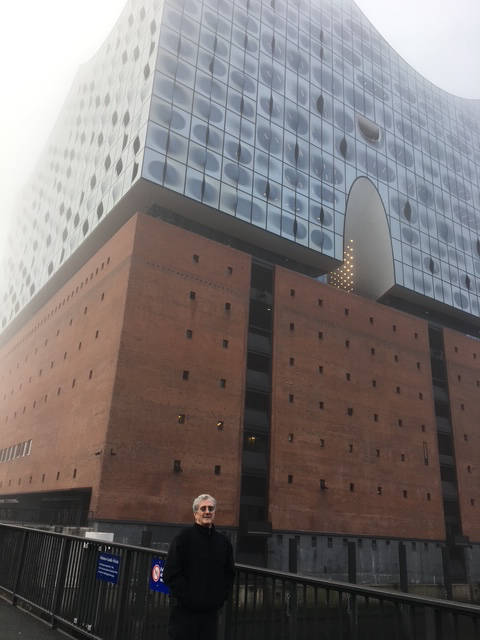
The Elbphilharmonie
We had the opportunity to explore some of Hamburg during the time we spent teaching there. Our work has taken us to cities around the world, and whenever our schedule allowed, we tried to experience something of the history and character of the place we were visiting. In Hamburg, one of the most striking sights […]
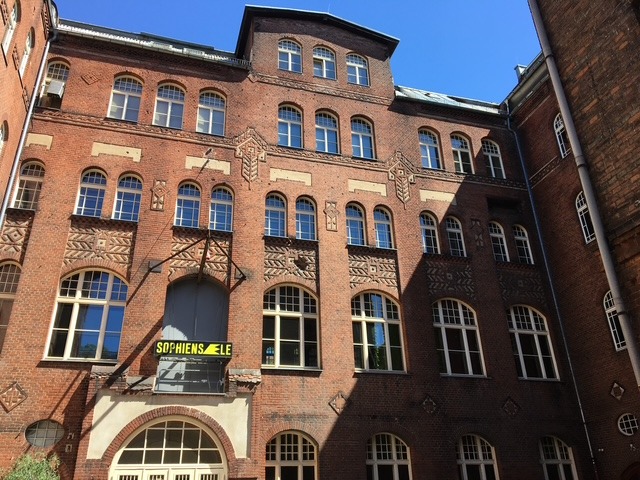
Sophiensæle
Behind the street frontage on Sophienstraße, the brick building now known as Sophiensæle began as a clubhouse for Berlin’s craftsmen’s association. Built in 1904–1905, it provided a setting for workers’ education and collective activity. The clubhouse also became a meeting place for the political left. Rosa Luxemburg, Karl Liebknecht, Clara Zetkin, and Erich Mühsam spoke […]

