Morrison & Tibbets Cast-Iron Stove, c. 1852
Inside the Wayland Historical Society is an ornate cast-iron stove that tells a surprisingly intimate story about life in this old house. Manufactured by Morrison & Tibbets of Troy, New York, its design was patented in 1852, when cast-iron stoves were transforming how American homes were heated.
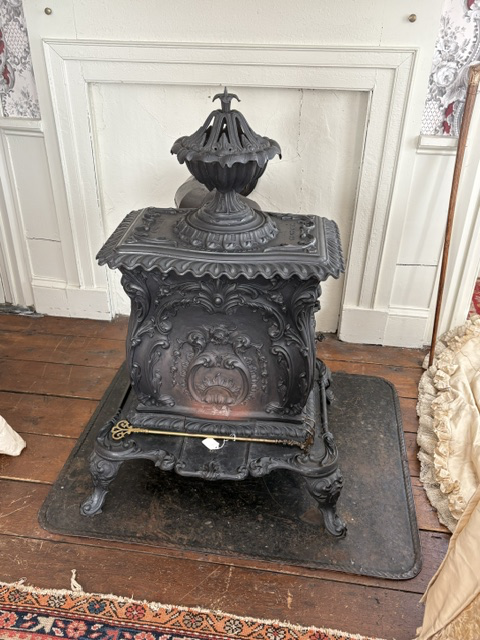
For generations, New England families had depended upon fireplaces. They provided warmth, but they were inefficient; much of the heat disappeared directly up the chimney. Enclosed cast-iron stoves held the fire and radiated its heat into the room, requiring less fuel while providing more consistent warmth. By the middle of the nineteenth century, they were becoming increasingly common in American homes.
Manufacturers soon realized that something occupying such a prominent place in a room could also be beautiful. This stove is almost architectural in its decoration. The cast iron is covered with elaborate scrollwork and floral designs, supported by decorative feet and crowned with an ornamental top. It was a functional household appliance, but it was designed to look like a piece of furniture.
This stove has an especially interesting connection to the history of the Heard House, today home of the Wayland Historical Society. It is the same model as the stove used by the last two Heard sisters who lived in the house during the 1950s.
That detail brings the story forward nearly a century. The stove’s design dated from 1852, yet a stove like this was still keeping rooms warm in the Heard House in the middle of the twentieth century. While postwar America was embracing television, modern kitchens, automobiles and suburban development, the Heard sisters continued living in a house where an old-fashioned cast-iron stove remained part of everyday life.
It is one of the things I appreciate about visiting historic houses. The grand furniture and portraits tell us something about the people who lived there, but ordinary objects often bring us closer to their actual lives.

Read More From Nancy

Wayland Public Library
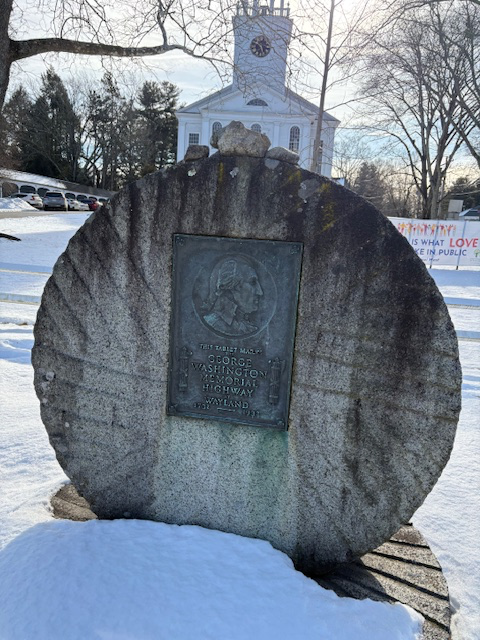
The Wayland Free Public Library occupies an important place in the history of public libraries in Massachusetts. Founded in 1848, it was among the earliest free public libraries in the Commonwealth and became a model for the movement to make books and knowledge available to all citizens regardless of income. At a time when many […]
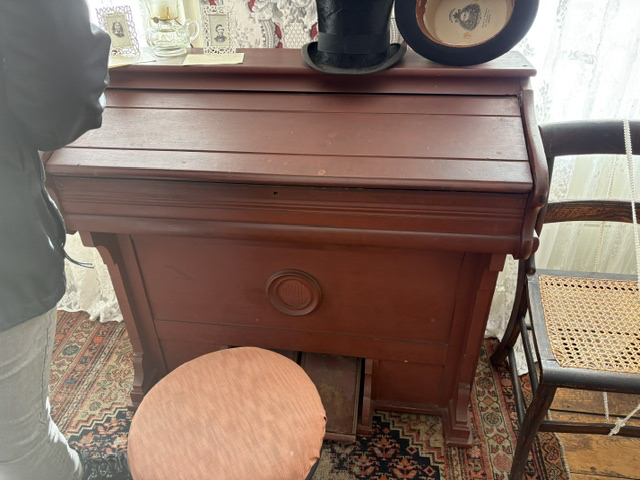
The Melodeon
I found this small wooden instrument in the Wayland History Museum. At first, it could easily be mistaken for a small upright piano, but it is actually a melodeon, or reed organ, made by Mason & Hamlin. The melodeon became a popular way of bringing keyboard music into American homes during the nineteenth century. Unlike […]
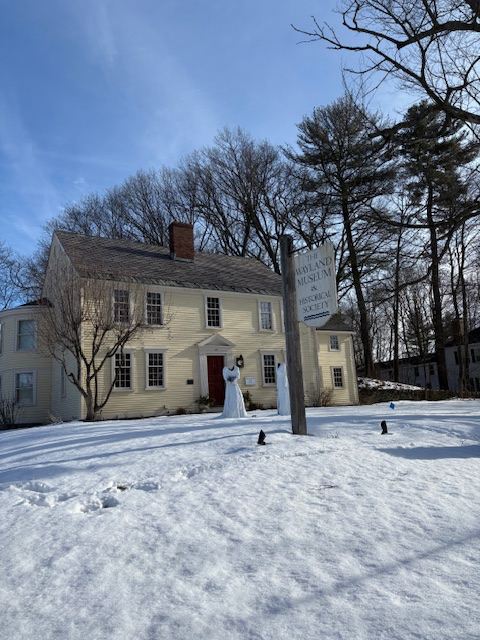
Grout-Heard House
Wayland began as a farming community with open land, stone walls and families whose lives were shaped by the steady rhythm of planting and harvest. The Grout-Heard House stands as one of the clearest reminders of this beginning. Built in the early 18th century, when Wayland was part of Sudbury, this modest farmhouse reflects the practical demands […]

