Wayland Public Library
The Wayland Free Public Library occupies an important place in the history of public libraries in Massachusetts. Founded in 1848, it was among the earliest free public libraries in the Commonwealth and became a model for the movement to make books and knowledge available to all citizens regardless of income. At a time when many libraries operated as private subscription institutions, Wayland embraced the idea that access to reading and learning should be a public benefit available to the entire community.
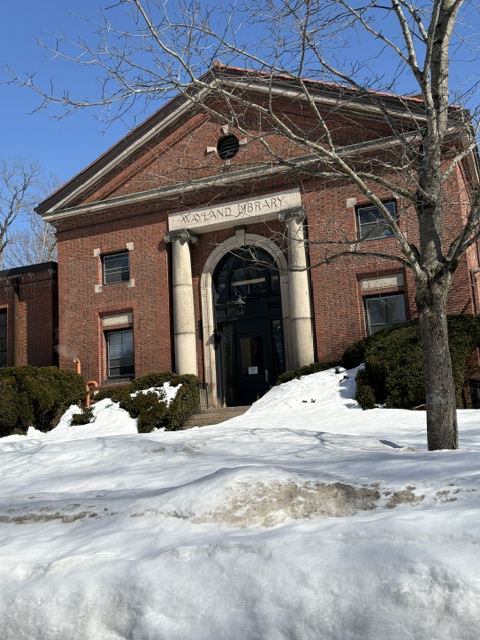
The library’s influence extended beyond the town itself. Questions raised by Wayland’s experiment with a free public library helped inspire Massachusetts legislation in 1851 authorizing towns to establish and support public libraries through taxation. This legislation contributed to the rapid growth of free public libraries across the Commonwealth and helped shape the modern public library system that we know today.
The present building was completed in 1900 through the generosity of Warren Gould Roby, a Wayland resident who donated both the land and the funds needed for construction. Designed by architect Samuel Mead, the structure reflects classical influences drawn from Roman and Renaissance architecture. Its stately brick façade, stone trim, and prominent entrance create a sense of permanence and civic pride, reflecting the importance that the community placed on education and public access to knowledge.
Today, the Wayland Free Public Library stands as both an architectural landmark and a reminder of an important chapter in Massachusetts history. Its legacy is not measured only by the books on its shelves, but by the role it played in advancing the principle that education and access to information are essential to a thriving community.
Read More From Nancy
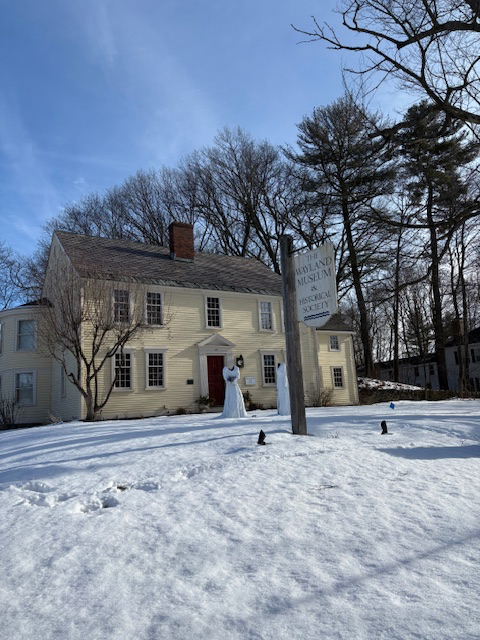
Grout-Heard House
Wayland began as a farming community with open land, stone walls and families whose lives were shaped by the steady rhythm of planting and harvest. The Grout-Heard House stands as one of the clearest reminders of this beginning. Built in the early 18th century, when Wayland was part of Sudbury, this modest farmhouse reflects the practical demands […]
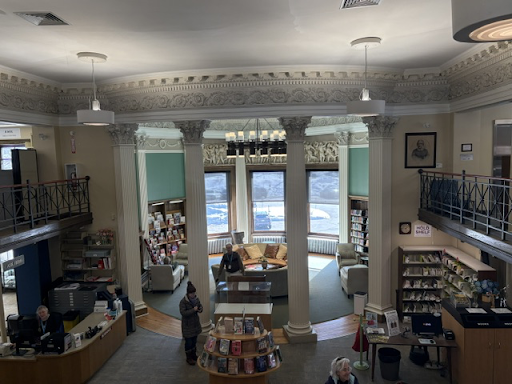
Rotunda of the Wayland Library
While the exterior of the Wayland Free Public Library reflects the dignity of a civic institution, the interior contains its greatest architectural treasure. Stepping inside, visitors are greeted by a remarkable circular reading room framed by towering columns, ornate plasterwork, and large windows that fill the space with natural light. The rotunda creates an atmosphere […]
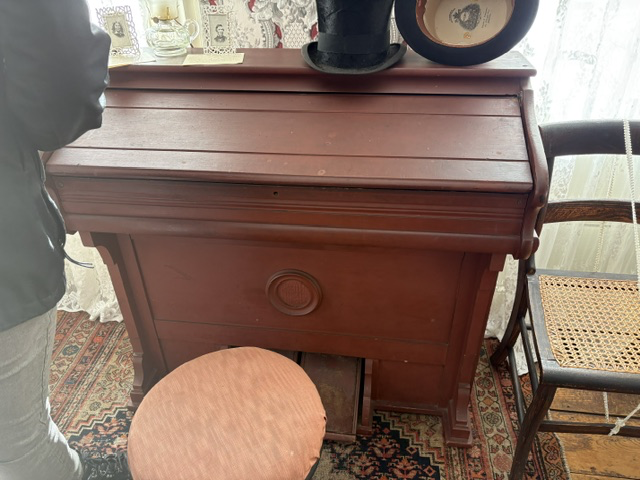
The Melodeon
I found this small wooden instrument in the Wayland History Museum. At first, it could easily be mistaken for a small upright piano, but it is actually a melodeon, or reed organ, made by Mason & Hamlin. The melodeon became a popular way of bringing keyboard music into American homes during the nineteenth century. Unlike […]

