The Swan Boats
Every April, there is a ritual in Boston that signals that spring has truly arrived. The Swan Boats return to the lagoon in the Public Garden. For generations of Boston families, a ride on the Swan Boats has been part of growing up in and around the city. This photograph of Erin and Emily brings me back to those days when a trip into Boston might include walking through the Public Garden and watching those familiar white swans slowly make their way around the lagoon.
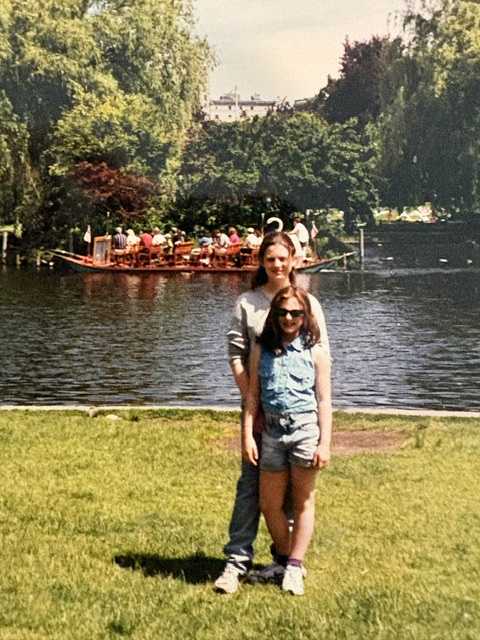
The tradition began in 1877 with Robert Paget, whose family operated a café near the Public Garden. Paddle-wheel boats were becoming popular, and Paget developed a small catamaran-style boat powered by a driver pedaling much like a bicycle. He added the large swan figure, reportedly inspired by the opera Lohengrin, in which a knight crosses a river in a boat drawn by a swan.
Robert Paget died only a year after launching the boats, leaving his wife, Julia, with four young children. At a time when women rarely operated businesses of this kind, she continued the enterprise. The Paget family has maintained the Swan Boats ever since, passing the tradition through generations.
The boats themselves remain remarkably simple. There is no motor. A driver sits behind the swan and pedals the boat around the lagoon while passengers sit on wooden benches and watch the Public Garden pass slowly by. Part of their charm is that there has never been a need to make the experience faster or more elaborate.
The setting has its own history. Established in 1837, the Boston Public Garden was the first public botanical garden in America. Its lagoon, bridges, flower beds, paths, and trees have become some of the most recognizable landscapes in Boston. But each spring, it is the return of the Swan Boats that tells us another Boston winter is ending.
Read More From Nancy
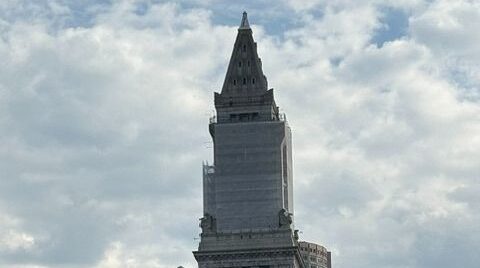
The Custom House Tower
During our walk around Boston, the Custom House Tower rose above the surrounding buildings, its pointed roof making it recognizable from a distance. This landmark connects two periods of the city’s history: the nineteenth-century seaport and the early twentieth-century skyline. The original Custom House opened in 1847. Designed by architect Ammi Burnham Young, its Greek […]
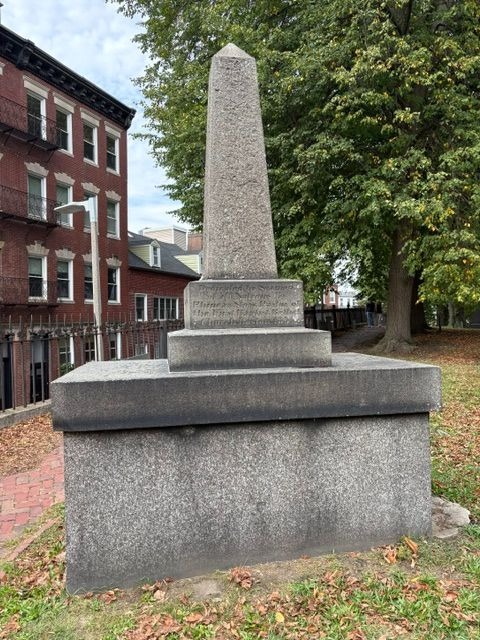
Edmund Hartt at Copp’s Hill Burying Ground
The monument to Edmund Hartt at Copp’s Hill Burying Ground connects this historic cemetery to Boston’s shipbuilding waterfront. Hartt owned the North End shipyard where the USS Constitution was built, helping provide the setting and skilled labor for one of the young United States Navy’s most ambitious projects. His memorial preserves the name of a […]
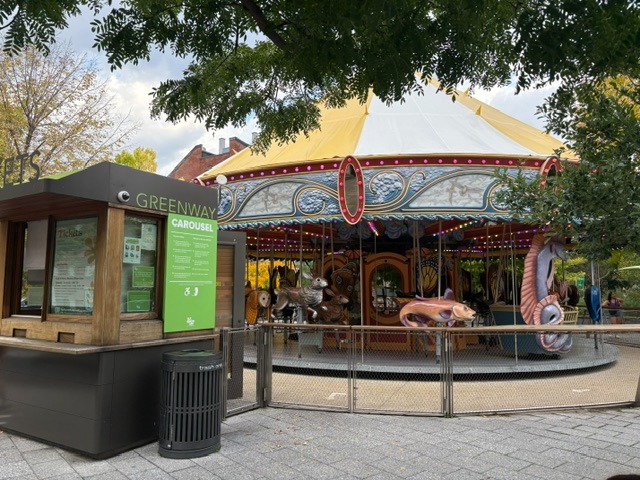
The Greenway Carousel
I ride this carousel as often as I can when I visit Boston. Walking through the city often leads us to historical places, but I also enjoy making time for something simply because it brings me joy. The Greenway Carousel has become one of those familiar stops I look forward to. Opened on August 31, […]

