A Grease Horn
Among all the objects that survive from Plymouth’s earliest years, some of the most interesting are not the rare or elaborate possessions, but the simple tools people used in their daily lives. This small grease horn dates from approximately 1635–1665 and is identified as coming from Plymouth.
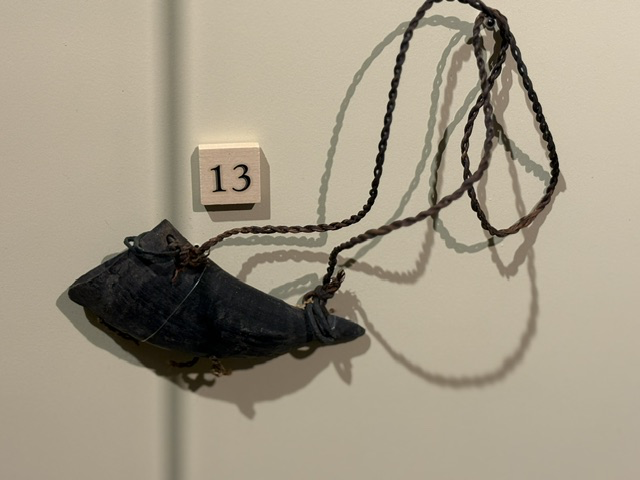
A grease horn was a practical container, usually made from an animal horn, used to carry animal fat or grease. The horn provided a naturally strong, lightweight, and readily available container. A cord allowed it to be hung from a belt, carried over the shoulder, or kept close at hand while someone worked.
The grease itself had many uses. It could be applied to tools and equipment as a lubricant, used on metal surfaces to help protect them from moisture and rust, and worked into leather to keep boots, harnesses, straps, and other leather goods from becoming dry and brittle. We do not know exactly what type of grease was carried in this horn, and people likely used whatever suitable animal fat was readily available.
This grease horn was never intended to tell a story. It was simply a useful object that someone in 17th-century Plymouth needed. Nearly four centuries later, its survival gives us a small glimpse into what an ordinary day in the colony might have looked like.
Read More From Nancy
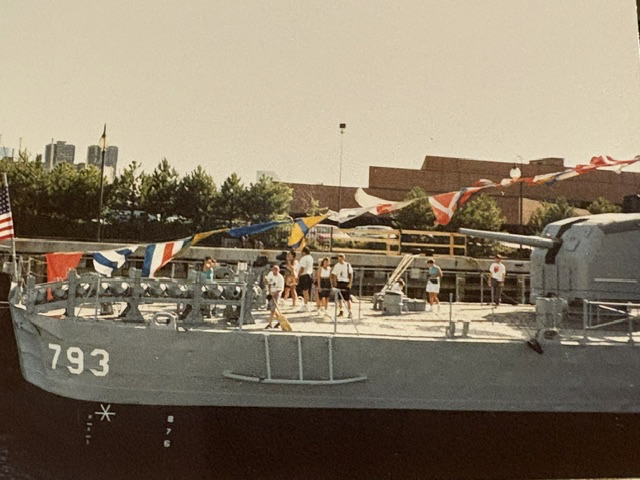
USS Cassin Young
The USS Cassin Young, identified by the hull number DD-793, is preserved at the Charlestown Navy Yard as part of Boston National Historical Park. The Fletcher-class destroyer represents both the industrial effort that produced thousands of American warships during the Second World War and the experiences of the sailors who served aboard them. The ship was […]
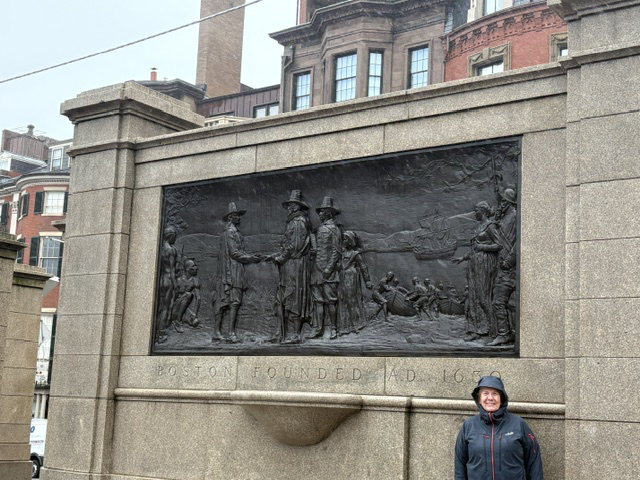
The Founders Memorial
Standing on Boston Common, the Founders Memorial commemorates the beginning of Boston’s story. Dedicated in 1930 during the city’s 300th anniversary celebration, the monument marks the founding of Boston in 1630 and honors the people whose decisions transformed a small peninsula known as Shawmut into one of America’s most influential cities. The centerpiece of the […]
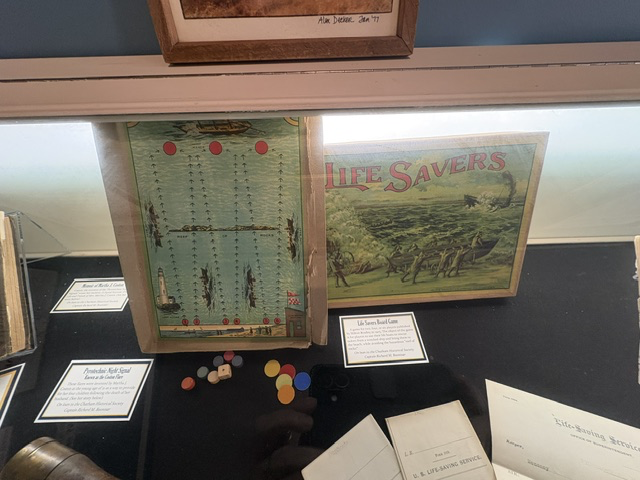
Life Savers and the Rise of American Board Games
The game Life Savers transformed the dangers of a shipwreck into a contest of rescue. Produced by the Milton Bradley Company near the turn of the twentieth century, the game challenged players to send lifeboats to a wrecked vessel, rescue its sailors, and return them safely to shore. Its illustrated cover, playing board, spinner, and colored pieces […]

