Torrent No. 4
Inside Plymouth’s historic courthouse, we found another remarkable piece of the town’s everyday history: Torrent No. 4, a hand-drawn suction fire engine built in Boston by Stephen Thayer in 1828. Long before motorized fire trucks and modern hydrants, equipment like this represented some of the best technology available to a community trying to protect its homes and businesses from fire.
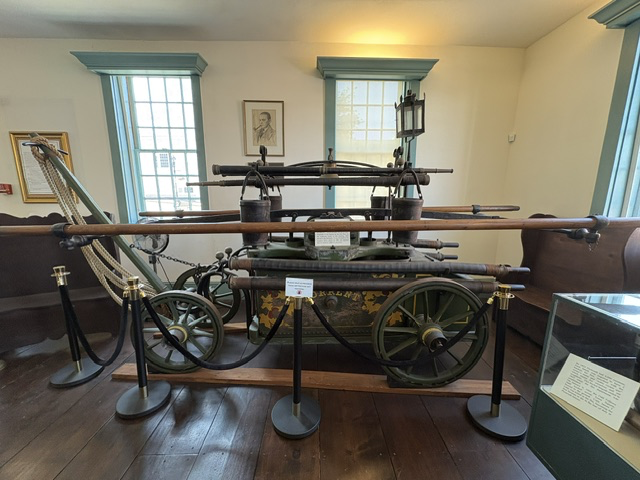
Plymouth purchased the engine by vote of Town Meeting for $400, a substantial investment at the time. The purchase included 700 feet of hose. Torrent No. 4 required between 18 and 20 volunteer firefighters to pull and operate it. Once at a fire, water was drawn into the engine and firefighters worked the long handles of the pump up and down, creating the pressure necessary to send water through the hose. Looking at those long wooden arms today, it is easy to appreciate just how physically demanding firefighting would have been.
I find objects like this particularly valuable when exploring a town such as Plymouth. So much attention naturally goes to 1620, but Plymouth continued to grow and change for centuries afterward. By 1828 this was a well-established town whose citizens were voting at Town Meeting to purchase firefighting equipment and organizing volunteer companies to protect their community.
Read More From Nancy
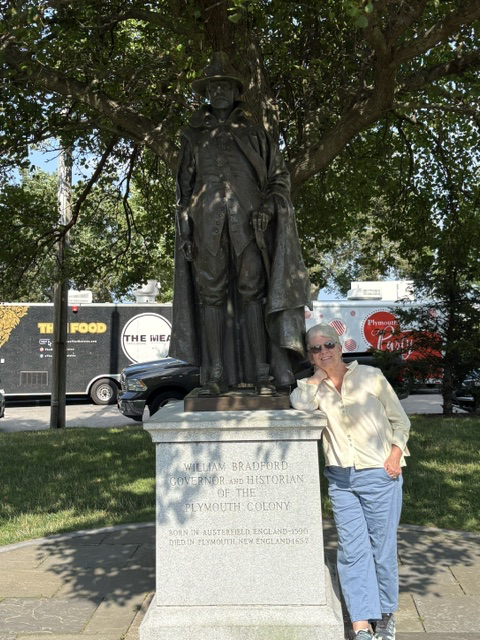
William Bradford Statue
Standing near Plymouth Harbor is this imposing statue of William Bradford, one of the most important figures in the story of Plymouth Colony. Bradford crossed the Atlantic aboard the Mayflower in 1620 and, after the death of Governor John Carver the following spring, was elected governor of Plymouth Colony. He would serve in that position […]
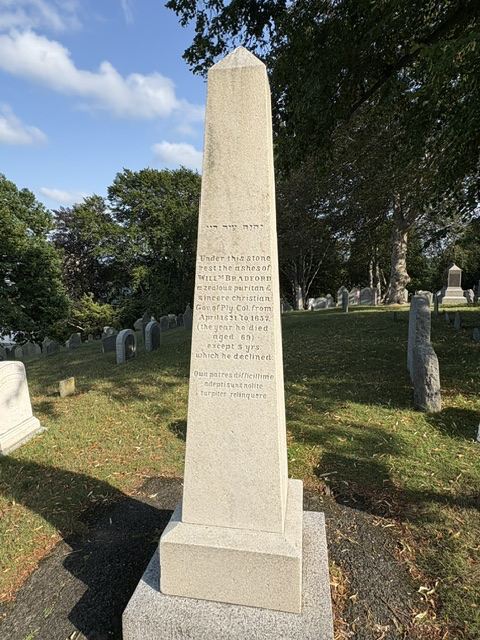
Governor William Bradford Memorial
This granite obelisk on Burial Hill honors William Bradford, one of the Mayflower passengers and a central figure in the establishment of Plymouth Colony. After Governor John Carver died in 1621, Bradford was chosen to lead the struggling colony. He continued to serve as governor for most of the years until his death in 1657, […]
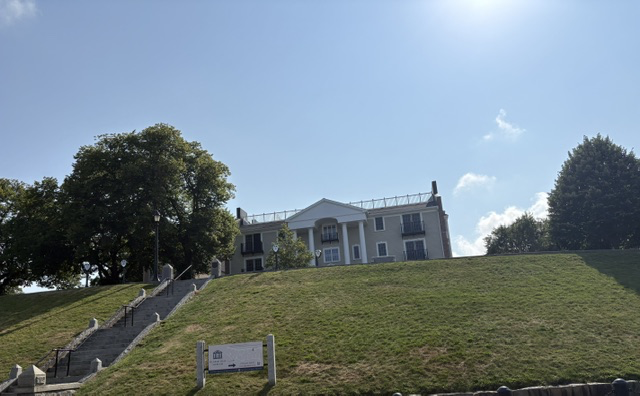
Cole’s Hill
Rising steeply above Plymouth’s waterfront, Cole’s Hill was the colony’s first burial ground. During the devastating winter of 1620–1621, nearly half of the Mayflower’s passengers died from disease, exposure, and the effects of their difficult voyage. Many were buried here in graves overlooking the harbor where their ship remained anchored. According to tradition, the settlers […]

