Oldest Hearse
Inside Plymouth’s historic courthouse, we came across an object that tells a very different kind of hometown story. This horse-drawn hearse dates to about 1820 and is believed to be the oldest surviving hearse in Plymouth. According to the exhibit, it was stored for many years in a small stone building behind First Church.
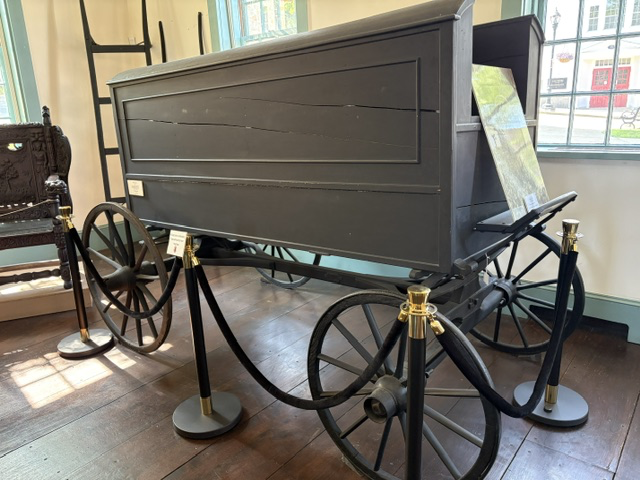
The hearse belonged to the Plymouth Aqueduct Company, an organization whose history reaches back to 1796. The company was created to bring fresh water from springs and ponds into the center of Plymouth through a system of hollow wooden pipes. It seems strange at first that a water company would own a hearse, but the company became involved in other community services as well. The hearse was used to transport the dead to Plymouth’s burial grounds, including Burial Hill, and remained part of the community for generations.
Looking at it today, it is easy to imagine this simple black carriage slowly making its way through the streets of 19th-century Plymouth. Unlike the elaborate hearses that would come later, there is little decoration. It was a practical vehicle created to perform one of the necessary services of a growing town.
People needed water systems, roads, churches, burial grounds and a way to care for their dead. Preserved here almost two centuries later, this old hearse offers an unexpected glimpse into the everyday workings of the town that grew from that first small settlement.
Read More From Nancy
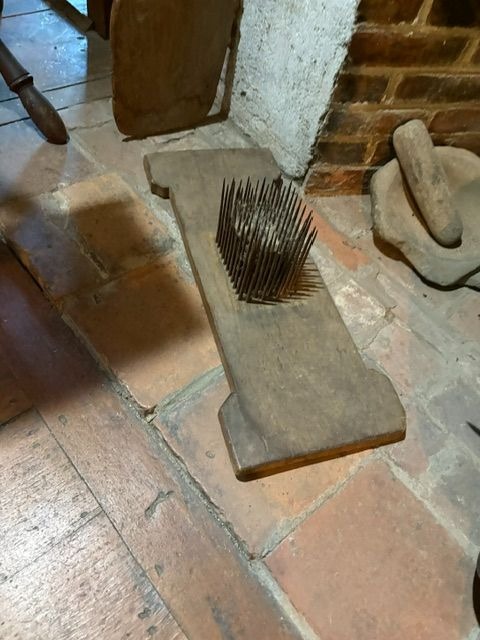
The Flax Hackle
A wooden board fitted with sharp iron teeth preserves one step in the long process of making linen. Known as a hackle, or hetchel, this tool combed flax fibers before they were spun into thread. Its simple construction conceals the skill and repeated effort required to turn a harvested plant into useful cloth. Linen comes […]
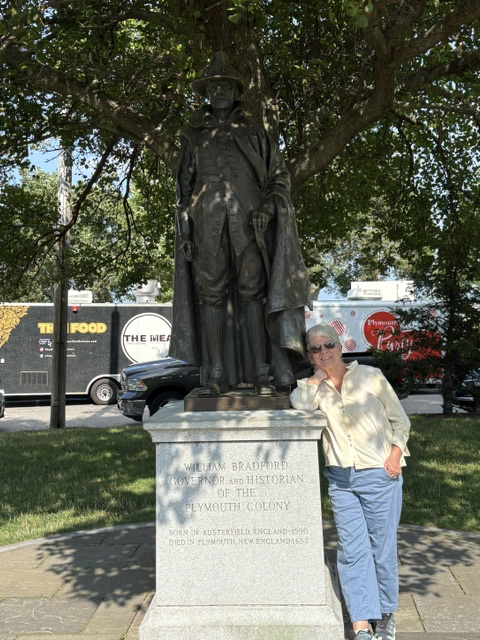
William Bradford Statue
Standing near Plymouth Harbor is this imposing statue of William Bradford, one of the most important figures in the story of Plymouth Colony. Bradford crossed the Atlantic aboard the Mayflower in 1620 and, after the death of Governor John Carver the following spring, was elected governor of Plymouth Colony. He would serve in that position […]
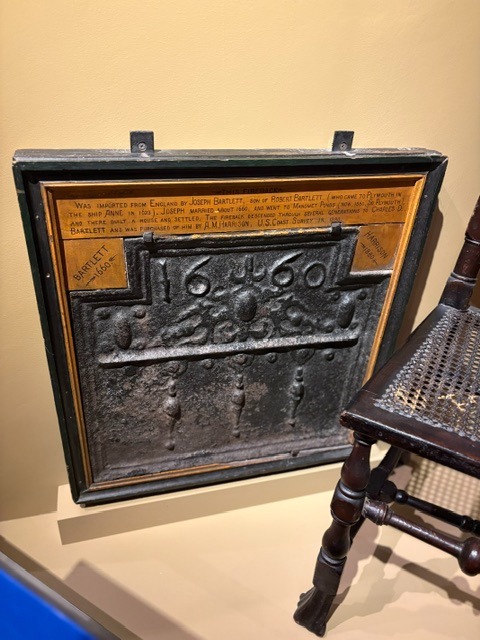
The Bartlett Fireback
Dated 1660, the Bartlett fireback at Pilgrim Hall Museum preserves a substantial piece of an early Plymouth household. Its raised decoration and prominent numerals made it both a useful fireplace fitting and an ornament within the home. A fireback stood against the rear wall of a fireplace, protecting the masonry from direct heat and reflecting […]

