National Day of Mourning
Just a short distance from the statue of Massasoit on Cole’s Hill is this small marker recognizing the National Day of Mourning. It presents another part of Plymouth’s history and reminds us that the events of 1620 and 1621 have been remembered very differently by different people.
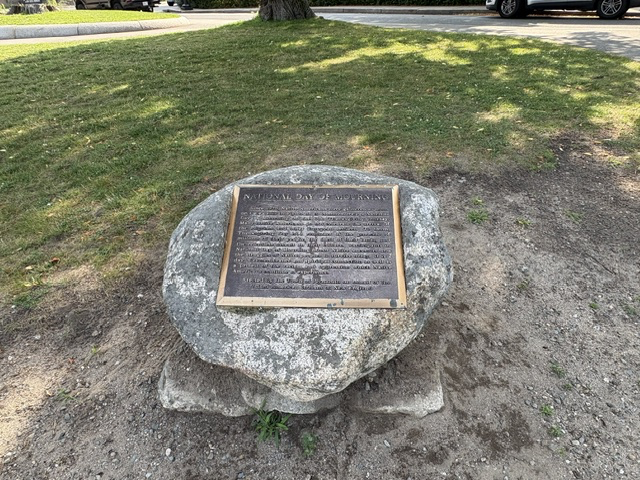
The National Day of Mourning began in 1970, when Wampanoag leader Frank James, also known as Wamsutta, was invited to speak at a banquet commemorating the 350th anniversary of the Pilgrims’ arrival. His prepared remarks offered a Native perspective on the consequences of European settlement. When organizers objected to his speech and offered a revised version, James chose not to participate in the banquet. Instead, Native people and their supporters gathered on Cole’s Hill, overlooking Plymouth Rock, for what became the first National Day of Mourning.
That gathering has continued each Thanksgiving Day since then. For participants, it is a day to remember Native ancestors, acknowledge the losses experienced by Indigenous peoples following European colonization, and affirm the survival and continuing presence of Native communities.
I find it particularly meaningful that this marker and the statue of Massasoit stand so close to one another. The Massasoit monument recalls a moment in 1621 when a visionary Native leader chose diplomacy and cooperation with the newly arrived settlers. This marker reminds us that the history that followed became far more difficult. Together, they demonstrate something important about visiting historic places: we do not have to erase one story to understand another.

Read More From Nancy
Burial Hill
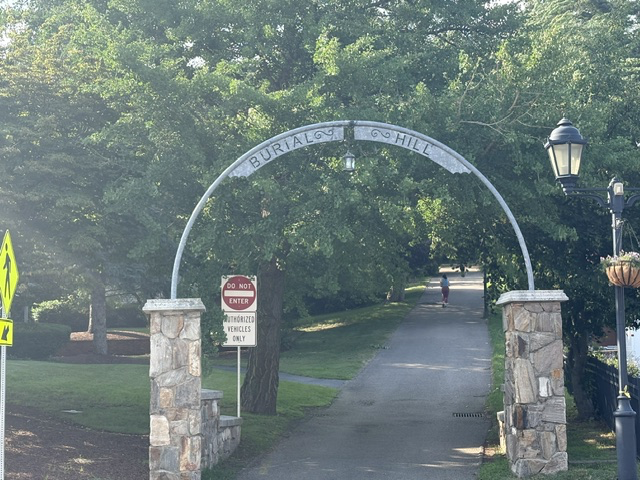
Rising above Town Square at the upper end of Leyden Street, Burial Hill is one of Plymouth’s most significant historic places. Its elevation provides a commanding view of the harbor, the waterfront, and the route of the town’s first street. That view explains why the settlers initially used the hill for defense rather than burial. […]
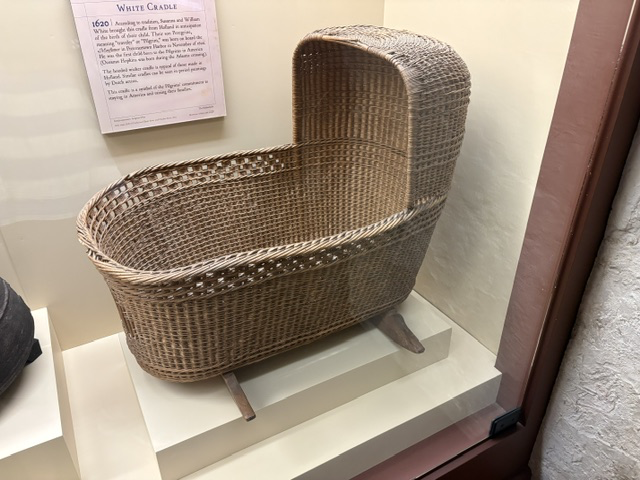
The White Cradle
Among the objects we encountered while exploring Plymouth was this simple wicker cradle. According to tradition, it belonged to Susanna and William White and was brought with them from Holland when they sailed aboard the Mayflower in 1620. Susanna White was pregnant during the Atlantic crossing. The Mayflower left Plymouth, England, in September with more […]
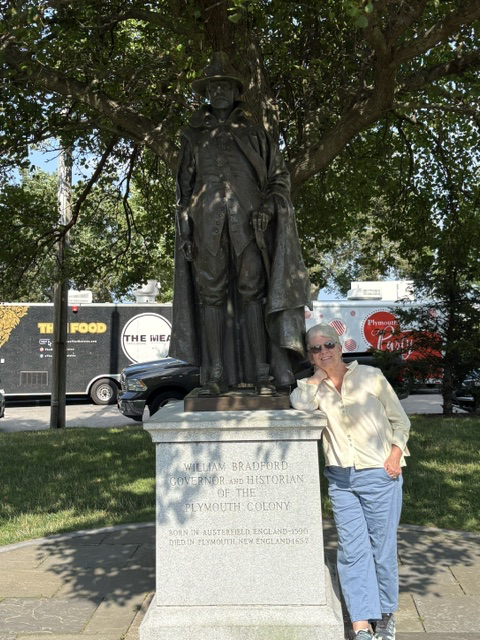
William Bradford Statue
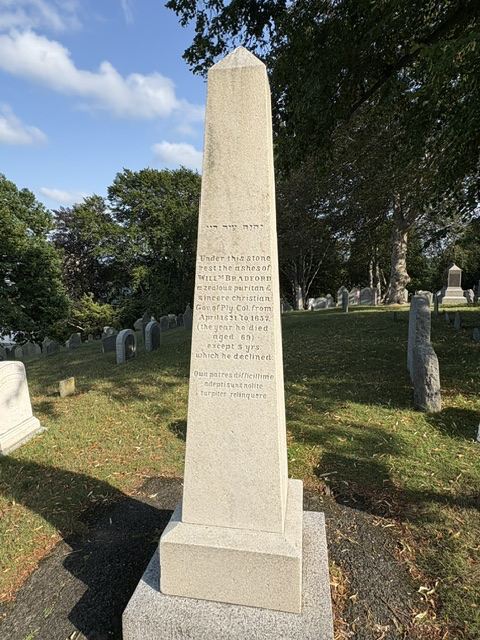
Standing near Plymouth Harbor is this imposing statue of William Bradford, one of the most important figures in the story of Plymouth Colony. Bradford crossed the Atlantic aboard the Mayflower in 1620 and, after the death of Governor John Carver the following spring, was elected governor of Plymouth Colony. He would serve in that position […]

