The Mayflower Compact
During another of our homeschooling road trips, we drove all the way out to Provincetown to discover an important part of the Pilgrim story that can easily be overshadowed by Plymouth. Before the Mayflower ever reached Plymouth, its passengers first arrived at the tip of Cape Cod.
After more than two months crossing the Atlantic, the Mayflower sighted Cape Cod on November 9, 1620. Two days later, the ship anchored in what is now Provincetown Harbor. The passengers had intended to settle much farther south, near the mouth of the Hudson River, but dangerous seas and the approach of winter convinced them to remain at Cape Cod.
It was while anchored here that another important event took place. Because the Mayflower had landed outside the territory covered by the colonists’ original patent, questions arose about who would have authority over the group. Before going ashore, 41 adult male passengers signed the agreement that became known as the Mayflower Compact, promising to form a “civil Body Politick” and establish laws for the good of the colony.
The passengers then began exploring Cape Cod. Men went ashore at Provincetown, where they encountered a landscape already inhabited and used by the Nauset and other Wampanoag peoples. Over the following weeks, exploring parties traveled along the Cape searching for fresh water, suitable farmland, and a protected place where they could establish a permanent settlement. Eventually they crossed Cape Cod Bay and selected Patuxet, the site that became Plymouth.
This enormous bronze relief in Provincetown commemorates the signing of the Compact aboard the Mayflower. Created by sculptor Cyrus E. Dallin, it presents the event as a crowded human scene, with passengers gathered closely around the document. Dallin is an interesting connection between two places in our travels: he also created the statue of Massasoit that we later visited in Plymouth.
Having my daughters stand beneath the relief during one of our homeschooling trips was another way of making history tangible. Instead of simply reading that the Pilgrims arrived in 1620, we could follow their journey geographically, first to the end of Cape Cod and then across the bay to Plymouth.
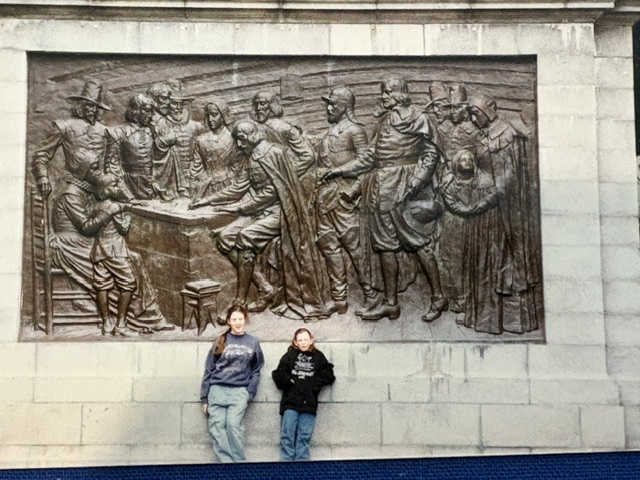
For years, Plymouth had been the place most closely associated with the Mayflower. Traveling to Provincetown with the girls added an important earlier chapter. This was where the Mayflower first found shelter after crossing the Atlantic, where its passengers first stepped onto the land that would become Massachusetts, and where they made an agreement about how they would govern themselves before they knew exactly where their new community would be.
Read More
Read More From Nancy
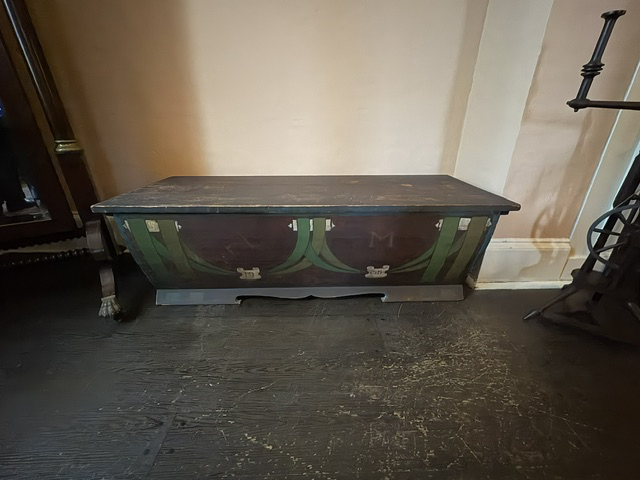
The Dowry Chest
This painted wooden chest at the Nichols House Museum in Boston is more than an attractive piece of antique furniture. Dating from the late 17th century, it is an English oak dowry, or dower, chest that would originally have been used to hold a woman’s personal possessions as she prepared for marriage and the establishment […]
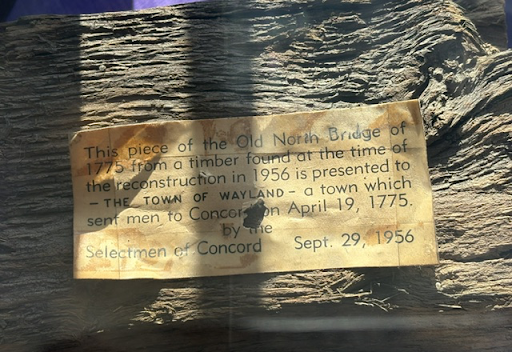
A Piece of the Old North Bridge
While visiting the Wayland Historical Society, I was surprised to find a small fragment of wood displayed in a simple case. At first glance, it appeared to be little more than an old, weathered timber. Yet this was no ordinary piece of wood. It was a remnant of the original Old North Bridge, the bridge […]
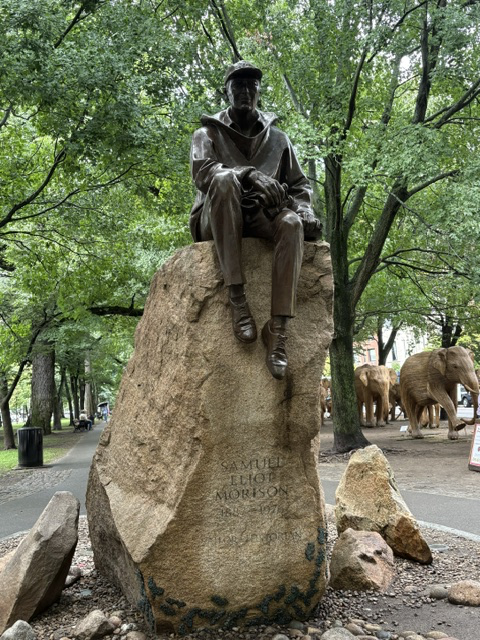
Samuel Eliot Morison Memorial
Walking along the Commonwealth Avenue Mall reveals a series of monuments honoring people connected to Boston and the wider world. Among them is a particularly distinctive sculpture of Samuel Eliot Morison. Rather than placing him formally on his feet or astride a horse, sculptor Penelope Jencks portrayed him as a sailor seated on an enormous […]

