Clay Pipe Warmer
Resting on the hearth of a colonial tavern was this simple iron frame and without a pipe set across it, I would never have recognized it as a clay pipe warmer. As with every object, there is a history, and it is that curiosity that draws me in to learn more.
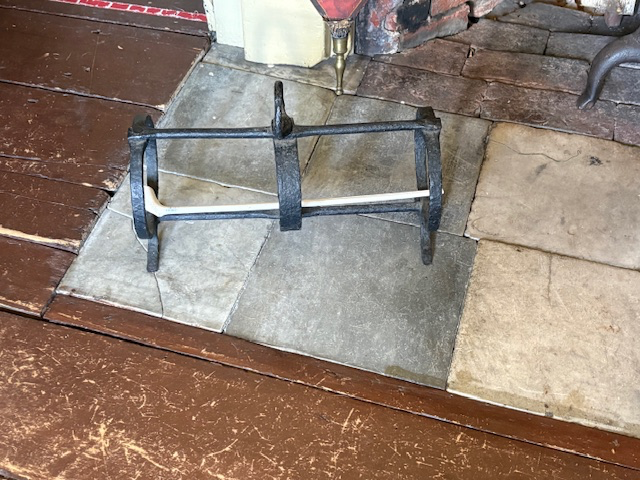
Before matches were common and reliable, keeping a pipe lit was a task. Smokers would place their long-stemmed clay pipes across a rack like this, resting them close enough to the fire to keep the tobacco warm and ready. The iron arms held the fragile pipes safely above the heat, preventing cracking while preserving the ember. Pipes would be warmed together as conversations unfolded.
The pipes themselves were made from fine white clay, shaped while still soft and then pressed into molds to create their long, slender stems and small bowls. After forming, they were fired in kilns at high temperature, which hardened the clay into a smooth, almost porcelain-like surface. These pipes were delicate and inexpensive and often treated as disposable.
Smoking these pipes was very common in colonial times. Men across many walks of life would have carried and used clay pipes. Taverns were typical places to see them in use, along with homes, and meeting places where people gather to talk, conduct business or simply pass the time. Tobacco use was widespread and most commonly associated with men in public settings.
Objects like this remind us that history is all around us, waiting to be noticed.
Read More From Nancy
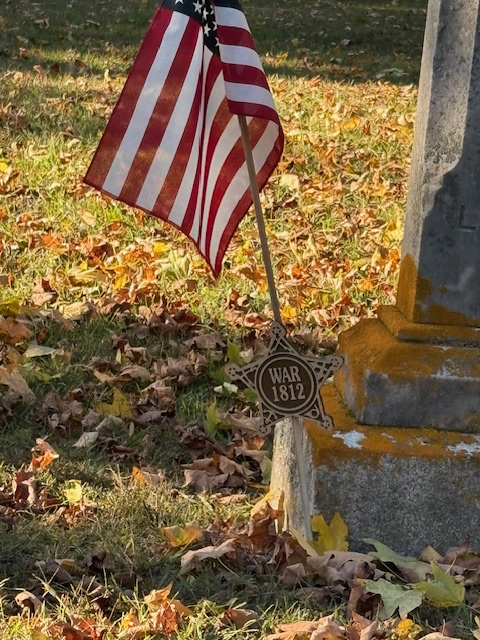
Star of War of 1812
Walking through a local cemetery, I noticed something that made me pause: a five-pointed metal star planted beside a grave holding an American flag. Cast into its surface are the words: War of 1812 I have come to recognize the familiar markers for Revolutionary War patriots and Civil War soldiers. Those appear often in New England cemeteries. But […]

Make Way for the Ducklings
Walking through the Boston Public Gardens, there is a familiar and beloved sight: a line of small bronze ducks following closely behind their mother. Most locals recognize them as characters from the classic children’s book “Make Way for Ducklings” by Robert McCloskey. These statues were created by sculptor Nancy Schon and installed in 1987 as a […]
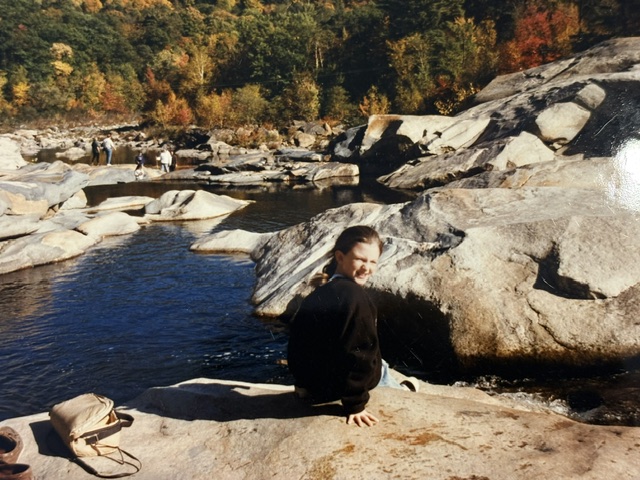
Glacial Potholes
At the base of Salmon Falls in Shelburne Falls, the Deerfield River flows through a landscape of smooth stone ledges and rounded hollows. Known as the Glacial Potholes, these formations reveal how moving water can gradually reshape even hard bedrock. Shelburne Falls is a village shared by the towns of Shelburne and Buckland. More than […]

