The Chains of Saint Peter
On our visits to Rome, we entered the Basilica of San Pietro in Vincoli, whose name literally means “Saint Peter in Chains”. The church is best known today by many visitors for Michelangelo’s magnificent statue of Moses, but beneath the main altar is something much older and even more connected to the earliest history of Christianity: the chains traditionally believed to have bound Saint Peter.
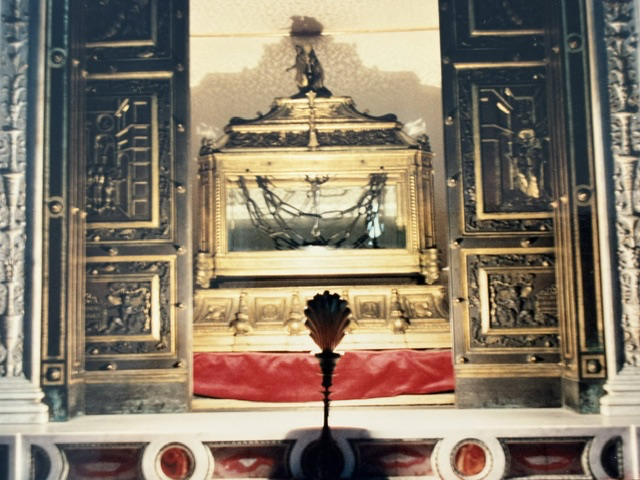
The tradition involves two sets of chains. One was believed to have held Peter when he was imprisoned in Jerusalem by King Herod Agrippa I. The story is told in the Acts of the Apostles: Peter was sleeping between two soldiers, bound with chains, when an angel appeared and the chains fell from his wrists, allowing him to escape.
A second set of chains was traditionally associated with Peter’s later imprisonment in Rome before his martyrdom. According to a tradition that developed in late antiquity, the Jerusalem chains were brought to Rome and presented to Empress Licinia Eudoxia in the fifth century. When they were placed beside the Roman chains, the two miraculously fused together. The joined chains became a treasured relic and were preserved in the church built to house them.
The basilica we see today traces its history to the fifth century, although it has been altered and restored many times. The chains are preserved in a gilded reliquary beneath the high altar and are an object of devotion that pilgrims have traveled to see for centuries.
There is something amazing about finding an object like this in Rome. Whether we approach the chains through faith, tradition, archaeology, or history, they represent nearly two thousand years of Christian memory. Generations of people have stood before this same relic thinking about Peter—the fisherman from Galilee who became one of Jesus’ closest disciples and whose story eventually became inseparable from the story of Rome itself.
Read More From Nancy
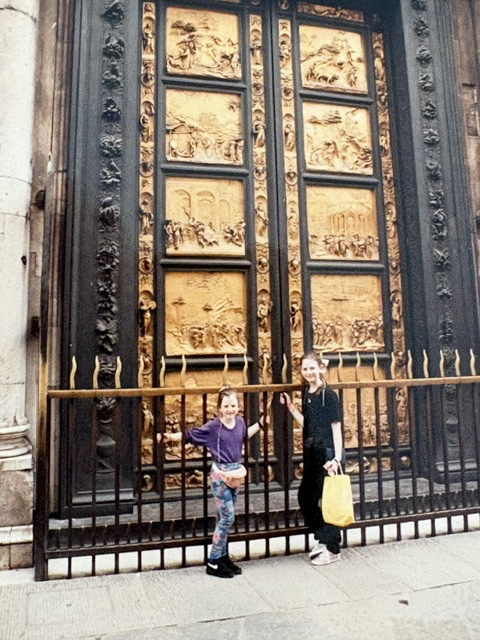
The Gates of Paradise
One of the highlights of our visit to Florence was seeing the magnificent bronze doors of the Baptistery of Saint John. As Emily and Erin stood before them, they were looking at one of the most celebrated masterpieces of the Italian Renaissance, a work that transformed bronze sculpture and influenced generations of artists. The east […]
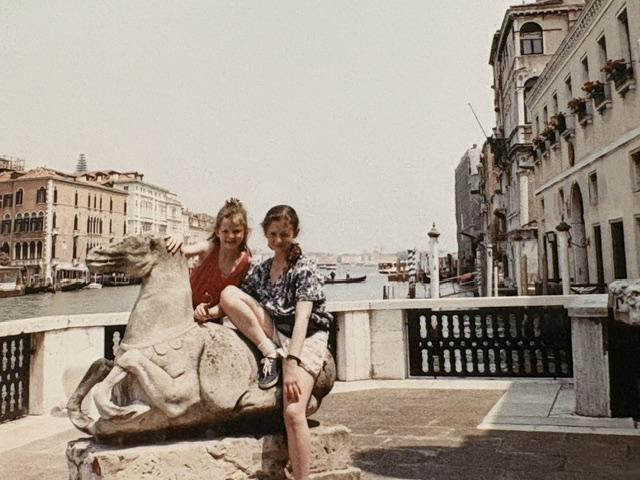
Peggy Guggenheim Collection
Palazzo Venier dei Leoni stands along Venice’s Grand Canal, but its appearance differs from the tall palaces surrounding it. Construction began during the eighteenth century for the Venier family, but only one level was completed. Its low profile and broad waterfront terrace eventually became part of the building’s distinctive character. Peggy Guggenheim purchased the unfinished […]
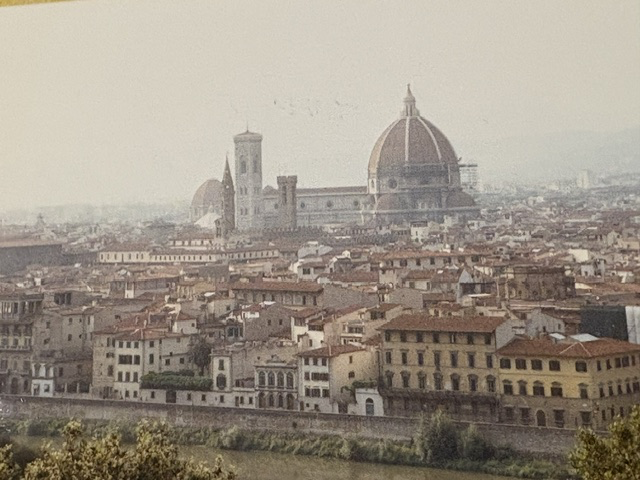
The Florence Skyline
Seen from the hills south of the Arno River, Florence reveals itself not as a collection of separate monuments but as a complete historic city. Rows of closely packed buildings spread across the valley, their warm stone walls and red-tiled roofs creating a remarkably unified landscape. Rising above them are the towers, domes and church […]

