William Bradford Statue
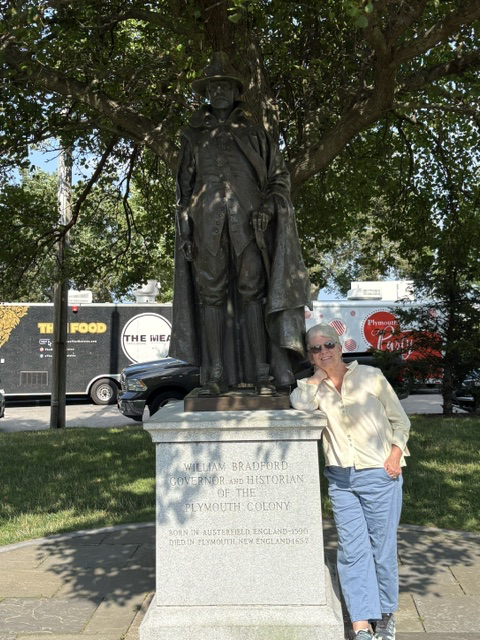
Standing near Plymouth Harbor is this imposing statue of William Bradford, one of the most important figures in the story of Plymouth Colony. Bradford crossed the Atlantic aboard the Mayflower in 1620 and, after the death of Governor John Carver the following spring, was elected governor of Plymouth Colony. He would serve in that position for more than 30 years, helping guide the small and often struggling settlement through its earliest decades.
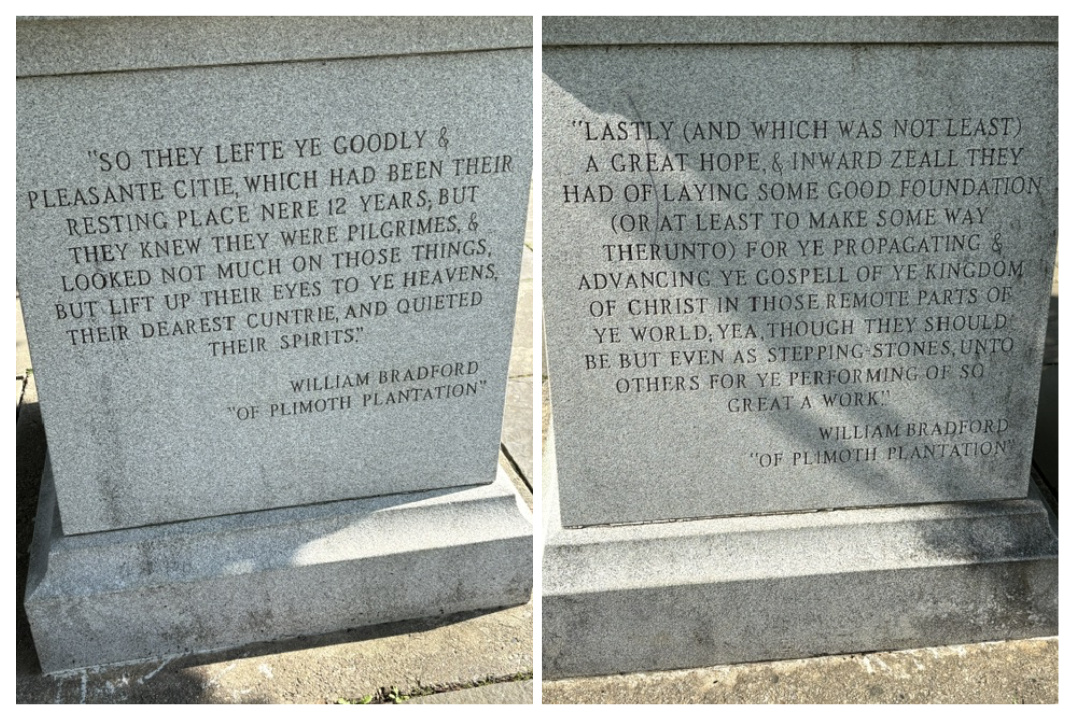
Bradford was also the colony’s great chronicler. His Of Plymouth Plantation, written over many years, remains one of our most important firsthand accounts of the Pilgrims including their years in Europe, their decision to leave Leiden, the Mayflower voyage, and the establishment of Plymouth. Appropriately, quotations from his writing are carved into the monument. One recalls the Pilgrims leaving the “goodly & pleasant citie” where they had lived for nearly twelve years, while another describes their hope of laying a foundation for advancing their religious beliefs in a distant part of the world. The words allow Bradford’s own voice to accompany his likeness.
There is another remarkable story connected to Bradford’s manuscript. After remaining in the Bradford family for generations, Of Plymouth Plantation eventually disappeared from New England during the turmoil surrounding the American Revolution. Decades later, scholars discovered that the original manuscript had made its way to England and was being kept in the library of the Bishop of London at Fulham Palace. Massachusetts began efforts to have it returned, and in 1897, more than a century after it had disappeared, the manuscript was formally restored to the Commonwealth. Today, Bradford’s original handwritten account is preserved by the State Library of Massachusetts.
The monument’s location near the harbor is especially fitting. From here we can look toward the water that brought Bradford and his fellow passengers to Plymouth more than four centuries ago. The statue does more than commemorate a colonial governor; together with the passages from his own writings, it reminds us that much of what we know about the beginnings of Plymouth survives because Bradford took the time to record what he and his generation experienced.
Read More From Nancy
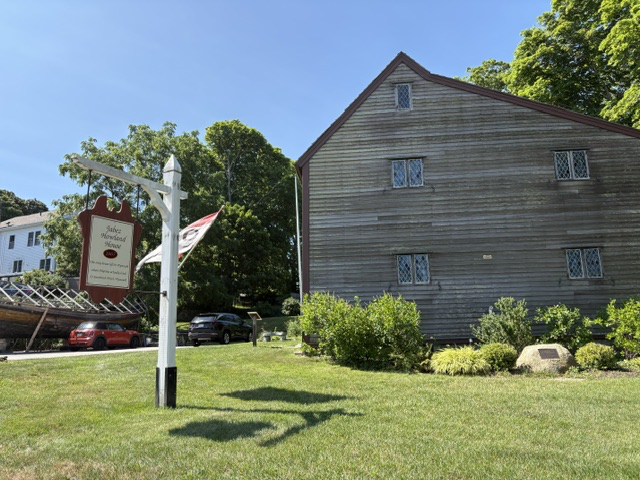
The Jabez Howland House
Among the many historic houses in Plymouth, the Jabez Howland House has a distinction that makes it extraordinary. Built about 1667, it is considered the only surviving building in Plymouth where people who actually arrived aboard the Mayflower are known to have spent time. Those people were John Howland and his wife, Elizabeth Tilley Howland. […]
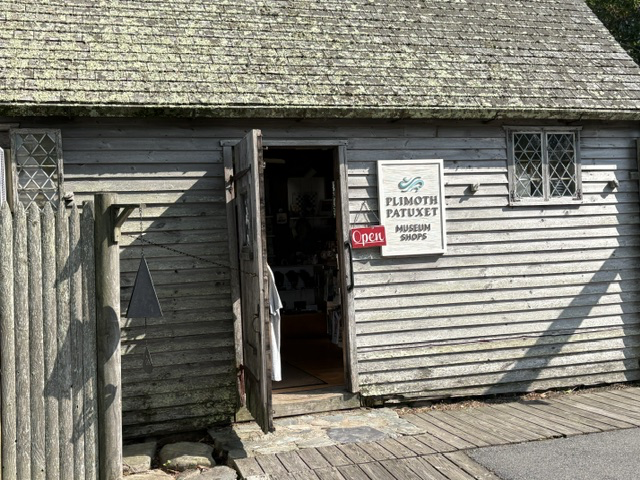
Plimouth Patuxet Museums
During my homeschooling years, we made many trips to what was then called Plimoth Plantation. It was one of those places where history became much more than something we read about in a book. As we walked through the recreated 17th-century English village, the people we met remained in character, speaking and responding as though […]
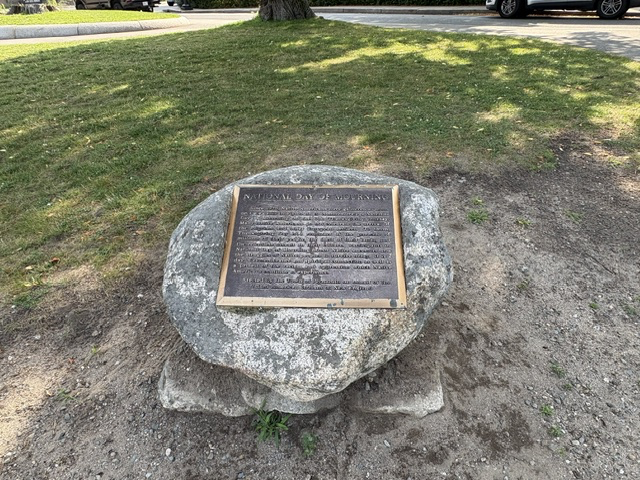
National Day of Mourning
Just a short distance from the statue of Massasoit on Cole’s Hill is this small marker recognizing the National Day of Mourning. It presents another part of Plymouth’s history and reminds us that the events of 1620 and 1621 have been remembered very differently by different people. The National Day of Mourning began in 1970, […]

