Case House and Case’s Corner
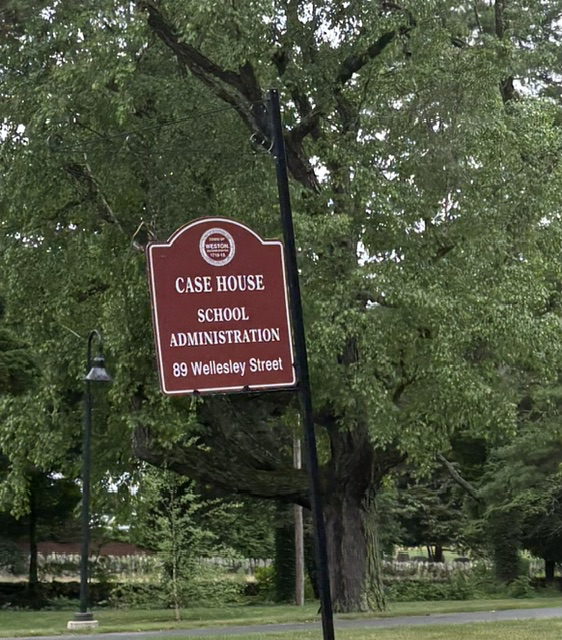
Driving along Wellesley Street in Weston, two signs bearing the Case name tell a story that reaches back more than a century. One marks Case House, today used by the Weston Public Schools administration. The other identifies Case’s Corner as a National Register Historic District. Together they preserve the story of a family whose presence became closely connected with this part of town.
Case House was originally known as Rocklawn. Built in 1889 for James Brown Case and his family, it was designed by architect Ernest N. Boyden as a substantial Shingle Style summer residence. The house dates from a period when Weston was changing. Improved transportation made it possible for prosperous families with connections to Boston to establish country homes here, gradually transforming portions of what had long been a farming community.
The Case family’s influence extended well beyond the house itself. James and Laura Case’s daughter, Marian Roby Case, developed a particular interest in agriculture and horticulture. In 1909 she established Hillcrest Farms, later known as Hillcrest Gardens, creating an extensive agricultural and horticultural enterprise that included gardens, orchards, fields and experimental plantings.
Following Marian Case’s death in 1944, much of the property passed to Harvard University’s Arnold Arboretum. For decades, the land known as the Case Estates was used for horticultural research, plant propagation and education. Portions eventually became town property, helping preserve an important piece of Weston’s open landscape. The nearby agricultural fields continue that connection with the land today.
The Case House itself found a new role. Rather than remaining a private country residence, it became the administrative headquarters for the Weston Public Schools. The change in use seems particularly appropriate because education became an important part of the history of Case’s Corner.
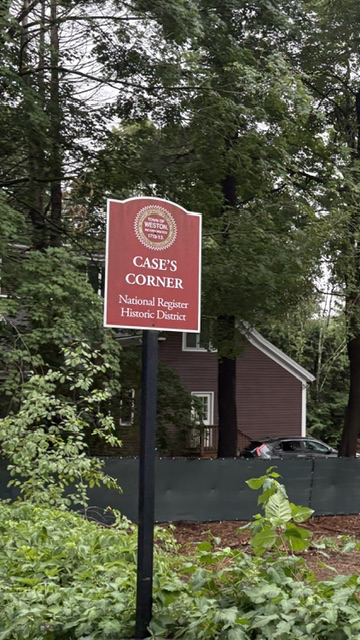
The surrounding Case’s Corner Historic District preserves that broader story. Beginning in the late nineteenth century, this area developed into an important center of Weston’s educational life. The town’s first four high schools were located within the district, and every school building constructed by Weston between 1878 and 1950 was built in this area.
One marks the former home of a family whose estate helped shape the landscape around it. The other marks an entire neighborhood where farms and country estates eventually existed alongside schools and other community institutions.
Today the Case name remains attached to both the house and the corner. The family is gone, the great estate has been divided and its buildings and land have taken on new purposes, but the name continues to identify this part of Weston.
It is another example of history all around us. A roadside sign that we might easily pass without a second thought can lead us back to a nineteenth-century country home, an innovative woman and her gardens, the development of Weston’s schools, and the changing landscape of the town itself.
Read More From Nancy
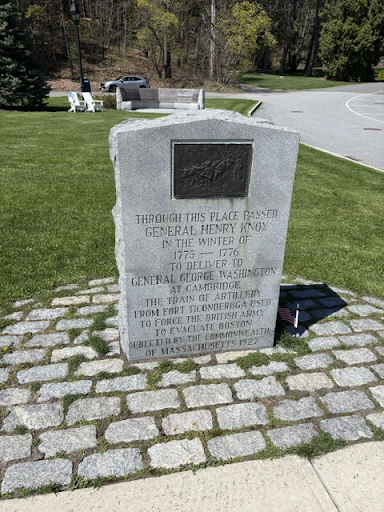
Henry Knox Trail Marker
As I continue to travel through eastern Massachusetts, I have made it a personal tradition to stop whenever I encounter one of the Henry Knox Trail markers. Although each monument commemorates the same remarkable journey, every marker represents another community through which Knox and his artillery train passed during the winter of 1775–1776. This marker […]
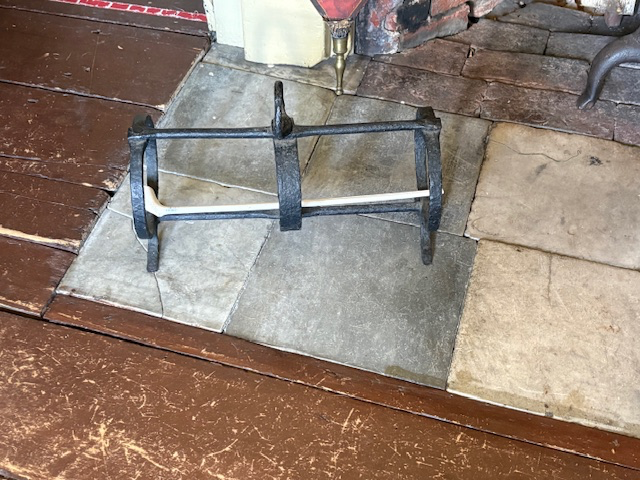
Clay Pipe Warmer
Resting on the hearth of a colonial tavern was this simple iron frame and without a pipe set across it, I would never have recognized it as a clay pipe warmer. As with every object, there is a history, and it is that curiosity that draws me in to learn more. Before matches were common and […]
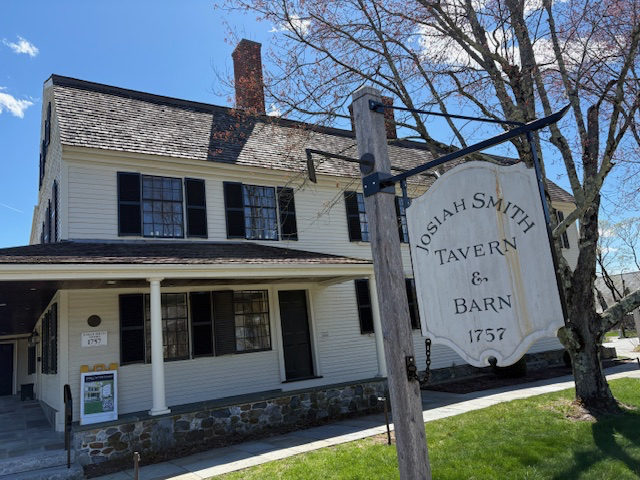
Josiah Smith Tavern
The Josiah Smith Tavern in Weston is not just a single historic building, but a location on one of the most important early roads in America: The Boston Post Road. Established in the 1600s and formalized in the early 18th century, the Boston Post Road connected Boston to New York and served as the main […]

